par Daniel AIT GOUGAM | Août 30, 2026 | news
For a single day out of Nice, three villages is the limit and Èze, Sainte-Agnès, and Peillon form the strongest eastern loop, while Saint-Paul-de-Vence, Gourdon, and Tourrettes-sur-Loup anchor the best western route. Both loops run comfortably within two to three hours of driving. Public buses reach some villages but slow the day considerably, which is why many visitors rent a bike or take our tours for a more active and flexible way to explore the area.
What are the best villages perchés near Nice?
The Alpes-Maritimes hinterland holds ten villages worth building a trip around, each rewarding a different kind of traveller. Some suit photographers chasing Mediterranean panoramas; others suit art lovers, quiet walkers, or anyone curious about medieval defensive architecture.
- Èze — cactus gardens and a sea panorama from the old citadel; about half an hour from Nice.
- Gourdon — a clifftop lookout over the Gorges du Loup with artisan shops; around three quarters of an hour depending on route.
- Peillon — car-free medieval lanes stacked on a rock spur; about a quarter of an hour from Nice.
- Sainte-Agnès — one of Europe’s highest coastal villages, with a ruined fort and long-range views; around 35 minutes.
- Saint-Paul-de-Vence — galleries, ramparts, and the Fondation Maeght; about 25 minutes.
- Tourrettes-sur-Loup — violet fields and stone ramparts; close to Vence, about 35 minutes.
- Coaraze — sundials painted by invited artists and a genuinely quiet centre; around half an hour.
- Peille — a lesser-visited counterpart to Peillon with Romanesque architecture; about 30 minutes.
- Lucéram — a working village with a striking nativity scene tradition each December; around 35 minutes.
- Sospel — a fortified river town with a toll bridge, further inland towards the Roya valley; roughly 50 minutes.
Photographers should prioritise Èze and Gourdon for the panoramas; those drawn to art head for Saint-Paul-de-Vence; anyone wanting an authentic, uncrowded walk should look at Coaraze or Peille first.
Which eastern villages near Nice reward the detour?
Èze remains the headline stop for good reason. The Jardin Exotique at the summit delivers one of the coast’s most photographed views, stretching from Cap Ferrat towards Italy, and the medieval core below it is compact enough to explore in under an hour if you arrive early. Parking sits below the village; from Nice NCE the drive takes roughly 25 to 30 minutes along the Moyenne Corniche, with the same road continuing on to Monaco in another 15 minutes.
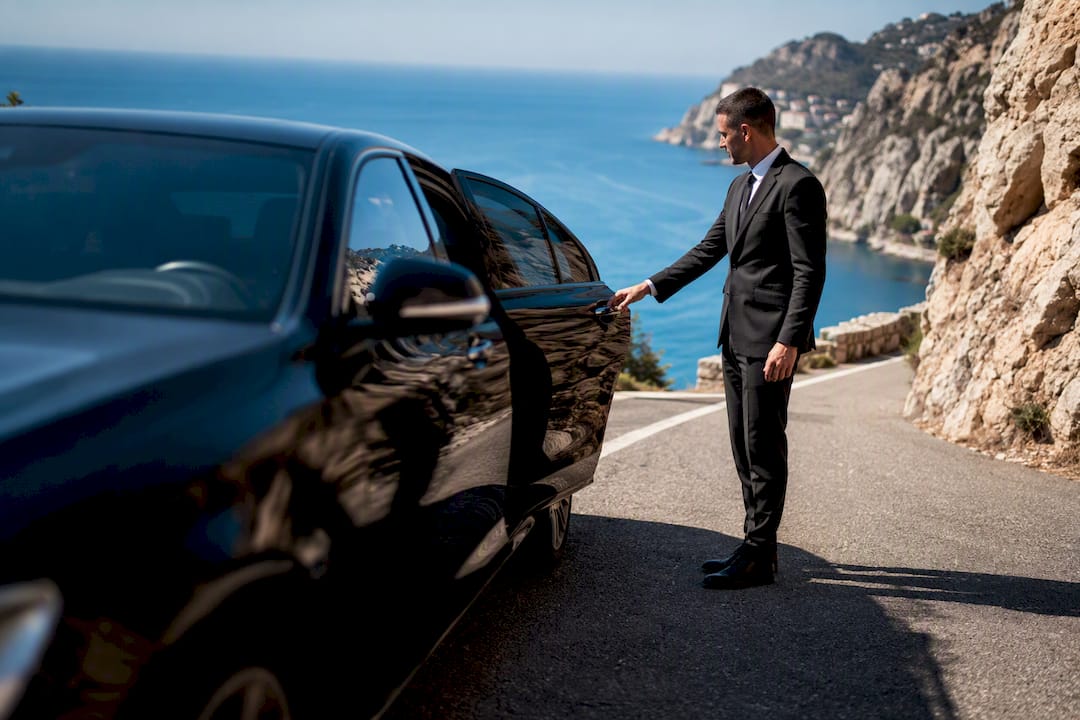
Sainte-Agnès sits higher and further east, reaching close to 800 metres above sea level, which makes it one of Europe’s highest coastal villages, and the ruined Fort de Sainte-Agnès above the houses was built as part of the Maginot Line’s Alpine defences. The climb from the car park to the fort involves genuine gradient, so trainers rather than sandals are the sensible choice. Clear days reward the effort with views stretching along the Menton coastline; the region enjoys a very sunny climate with many clear days annually.
Peille and Roquebrune offer quieter alternatives when Èze feels crowded. Peille keeps its Romanesque church and arcaded streets largely to itself outside peak season, and Roquebrune’s medieval castle sits a short detour off the Sospel road.
- Èze: 25 to 30 minutes from Nice NCE, moderate walking, parking below the village.
- Sainte-Agnès: approximately 35 minutes, with steeper walking to the fort and limited parking that fills quickly in summer.
- Peille: about 30 minutes, with fewer crowds and roadside parking near the entrance.
Which western and hinterland villages are worth a stop?
Gourdon holds official recognition as one of the Plus Beaux Villages de France, and the reputation is earned. The village clings to a limestone cliff above the Gorges du Loup, with a viewpoint that drops nearly 500 metres to the valley floor. Artisan workshops line the single main street, and a short circular walk around the château walls takes about 20 minutes. Parking is limited to a strip near the entrance, so arriving before midday is advisable in peak summer.
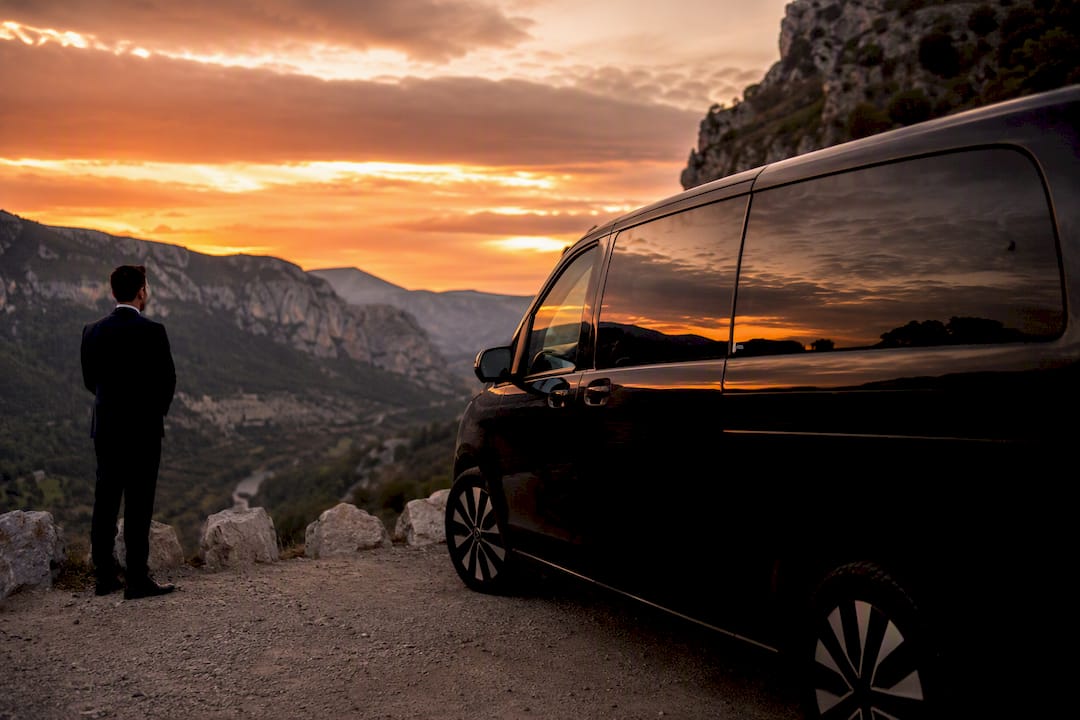
Peillon, distinct from Peille, is entirely car-free at its centre. Steep stone stairways connect the houses, and there is no vehicle access beyond the small car park at the village edge. It sits barely 25 minutes from Nice, making it one of the easiest genuinely medieval villages to fit into a short morning.
Saint-Paul-de-Vence justifies a longer stop than any other village on this list. Beyond the ramparts and cobbled Rue Grande lined with galleries, the Fondation Maeght holds work by Miró, Chagall and Giacometti, and a proper guided visit there runs around roughly one and a half hours on its own. Pair it with lunch on the ramparts and the village easily fills half a day.
- Tourrettes-sur-Loup: known for violet cultivation and stone ramparts, a calmer counterpart to Saint-Paul-de-Vence.
- Coaraze: an officially listed Plus Beaux Villages member with painted sundials commissioned from visiting artists over decades.
- Lucéram: a working agricultural village with narrow vaulted passages, best known regionally for its December nativity display.
- Sospel: fortified toll bridge over the Bévéra river, gateway to the Roya valley and further from Nice than the others on this list.
How do you plan a day trip to these hilltop villages?
Realistic timing separates a rewarding day from a rushed one. From Nice, driving estimates run roughly as follows.
- Èze: around half an hour via the Moyenne Corniche.
- Peillon: approximately 25 minutes inland via the Paillon valley.
- Gourdon: around 45 to 60 minutes depending on the route taken.
- Sospel: around about 50 minutes, the longest drive among the commonly paired villages.
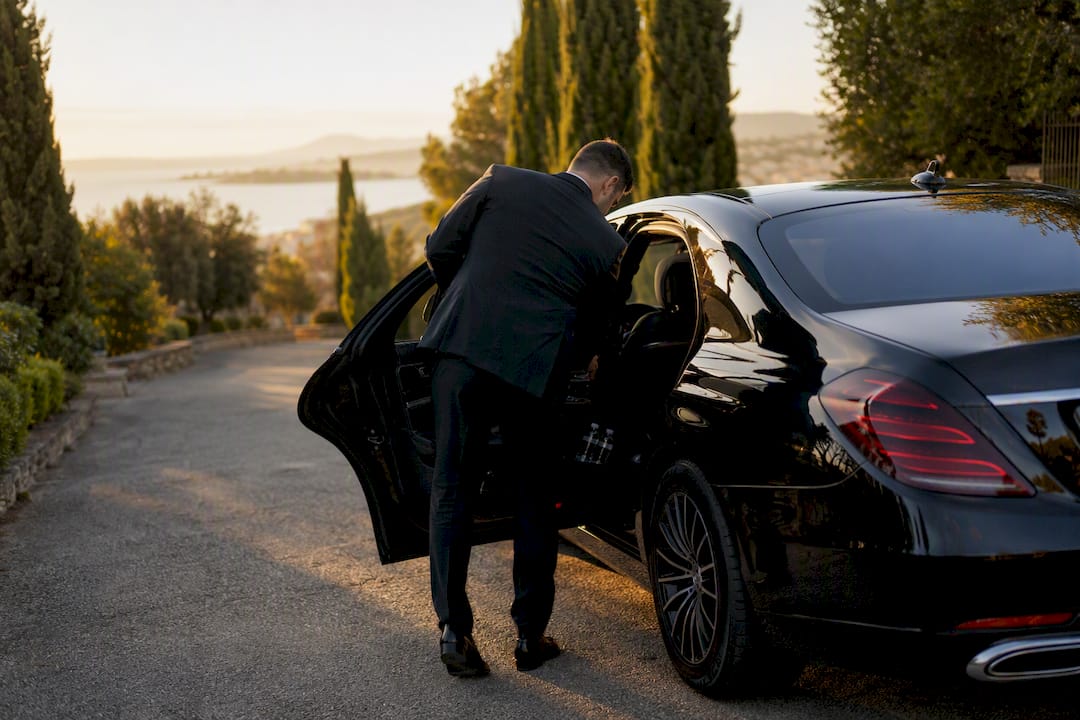
Buses connect some villages to Nice, but timetables are infrequent outside term time and rarely align well across two or three stops in one day, which stretches what should be a half-day loop into a full one. A private chauffeur removes that friction entirely: fixed 2026 rates, 24-hour availability, flight monitoring on airport pickups, and drivers fluent in at least English and French. Transponyx runs a Standard Sedan or Business Sedan for up to three passengers, and a Van 7 pax or Van 8 pax for larger groups, all bookable on +33 6 10 30 71 84.
Pro Tip: Start before 9am in July and August. The light on Èze’s citadel is softer, the car parks still have space, and you will have crossed two villages off the list before the coach parties arrive.
Sample one-day and three-day itineraries
A single day rarely accommodates more than three villages if you want proper walking time and a relaxed lunch, so pick a loop rather than trying to cover the whole hinterland at once.
- East loop: Èze (arrive 9am, one hour), Sainte-Agnès (11am, ninety minutes including the fort climb), lunch, then a short stop in Roquebrune before returning to Nice by late afternoon.
- West loop: Saint-Paul-de-Vence (morning, including the Fondation Maeght), Gourdon (early afternoon for the gorge views), Tourrettes-sur-Loup (late afternoon, coffee among the violet fields).
- Three-day version: add a morning among the Bellet vineyards on the edge of Nice, then dedicate a full day to the Vésubie or Roya valleys beyond Sospel and Lucéram, matching the two to three days regional guides recommend for covering the hinterland properly. A sample regional route from Nice through Èze, Peillon and Peille covers around 75 kilometres and two and a half hours of driving across the day, a useful benchmark for pacing your own loop.
What should you know before setting off?
Every village on this list was built for defence, not convenience, which means steps and cobbles rather than pavements. Sainte-Agnès and Gourdon demand the most from your ankles; Saint-Paul-de-Vence and Èze are gentler but still uneven underfoot, so leave the sandals at the hotel.
- Peillon’s centre is entirely car-free; agree a drop-off point at the village edge before you set off.
- Cafés and galleries in smaller villages such as Coaraze and Peille often close on Mondays or reduce hours outside summer.
- Public toilets are limited in most villages, so use facilities before leaving larger stops like Saint-Paul-de-Vence.
- Shoulder season mornings, roughly April to June and September to October, offer the clearest views with the fewest coach groups.
- Avoid arriving after 11am at Èze or Saint-Paul-de-Vence between June and August, when both villages fill quickly.
Why these villages still matter beyond the view
The defensive siting that shaped Peillon’s stairways and Sainte-Agnès’s fort was never designed with tourism in mind, and that tension between fortress logic and postcard charm is exactly what makes this stretch of the Alpes-Maritimes worth the detour. Saint-Paul-de-Vence took that same isolation and turned it into an artists’ colony; Coaraze did the same with its sundials. A private chauffeur does not replace that history, it simply removes the friction around it: a Business Sedan waiting outside Peillon’s car-free core, or a Van 7 pax collecting a family from Gourdon’s cliff-edge car park before the afternoon heat sets in, at fixed 2026 rates agreed before departure.
— Dany
Book a private chauffeur for your village day trip
Transponyx is the practical answer to a problem this guide keeps circling back to: public transport is too slow to link three hilltop villages in one day, and self-driving means someone in the group misses the view while watching the road. A confirmed 2026 fixed rate, agreed before you leave the hotel, removes that trade-off entirely.
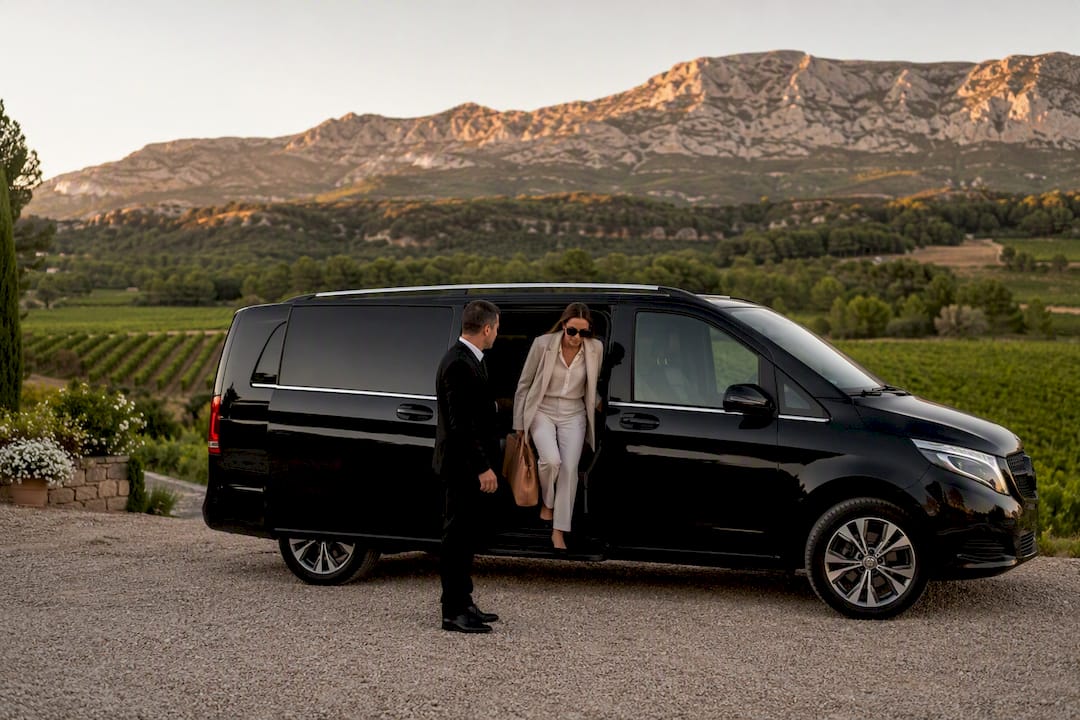
For up to three passengers, the Standard Sedan or Business Sedan handles the Èze, Peillon, and Sainte-Agnès loop comfortably; families or small groups heading to Gourdon and Saint-Paul-de-Vence tend to prefer the Van 7 pax, while larger parties book the Van 8 pax. Every booking includes 20 minutes of free waiting time at village stops, flight monitoring if the day starts from Nice Côte d’Azur Airport, and a driver briefed on drop-off points where the cobbles begin. Combine village visits with a stop at the Bellet vineyards on the Nice hillside for a fuller day, or check availability directly on the Nice airport transfer page. Call +33 6 10 30 71 84 to confirm a vehicle for your chosen loop, or reserve online at Transponyx.
Where to verify opening times and further details
Village-level opening hours and event dates change seasonally, so confirm details directly with each commune’s tourism office before travelling. The Plus Beaux Villages de France listings cover Coaraze and Gourdon’s official status, while Chemins de mémoire documents the Fort de Sainte-Agnès. For itinerary pacing, the Cantons de Provence regional guide offers useful sample routes, and transfer bookings run through Transponyx.
Sources
FAQ
What are the villages perchés near Nice?
The main perched villages within reach of Nice are Èze, Gourdon, Peillon, Sainte-Agnès, Saint-Paul-de-Vence, Tourrettes-sur-Loup, Coaraze, Peille, Lucéram and Sospel, each perched on a hilltop or ridge for historic defensive reasons.
Which perched villages sit closest to the Côte d’Azur coastline?
Èze, Peillon and Saint-Paul-de-Vence are the closest to the coast, each reachable from Nice in roughly 25 to 30 minutes by road.
Is there an official list of the top 11 perched villages?
There is no single canonical “top 11” list; the ten villages covered here (Èze, Gourdon, Peillon, Sainte-Agnès, Saint-Paul-de-Vence, Tourrettes-sur-Loup, Coaraze, Peille, Lucéram and Sospel) represent the most commonly recommended set around Nice.
How many perched villages can you visit in one day from Nice?
Most itineraries work best with three villages per day, allowing time for walking, viewpoints, and a proper lunch rather than rushing between stops.
Is it worth hiring a private driver for a village day trip?
A private chauffeur suits travellers who want to link two or three villages without relying on infrequent bus timetables; Transponyx offers fixed 2026 rates with vehicles ranging from the Standard Sedan to the Van 8 pax for this exact purpose.

par Daniel AIT GOUGAM | Août 29, 2026 | news
Booking a wine tasting in Aix-en-Provence usually means choosing between three formats: a city cellar door on Cours Mirabeau for a quick 45 to 60 minute session, a domaine visit near Sainte-Victoire for a longer, scenic experience, or a guided food-and-wine walk run through the local tourist office. City venues sometimes accept walk-ins, but domaines and guided tours need advance reservation. Expect to pay somewhere between €25 and €60 depending on format, and budget 45 minutes for a cellar tasting versus two hours or more for a domaine visit with a terrace view of the mountain.
Where to taste wine near Aix-en-Provence
Aix sits at the centre of a wine region shaped by one unmistakable backdrop: the Montagne Sainte-Victoire, the limestone ridge that Cézanne painted obsessively and that now shades some of the region’s most distinctive vineyards. The city itself and the countryside around it offer genuinely different tasting experiences, and knowing which is which saves a wasted afternoon.
La cave du Cours Mirabeau, right in the centre of town at 19 Cours Mirabeau, runs a guided tasting pairing three Provençal wines with three French cheeses. Sessions last 45 to 60 minutes, and the seasonal schedule and ticketing list a full-fare price of €25 for the April to October 2026 period. It suits anyone who wants a structured introduction without leaving the old town, and it works well slotted between a morning at the Cours Mirabeau market and an afternoon at the Musée Granet.
Jas Monges takes you out of town and onto a terrace facing Sainte-Victoire directly. The domaine offers visit-and-tasting formulas on reservation, and it sits roughly 20 minutes’ drive from central Aix under normal traffic. This is the option for visitors who want the landscape as part of the tasting, not just the wine, and who don’t mind planning a short trip out.
Les Vignerons d’Aix-en-Provence, the city’s long-established cooperative cave, has been producing and selling locally since 1925. Its year-round opening hours make it a reliable fallback when domaine schedules don’t align with your dates, and it doubles as a retail stop if you want to bring bottles home.
For a broader introduction, the Provence-Alpes-Côte d’Azur Tourisme office organises a two-hour guided walking tour combining several food shops with a commented wine-and-cheese tasting. It runs in French and English, books through the Office de Tourisme d’Aix-en-Provence, and works best for visitors who want context and narrative alongside the glass in hand.
A quick reference for planning:
- City tasting (La cave du Cours Mirabeau): 45 to 60 minutes, walk-ins sometimes possible, around €25.
- Domaine visit (Jas Monges): 1.5 to 2 hours, reservation recommended, 20 minutes’ drive from Aix.
- Cooperative cave (Les Vignerons d’Aix-en-Provence): flexible, open most days, no fixed session length.
- Guided food-and-wine walk (Office de Tourisme): 2 hours, French and English, book ahead.
How do I choose the right tasting for my trip?
The honest answer depends on three things: how much time you have, what kind of experience you want, and who you’re travelling with.
- Match the format to your schedule. If you have under an hour free between other plans, the city tasting on Cours Mirabeau is the sensible pick. If you’ve blocked out half a day, a domaine visit near Sainte-Victoire rewards the extra time with terrace views and a slower pace.
- Decide what you want to learn. An œnologue-led tasting gives you technical detail on soil, blending and vintage variation. A domaine visit tends to be more sensory and conversational, often led directly by the winemaker rather than a trained oenologist.
- Think about your group. Some domaines welcome dogs on the terrace but not inside tasting rooms; some city venues can’t easily accommodate large groups without notice. Confirm language availability upfront if English matters to you, and flag any accessibility needs when booking.
- Check what the price includes. Most published rates cover the tasting itself; bottle purchases, extra pours and cheese platters beyond the standard selection are often separate.
Treat a lack of clear pricing or booking information as a signal to look elsewhere. Any venue worth its reputation publishes hours, a contact method and a rough sense of cost before you arrive.
Pro Tip: If you’re travelling with a mixed group of technical wine drinkers and casual tasters, book the guided food-and-wine walk rather than a single domaine. The narrative format keeps everyone engaged even if only half the group cares about tannin structure.
Getting from Aix to the vineyards: transport and timing
Distances here are short, which is part of what makes Aix such a workable base. Jas Monges is around 20 minutes from the city centre; other estates near Sainte-Victoire fall somewhere in the 20 to 40 minute range depending on traffic and the exact address. That’s manageable by rental car, though public transport and taxis thin out quickly once you’re off the main roads into vineyard country, which is where most independent travellers hit friction.
A private chauffeur removes that friction entirely. Door-to-door timing means you arrive exactly when your reservation starts, not fifteen minutes late because a rural road wasn’t signposted. Luggage handling and bilingual drivers matter more than people expect, particularly for visitors combining a tasting day with an airport transfer either side.
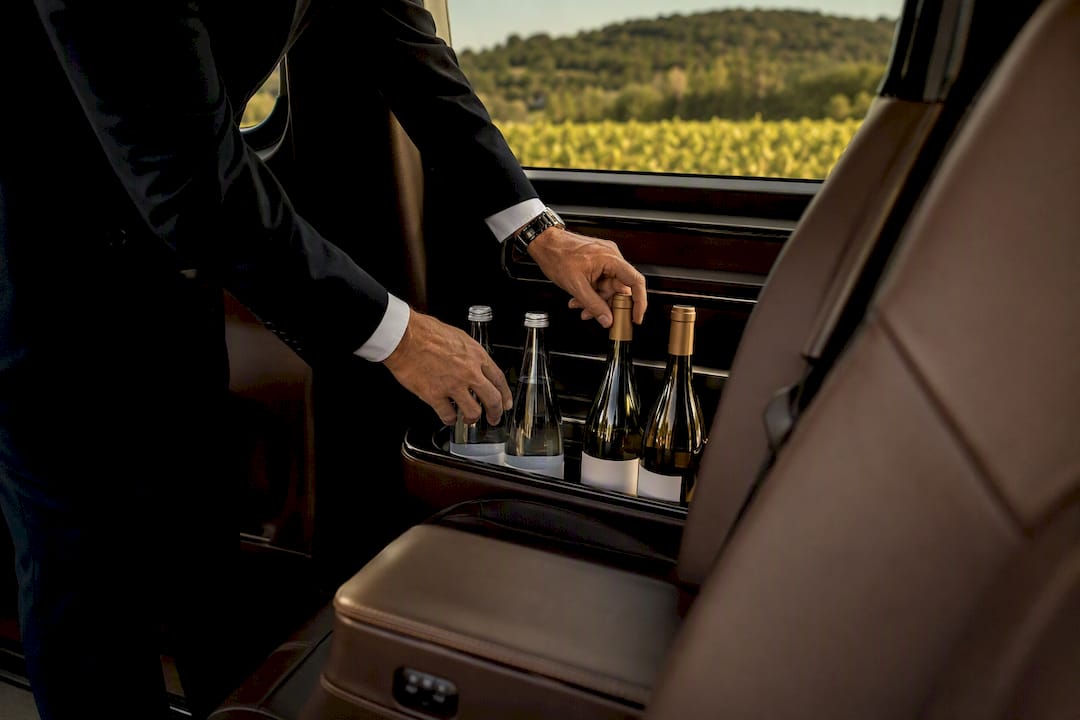
Transponyx runs a fleet built for exactly this kind of day: Standard Sedan and Business Sedan for individuals or couples, Van 7 pax and Van 8 pax for larger groups, all Mercedes-Benz vehicles fitted with Wi-Fi, air conditioning, chilled water and phone chargers. Every rate for 2026 is fixed and confirmed at booking, so there’s no surprise adjustment because the estate ran your tasting fifteen minutes over.
Practical points worth confirming before you book transport:
- Reserve pickup times that match your tasting slot, not the other way round.
- Ask about return timing if the domaine has restrictions on group arrivals or departures.
- Request a bilingual driver in advance if your group needs English-language commentary en route.
- Build in buffer time between a city tasting and a domaine visit rather than scheduling them back to back.
What happens during a tasting, and how should you behave
Most tastings, whether in a city cellar or on a terrace facing Sainte-Victoire, follow a similar shape: a welcome, a guided sampling of several wines (typically a red, a rosé and a white), and often a pairing with local cheese or produce. Estates around Sainte-Victoire tend to lean into the sensory and conversational side of tasting, encouraging visitors to describe what they taste and to talk with the winemaker rather than treating the session as a formal exam.
A few habits smooth the experience considerably:
- Arrive on time. Small domaines run tight schedules between groups.
- Avoid strong perfume or cologne, which interferes with everyone’s ability to smell the wine.
- Ask questions. Winemakers generally enjoy explaining terroir and vintage differences rather than being asked to simply pour and wait.
- Declare dietary restrictions when booking, not on arrival, particularly for cheese or charcuterie pairings.
- If poor weather threatens an outdoor walking tour, check ahead. Some guided tastings are weather-dependent and may be rescheduled.
Non-drinkers aren’t left out. Most venues offer a soft alternative, usually juice or sparkling water, without making a fuss of it. If you buy bottles to take home, ask the venue for protective packaging, particularly in the summer months when a hot car boot can do real damage over a few hours.
Why Aix-en-Provence has been a wine town for centuries
Winemaking here isn’t a tourism invention. The Coteaux d’Aix-en-Provence appellation has vineyards stretching back to Roman settlement in the region, and the specific combination of limestone soils, mistral wind and the microclimate created by Sainte-Victoire has shaped Provençal viticulture for generations. Grape varieties like Grenache, Syrah, Cinsault and Rolle dominate the reds and rosés, while Vermentino and Sémillon feature in the whites, all suited to a landscape that swings between intense summer heat and cooling wind.
The cooperative model, exemplified by Les Vignerons d’Aix-en-Provence since 1925, reflects a broader pattern across Provence: smallholder growers pooling resources rather than competing individually. That history matters for visitors because it explains why so much of the region’s wine culture feels communal rather than corporate. Rosé, the wine most associated with Provence internationally, only became the dominant regional style in the latter half of the twentieth century as tourism and export demand shifted production away from heavier reds. Today’s tastings, whether on a Cours Mirabeau terrace or a domaine facing Sainte-Victoire, sit on top of that long, layered agricultural history rather than apart from it.
When to visit and what to pair it with
Shoulder months, roughly April, May, September and October, give you a quieter, more intimate domaine visit than the height of summer, when estates near Sainte-Victoire fill quickly with day-trippers. Riviera events also ripple inland: the Cannes Film Festival in May and the Monaco Grand Prix in the same window push transfer demand and pricing across the region, so book tasting slots and any chauffeur transport well ahead if your dates overlap either event.
Pair a Sainte-Victoire domaine visit with a Provençal lunch nearby, or a short walk along one of the marked trails at the foot of the massif, and you get a half-day that feels considered rather than rushed. Whatever the season, confirm opening hours directly before travelling. Small estates change schedules with little notice, and peak-period tasting slots fill fast.
— Dany
Book a private chauffeur or curated wine tour from Aix
Transponyx is the practical alternative to arranging your own transport between Aix and the vineyards: one fixed 2026 rate, a driver who knows exactly where Jas Monges’ entrance is without a wrong turn down a farm track, and no need to coordinate taxis for a group split across two cars.
Beyond point-to-point transfers, Transponyx’s sister offering, Onyx Tours, runs curated excursions built specifically around this kind of day, including the Sunset Wine Experience and the Provence Art & Wine Retreat, which pairs vineyard visits with stops at notable estates and galleries across the region. The fleet covers every group size: Standard Sedan and Business Sedan for couples or solo travellers, Van 7 pax and Van 8 pax for larger parties, all Mercedes-Benz vehicles with Wi-Fi, air conditioning, chilled water and phone chargers as standard.
If you’d rather combine a tasting day with an overnight stay, it’s also worth reading up on how to combine lodging and gastronomy when planning a longer Provence itinerary.
To book, call +33 6 10 30 71 84 or message via WhatsApp on +33 7 67 78 10 26. Visit the dedicated wine-tasting tours page to see current itineraries, and when you book, confirm your pickup time against your tasting reservation and request a bilingual driver if your group needs English-language commentary along the way.
Sources
FAQ
Do I need to book wine tastings in Aix-en-Provence in advance?
Domaine visits and guided food-and-wine walks generally require advance reservation, while some city tastings such as La cave du Cours Mirabeau sometimes accept walk-ins depending on the day.
How much does a wine tasting cost in Aix-en-Provence?
Prices vary by format: a city cellar tasting runs around €25 for the full fare between April and October 2026, while domaine visits and guided walks vary by operator and typically cost more for the added time and content.
How far are the vineyards from central Aix-en-Provence?
Most estates near Sainte-Victoire, including Jas Monges, sit around 20 to 40 minutes from the city centre by car depending on traffic and the exact location.
What wine varieties will I taste in Aix-en-Provence?
Expect Grenache, Syrah, Cinsault and Rolle in the reds and rosés, and Vermentino or Sémillon in the whites, all typical of the Coteaux d’Aix-en-Provence appellation.
Is a private chauffeur worth it for a wine-tasting day near Aix?
For groups wanting door-to-door timing without navigating rural roads or coordinating return journeys, Transponyx offers fixed 2026 rates, bilingual drivers and a Mercedes-Benz fleet suited to both solo travellers and larger parties.
par Daniel AIT GOUGAM | Août 28, 2026 | news
Visit Fragonard, Molinard, Galimard and the Musée International de la Parfumerie for a complete perfumeries Grasse visite. A half day covers the essentials through free guided tours; a full day lets you add an atelier and the Fabrique des Fleurs. Most factory visits require no reservation, though ateliers and groups usually do.
Which parfumeries should you visit in Grasse?
Four names anchor any serious visite parfumeries Grasse itinerary, and each earns its place for a different reason.
Fragonard operates two sites worth knowing apart. The Usine historique, in the old town, runs free guided tours with departures throughout the day, tracing the brand’s nineteenth-century roots. A short drive away, La Fabrique des Fleurs shows modern production methods and includes a garden planted with the flowers used in Grasse fragrance workshops, from rose de mai to jasmine.

Molinard takes a more intimate approach at La Bastide, its historic house, where guided visits run around 25 minutes and focus on antique distillation machinery and raw-material selection. The boutique afterwards is genuinely worth the stop.

Galimard, family-run since 1747, offers free guided factory and museum visits seven days a week, finishing with an olfactory game that tests your nose rather than your wallet. Paid ateliers here let you compose your own fragrance to take home.
The Musée International de la Parfumerie rounds things out with curated exhibitions and gardens that place all three houses in historical context, ideal if you want the full story before or after the factory visits.
What actually happens during a Grasse perfume factory tour?
Expect a rhythm that repeats across most houses, with small variations in length and depth.
- Museum or heritage section first (10 to 20 minutes), covering the history of the house and Grasse’s role as a perfume capital.
- Guided factory walkthrough (20 to 30 minutes), demonstrating distillation, maceration and blending, usually with a guide narrating rather than a self-paced audio tour.
- Olfactory game or sensory test at the close of most free visits, often the highlight for children and casual visitors alike.
- Boutique stop, where guides typically allow time to browse without pressure to buy.
Ateliers run separately and longer, often 60 to 90 minutes, and these are the visits that tend to require advance booking and carry a fee, unlike the standard factory tours. If you or a travelling companion is sensitive to strong scents, mention it to staff beforehand. Most tours are accessible, though older buildings like La Bastide have uneven flooring in places.
Opening hours, tickets and parking for Grasse perfumeries
Grasse’s factory tours follow a fairly consistent pattern, but the details matter enough to plan around.
- Guided factory tours at Fragonard, Molinard and Galimard are free for individual visitors; ateliers and some MIP exhibitions carry separate ticket prices.
- Arrive well before closing time for the last guided departure, a rule that applies across most Fragonard sites.
- Groups typically need to reserve ahead, while individual visitors can usually join without booking.
- Molinard’s La Bastide offers free parking close to the site, useful given central Grasse’s narrow streets.
- The SNCF station in Grasse sits roughly a short walk from the old town’s perfumeries, with local bus lines covering the rest.
Fragonard’s Usine historique routinely operates free guided tours with departures throughout the day, a detail that matters when you’re juggling multiple sites in one day and don’t want to wait an hour for the next slot. For group bookings, calling ahead in French or English is standard practice, and most houses can accommodate school groups, coach parties and private tours with a few days’ notice.
Half-day or full-day: two ways to see Grasse’s perfumeries
Your available time should dictate the order, not the other way round.
- Half-day loop (roughly 9:30am to 1pm): Fragonard’s Usine historique first, then Galimard, both within walking distance of central Grasse. This covers two free guided tours and an olfactory game without rushing.
- Full-day itinerary (9am to 5pm): Start at La Fabrique des Fleurs for the modern production angle, move to the Usine historique for contrast, visit the Musée International de la Parfumerie over lunch, then close with a paid atelier at Galimard or Molinard for a hands-on finish.
From Nice NCE, the drive to Grasse takes roughly 45 to 55 minutes depending on traffic; from Cannes it’s closer to 20 to 25 minutes, which makes a half-day trip realistic even for visitors based on the coast. If you’re arriving by train, the Grasse SNCF station connects to Nice and Cannes on regional lines, though schedules are less frequent than the drive would suggest, and a private transfer often saves more time than it costs.
Getting between the perfumeries without losing half your day

Central Grasse rewards walkers. The Usine historique, Galimard’s town-centre boutique and the Musée International de la Parfumerie sit within a 10 to 15 minute walk of one another, and parking in the old town is limited and often metered. La Fabrique des Fleurs and Molinard’s La Bastide, both slightly outside the centre, are better reached by car.
That’s where the logistics start to matter more than most guides admit.
- Public buses connect the SNCF station to the old town, but timetables thin out midday and on Sundays.
- Driving yourself means finding parking twice, once near the historic sites and again near the outlying factories.
- A private transfer removes both problems in one booking.
TranspOnyx runs the Nice to Grasse route at roughly 45 to 55 minutes depending on traffic, using fixed 2026 rates confirmed before you travel, with no surge pricing if your day runs long. Bilingual drivers can wait between stops, and the standard 20 minute free waiting allowance at non-airport addresses covers most factory visits comfortably.
Pro Tip: During the Cannes Film Festival or the Monaco Grand Prix, add at least 30 extra minutes to any coastal transfer into Grasse, since traffic on the A8 backs up well beyond the zones of the events themselves.
Why a private transfer changes how you experience Grasse
Most visitors underestimate how much dead time a self-driven Grasse day actually swallows. Between hunting for parking near the Usine historique, doubling back for La Fabrique des Fleurs, and timing a train against a factory’s last guided departure, you can lose an hour without noticing.
TranspOnyx operates 24 hours a day, seven days a week, with a fleet of Mercedes-Benz vehicles across Standard Sedan, Business Sedan, Van 7 pax and Van 8 pax categories, each fitted with Wi-Fi, air conditioning, chilled water and phone chargers. Drivers are licensed VTC professionals, bilingual in English and French at minimum, and every 2026 rate is fixed and confirmed at booking. For a family or group moving between four perfumeries in one day, that consistency matters more than any single attraction does. Reservations run through +33 6 10 30 71 84 or Transponyx.
— Dany
Book a private transfer for your Grasse perfume day
TranspOnyx is the practical alternative to juggling trains, timetables and parking metres on a Grasse perfumery day. Rather than splitting your morning between a station taxi rank and a search for parking near La Bastide, one fixed-price booking covers the whole route from your hotel in Nice, Cannes or Antibes to every site on your list and back.
A private driver from Nice to Grasse suits visitors planning their own itinerary, while the Côte d’Azur Glamour Tour through Onyx Tours packages Grasse alongside Antibes and Cannes for a single guided day. Choose from Standard Sedan, Business Sedan, Van 7 pax or Van 8 pax depending on group size, and every 2026 rate is fixed and confirmed before departure. Airport pickups include a 60 minute free waiting allowance, with flight monitoring built into the service. Call +33 6 10 30 71 84 or visit Transponyx to request a fixed quote for your Grasse day.
Where to check official visiting details before you travel
Opening hours and atelier bookings change seasonally, so confirm details directly with each house before setting off.
Sources
FAQ
Which parfumerie should I visit in Grasse?
Fragonard’s Usine historique and Galimard both offer free guided tours suited to first-time visitors; add Molinard’s La Bastide or the Musée International de la Parfumerie for a fuller picture of the region’s history.
What is the most famous perfumery in Grasse?
Fragonard is generally considered the most widely known of the three historic Grasse houses, though Molinard and Galimard carry equally long family histories dating back centuries.
How much does a perfumery visit in Grasse cost?
Guided factory tours at Fragonard, Molinard and Galimard are typically free for individual visitors; paid ateliers where you create your own fragrance cost extra and often require booking ahead.
Who are the three great perfumers of Grasse?
Fragonard, Molinard and Galimard are the three historic houses most often cited as Grasse’s founding perfumers, each still operating factories and museums open to visitors today.
Do I need to book in advance to visit Grasse perfumeries?
Individual visitors can usually join free guided tours without a reservation, but groups and paid ateliers generally require advance booking through the house’s official page.
par Daniel AIT GOUGAM | Août 27, 2026 | news
Four sources answer nearly every question about a flight at Nice Côte d’Azur Airport. Check the Nice airport arrivals page or departures page first for terminal, gate and baggage belt data. Use the airline’s own app for boarding changes, rebooking and delay compensation. Turn to Flightradar24 or FlightAware when you want to see exactly where the aircraft is in the sky. If you have a chauffeur transfer booked, Transponyx tracks the flight independently and adjusts the pickup time without you lifting a finger.
Each source does a different job:
- Nice airport site and app — gate, terminal, baggage belt, official status
- Airline app — boarding calls, rebooking, delay and cancellation rights
- Flightradar24 / FlightAware — live airborne position, radar-based ETA
- Transponyx — flight monitoring built into every airport transfer, with 60 minutes of free waiting on pickups
Knowing which one to open first saves you standing at the wrong end of Terminal 2 wondering why nobody has landed yet.
How to track a flight on the official Nice airport site and app
Start with the source that actually controls the gates. The Nice airport arrivals and departures pages show scheduled and estimated times, current status and the baggage belt number, and this data comes directly from airport operations rather than a third-party feed. For departing passengers, the equivalent departures page lists check-in desks and boarding gates as they’re assigned.
The companion app goes further. It can scan your boarding pass and populate your specific flight automatically, which beats scrolling through a departure board searching for your number.
To set it up properly:
- Download the official Nice Côte d’Azur Airport app and open the flight search tool.
- Scan your boarding pass or enter the flight number and date manually.
- Enable push notifications in the app settings so status changes reach you without opening the app again.
- Add a second traveller’s flight if you’re coordinating a pickup for someone else.
The app’s push notifications cover boarding calls, delays and baggage updates, which means once it’s configured, you can put your phone away and trust it to alert you.
Terminal assignment is the field most worth double-checking. Nice operates two terminals roughly two kilometres apart, and turning up at the wrong one with luggage in tow costs you a shuttle ride and some extra time you didn’t budget for.
When Flightradar24 or FlightAware tell you more than the airport does
Radar trackers earn their keep once the aircraft is actually airborne. Flightradar24 uses ADS-B signals broadcast by the aircraft itself to plot its exact position, altitude and speed, and its estimated arrival time is calculated from that live track rather than from a static schedule. FlightAware runs on the same principle, offering an independent live feed for Nice (LFMN) covering arrivals, departures and aircraft still en route.
This matters most in three situations:
- A flight is running long over the Alps due to headwinds, and the radar-derived ETA shifts before the airport page updates.
- An aircraft enters a holding pattern off the coast waiting for a runway slot, visible on the tracker’s live map long before any status change appears elsewhere.
- A flight diverts to Marseille or Lyon because of weather or an operational issue at Nice, something you’ll spot on a tracker’s route map well before an announcement.
What these tools won’t tell you is which belt your suitcase is heading to or which gate has just changed. For that, you still need the airport’s own feed. Treat Flightradar24 and FlightAware as your window on the sky, and the Nice airport pages as your window on the ground.
Why the airline app still matters for boarding and rebooking
Nobody rebooks you except the airline. If a flight is cancelled or you’ve missed a connection, the airline’s own app or website is the only channel that can issue a new boarding pass, process compensation, or confirm your baggage has been rerouted. Airport pages and radar trackers are informational, not operational.
Watch for code-share confusion. A flight sold as an Air France number might actually be operated by a partner carrier, and trackers display the operating flight number, not the marketing one. If your booking reference doesn’t match what you see on Flightradar24 or the Nice arrivals board, search using the operating carrier’s number instead.
As a rule of thumb: contact the airline for anything involving your ticket, seat or rebooking, and check the airport for anything involving where to physically be. Mixing the two up wastes time on hold when a glance at the departures page would have answered the question already.
Speed matters most when you’re already in the car heading to pick someone up. The fastest route to the right flight varies slightly by platform, but the logic holds everywhere.
- Search by flight number and date first. This is the quickest match on the Nice airport site, the airline app and both trackers.
- If you don’t know the flight number, search by route and approximate time instead. Both airport pages and Flightradar24 allow filtering by origin airport.
- On the Nice airport app, scan the boarding pass barcode directly. It auto-fills the flight number, date and passenger name in one step.
- For code-shared flights, always use the operating carrier’s number rather than the one printed on a connecting ticket, since trackers index by operating flight.
Pro Tip: Save the flight number to your phone’s notes app the moment you book, not the morning of travel. Code-share numbers get buried in itinerary emails, and hunting for them at the arrivals hall with a data signal that keeps dropping is a bad way to start a pickup.
What “delayed”, “landed” and other flight statuses actually mean
Status labels look simple until two sources disagree, which happens more often at Nice than travellers expect given how close the airport sits to the Mediterranean and how quickly Mistral winds can shift approach patterns.
| Status |
Meaning |
Where it typically appears first |
| Expected / scheduled |
Flight is on its planned timetable, no live update yet |
Airport site |
| Approach |
Aircraft is descending towards Nice, visible on radar |
Flightradar24 / FlightAware |
| Landed |
Wheels down on the runway |
Radar trackers, seconds before airport site |
| Arrived / on stand |
Aircraft has reached the gate; passengers can disembark |
Nice airport site |
| Delayed |
Departure or arrival pushed past scheduled time |
Airline app, then airport site |
| Diverted |
Aircraft redirected to another airport |
Radar trackers first |
| Cancelled |
Flight will not operate |
Airline app |
The gap between “landed” and “arrived” catches people out most. A flight can land and still take ten to fifteen minutes taxiing to the stand, especially during peak MIPIM or Cannes Film Festival traffic when apron congestion is heavier than usual. If you’re timing a pickup, wait for “arrived” or the baggage belt number to appear before assuming your passenger is walking through the doors.
What to do when a flight is delayed, cancelled or diverted
A delay at 35,000 feet is not a crisis. A delay nobody tells your driver about is. The sequence that actually resolves things fastest:
- Confirm the official status on the Nice airport arrivals page rather than relying on a single tracker.
- Contact the airline directly if you need rebooking, compensation or baggage tracing.
- Check the new baggage belt assignment once the flight shows as arrived, since delays sometimes shift belt numbers.
- Update your transfer provider immediately if pickup timing has changed by more than a few minutes.
That last point is where Transponyx does the work for you. Every airport transfer booked with Transponyx includes flight monitoring as standard, so a delay on your route is picked up automatically rather than left for you to report.
Transponyx operates 24 hours a day, seven days a week from Nice, with fixed 2026 rates confirmed at the time of booking and 60 minutes of free waiting time on every airport pickup. Drivers are notified of schedule changes directly, so a two-hour delay into Terminal 1 doesn’t mean a driver circling the forecourt or a client standing outside with no car in sight.
If a diversion or lengthy delay pushes your arrival well past the free waiting allowance, call Transponyx on +33 6 10 30 71 84 to adjust pickup timing or request a different driver slot. Genuine schedule changes are accommodated rather than charged as a missed pickup, which is worth knowing before you land rather than after.
Accessibility options for tracking flights at Nice
Not every traveller checks a flight status the same way, and Nice’s official channels account for that reasonably well. The airport app supports screen readers on both iOS and Android, and the arrivals and departures pages on the Nice Côte d’Azur website are built with standard web accessibility markup that works with assistive browsing tools.
For travellers who find small departure boards hard to read in the terminal, the app’s larger on-screen text and boarding pass scanner remove the need to squint at a physical display altogether. Push notifications also help anyone who struggles to monitor a screen continuously, since the alert arrives regardless of whether the app is open.
Voice-based options exist too, though indirectly. Both Flightradar24 and FlightAware integrate with third-party voice assistants in some regions, letting a traveller ask for a flight’s status verbally rather than reading it. Coverage and accuracy of these integrations vary by device and are worth testing before relying on them for a time-sensitive pickup.
For anyone travelling with a companion or carer who needs to coordinate a meeting point, sharing the flight number through the Nice airport app means both parties see identical status updates rather than relaying information secondhand. That single shared source removes a common point of confusion, particularly at Terminal 2, where the arrivals hall serves several long-haul and charter services simultaneously during peak summer weeks.
When to head to the terminal and how to handle a sudden gate change
Timing your arrival at Nice comes down to one habit: check the status again shortly before you leave, not just the night before. Schedules shift, and a flight showing “on time” at breakfast can slip by twenty minutes before lunch, particularly during Mistral wind conditions that affect approach paths into Nice more than most French airports.
For departing passengers, arrive at the terminal with enough margin for security and, during high-traffic periods like a busy weekend or a major event weekend, allow extra time for taxi and drop-off congestion outside both terminals. Gate numbers at Nice are often only confirmed 30 to 45 minutes before boarding, so it’s not unusual to see “gate to be announced” until relatively late.
If a gate change is announced, the fastest confirmation comes from the departure board or the airport app rather than word of mouth in the terminal. Terminal 1 and Terminal 2 are separate buildings, so a gate change that also involves a terminal switch needs a shuttle bus, and that alone can eat fifteen minutes you weren’t expecting.
For those meeting arriving passengers, resist the urge to head to the terminal the moment a flight shows “landed”. Taxiing, disembarkation and passport control at Nice typically add fifteen to twenty-five minutes beyond that point. Watching for the baggage belt number is a more reliable cue than the landed status alone, especially on flights arriving during a busy event or MIPCOM when arrivals volume runs high and processing takes longer.
Sometimes an app doesn’t answer the question you actually have, and that’s what the information desks are for. Nice Côte d’Azur Airport staffs help points in both terminals, positioned near the main arrivals and departures halls, and they can confirm live flight status, terminal assignments and baggage handling issues that occasionally lag behind the digital feed during high-volume periods.
The desks are particularly useful for two scenarios the app can’t fully resolve: a baggage discrepancy after a flight has already been marked “arrived”, and confirming which exit or meeting point to use when a terminal has multiple arrival halls active simultaneously, as Terminal 2 does during peak summer and major event periods.
Phone contact is also available for general flight information enquiries, listed on the airport’s official site alongside the arrivals and departures pages. For anything involving a ticket change, refund or missed connection, airport staff will still direct you to the airline, since only the operating carrier holds the authority to rebook or compensate a passenger. The information desk’s role is logistical, not contractual.
If you’re coordinating a chauffeur pickup and a discrepancy arises between what the app shows and what’s happening at the gate, contacting Transponyx directly on +33 6 10 30 71 84 resolves it faster than waiting in an airport queue, since the flight monitoring built into your transfer already has the corrected data.
Arrivals versus departures: what actually differs in the tracking
Tracking an arrival and tracking a departure at Nice aren’t quite the same exercise, even though both run through the same airport systems. Arrivals tracking centres on three checkpoints: landing time, taxi to stand, and baggage belt assignment. Departures tracking centres on check-in desk, security wait and gate assignment, which tends to firm up much later in the process than an arrival’s belt number does.
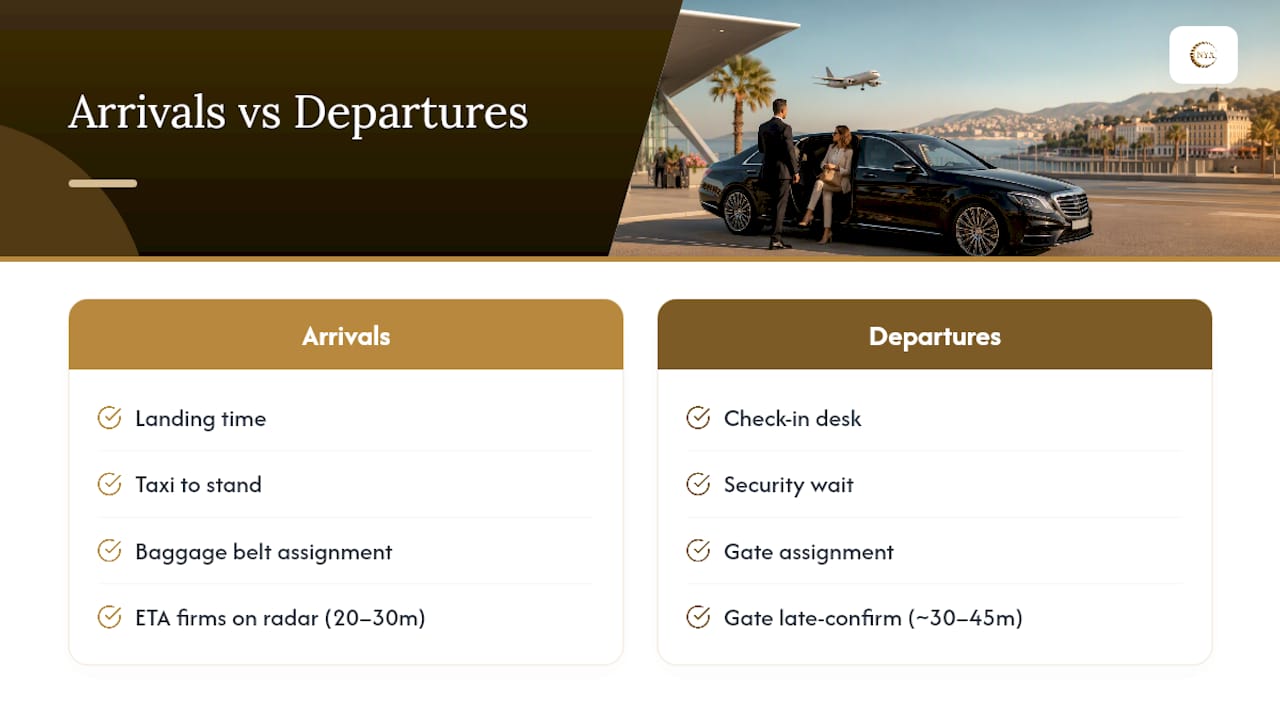
The practical difference shows up in how early useful information appears. A departing passenger often knows their check-in desk hours in advance, but the gate number can remain unconfirmed until 30 to 45 minutes before boarding. An arriving passenger’s flight status becomes far more precise once the aircraft is on radar, typically 20 to 30 minutes before landing, because Flightradar24 and FlightAware can then extrapolate a firm ETA from the aircraft’s actual descent path rather than a scheduled estimate.
Baggage information only exists on the arrivals side, and belt numbers at Nice are sometimes reassigned mid-process if a delayed flight’s original slot gets reused by another arrival. Departures never carry this ambiguity since check-in and gate data doesn’t get reassigned the way baggage belts occasionally are.
For anyone organising a pickup, this asymmetry is exactly why the Nice airport arrivals page deserves more attention than the departures side. It’s the version of the site that changes right up until the last useful minute, and it’s the one Transponyx drivers monitor for every scheduled collection.
Why chasing every tracker at once misses the point
The instinct with flight tracking is to open four tabs and cross-reference everything, and that instinct is mostly wrong. Most delays and gate changes at Nice resolve through a single authoritative source, the airport’s own arrivals or departures feed, and the value of Flightradar24 or FlightAware lies in a narrow, specific window: the twenty minutes before landing when radar data genuinely outpaces the airport’s own estimate.
Conventional advice treats all four channels as roughly interchangeable, which undersells how differently they behave. An airline app is built for compensation and rebooking, not live position. A radar tracker is built for position, not baggage belts. Conflating the two leads to travellers refreshing Flightradar24 for gate information it was never designed to show.
What actually matters is sequencing: check the airport first for anything ground related, layer in a radar tracker only when you specifically need airborne ETA precision, and treat the airline as your last resort for anything involving your ticket. For anyone with a transfer already booked, that sequencing problem largely disappears, because flight monitoring built into the booking does the cross-referencing before you’d even think to open an app. That’s the detail conventional guides tend to skip, because it’s a logistics point rather than a technology one, and logistics is where most pickups actually go wrong.
— Dany
Sources
FAQ
How can I track an Air France flight’s route in real time?
Search the flight number on Flightradar24 or FlightAware to see its live position, or check the Air France app for boarding and status updates; if it’s a code-share, use the operating carrier’s flight number for the tracker search.
How do I track my flight live once it’s in the air?
Enter the flight number and date into Flightradar24 or FlightAware to see its current altitude, speed and position on a live map, alongside a radar-derived estimated arrival time.
Is there a problem at Nice airport today?
Check the official Nice airport departures and arrivals pages for current status alerts, since disruptions from weather, strikes or runway issues are posted there first, ahead of third-party trackers.
If you’re arranging a pickup and want the flight watched for you, Transponyx builds monitoring into every airport transfer at no extra cost, alongside 60 minutes of free waiting time. Call +33 6 10 30 71 84 or visit Transponyx to arrange a chauffeur for your next arrival into Nice.
par Daniel AIT GOUGAM | Août 26, 2026 | news
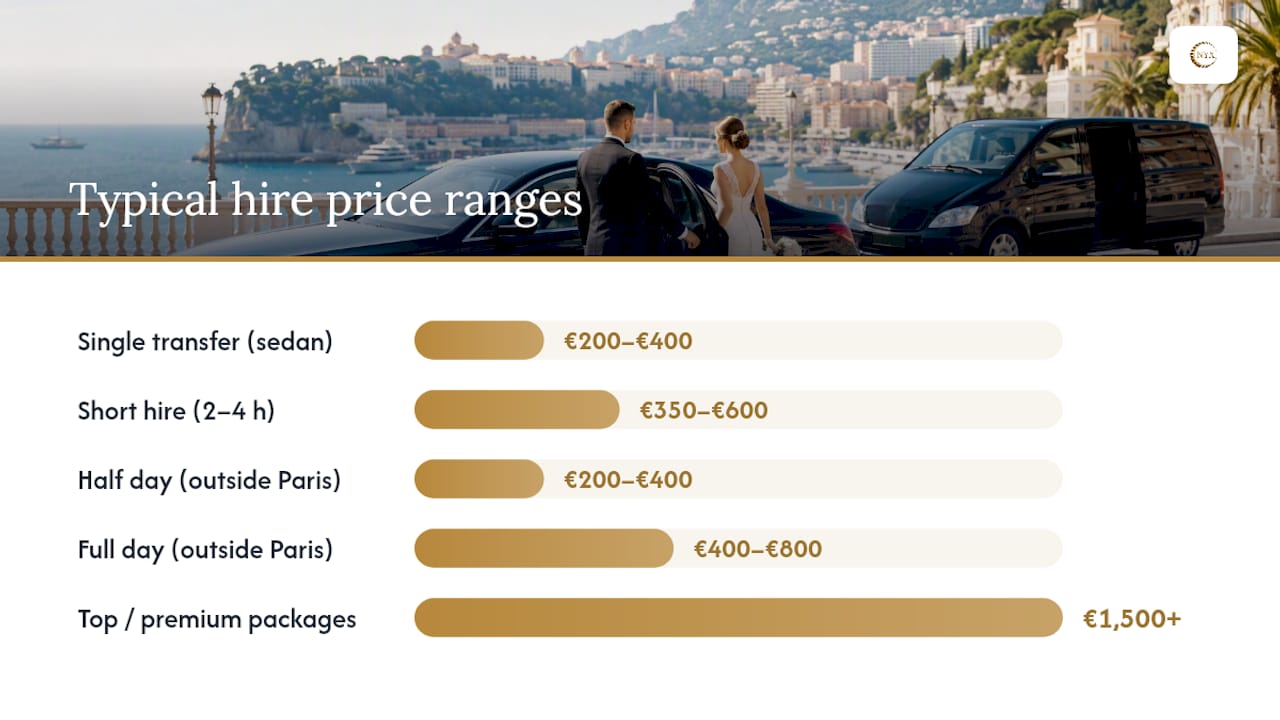
A single wedding transfer with a chauffeur typically costs €200 to €400 in France, a short two to four hour hire runs €350 to €600, a half day sits between €500 and €900, and a full day package starts around €800 and can exceed €1,500 depending on the vehicle and extras, according to French wedding transport pricing guides. Paris and Riviera festival dates push every one of these bands upward.
The single most useful thing you can do right now is ask each supplier for a fixed, per-vehicle quote that spells out the waiting allowance in minutes and the kilometres included. Everything else, vehicle choice, decoration, extra stops, is negotiable detail sitting on top of that base figure.
Typical 2026 wedding chauffeur budget bands in France:
-
Single transfer (church to reception, for example): €200–€400
-
Short hire, 2 to 4 hours: €350–€600
-
Half day (demi-journée): €500–€900
-
Full day: €800–€1,500+
-
Paris and Île-de-France: expect a notable uplift on every band above
-
Cannes, Monaco or Saint-Tropez during major events: book early, prices firm up fast
How much does a wedding chauffeur cost in France?
The national price bands hold reasonably steady across most of France, but the vehicle category and the region you marry in move the number more than almost anything else. A modest single transfer with a Standard Sedan style vehicle sits comfortably at the lower end of the €200 to €400 bracket, while the same journey in a vintage or classic car, or during a high demand weekend, drifts toward the top.
Short hires of two to four hours, the format most couples choose for the ceremony to reception leg plus photographs, typically land at €350 to €600, according to the same French wedding transport guides. This bracket assumes a single vehicle, a modest number of stops, and no significant waiting between engagements.
Half day and full day hires change the maths because suppliers price them as blocks rather than point to point journeys. Event and VTC trade sources describe demi-journée packages commonly running €200 to €400 in the regions outside the capital, with journée complète packages at €400 to €800 regionally, and Paris typically 20 to 40% above those figures, according to VTC wedding and event guidance. Nationally, once you factor in premium vehicles and longer full day formats, the top of the market climbs past €1,500.
Vehicle style is the other major lever. Limousine and premium vehicle hire guides put full wedding limousine packages between €400 and €1,500 depending on the formula chosen, with Paris consistently the most expensive market in France, according to limousine pricing data. A restored classic convertible or a stretch limousine will always price above a modern executive sedan, purely because supply is scarcer and preparation takes longer.
A snapshot of what shapes the final figure:
- Vehicle category: vintage and classic cars cost more than modern sedans; vans built for multiple passengers price differently again
- Duration: single transfers versus half day versus full day are priced as separate products, not linear multiples of an hourly rate
- Region: Paris and Île-de-France carry the highest national premiums; the Riviera follows during major events
- Number of vehicles: a bridal car plus a guest shuttle multiplies the total quickly
Local marketplace listings for the Alpes-Maritimes, covering Nice and the surrounding coast, show a typical median close to €400 to €600 for a wedding car, with entry level offers from around €120 to €250 and premium full day or rare vehicle packages exceeding €1,000, according to regional listings for Nice. That spread tells you something important: the Riviera is not a single price zone. A quiet Tuesday in November prices very differently to a Saturday during the Cannes Film Festival.
What does a wedding chauffeur price actually include?
A fair quote names its components rather than quoting one round number and leaving the rest to assumption. Before you compare two suppliers side by side, confirm these are on the table.
- The chauffeur’s time and the vehicle itself, prepared and presented for the day, not simply “available”.
- Passenger insurance, covering the wedding party while travelling in the vehicle.
- A stated waiting allowance, expressed in minutes, not the vague phrase “waiting included”.
- Fuel and standard mileage up to a defined limit, usually specified per package.
- A fixed price per vehicle, confirmed before the day, with no surprise surcharge added afterwards.
What commonly costs extra tells you just as much. Floral decoration and ribboning of the vehicle, champagne service inside the car, a night surcharge for late finishes, additional waiting hours beyond the stated allowance, and mileage beyond the contracted limit are the recurring add-ons across French wedding transport guides and limousine hire pricing tables alike, per limousine and premium vehicle guides.
Pro Tip: Ask the supplier to quote overtime per 15 minutes rather than accepting “extra charges may apply”. A precise overtime rate is the only way to compare two quotes that structure their waiting allowance differently.
Before signing anything, insist on seeing the maximum kilometres included, the cancellation policy in writing, and, if you have any doubt about legitimacy, proof of a valid VTC licence. A supplier confident in their pricing will produce all three without hesitation.
Why do wedding chauffeur quotes vary so much?
Two couples booking the same duration on the same weekend can receive quotes that differ by several hundred euros, and the gap almost always traces back to five variables rather than one.
Vehicle rarity sits at the top. A fleet sedan or van is straightforward to source and price; a vintage convertible or a stretch limousine requires specialist maintenance and sits in far shorter supply, which shows up directly in the quote. Duration and the number of stops matter almost as much: a chauffeur held on standby between the ceremony and the photo session, then driven across town for a reception, is effectively working a longer day than the headline hours suggest, and experienced Riviera operators typically build in a minimum mobilisation window of around four hours to cover vehicle preparation and depot travel time.
What consistently drives a quote higher:
- A rare or vintage vehicle instead of a modern fleet sedan or van
- Multiple stops or a long gap between ceremony and reception requiring the chauffeur to remain on standby
- A wedding date falling during a major regional event
- A Paris or Île-de-France postcode, which carries the steepest national premium
- A request for a specific, uniformed, bilingual chauffeur rather than “any available driver”
Seasonal and event driven demand is where the Riviera behaves differently from most of France. The Cannes Film Festival, the Monaco Grand Prix, Cannes Lions, MIPCOM and MIPIM all compress available chauffeur and vehicle stock across the coast for days at a time, and couples marrying during those windows should expect both higher prices and much earlier booking deadlines. A bilingual, uniformed, professionally licensed chauffeur also costs more than an unbadged driver, and for good reason: on a wedding day, the margin for error is zero, and experience is what prevents it.
What do real wedding transport packages cost?
Turning a price range into an actual decision is easier with worked examples. These reflect the pricing logic used across French guides and Riviera practice, not a single supplier’s rate card.
-
Bridal couple, single transfer only. One vehicle collects the couple from the ceremony and delivers them to the reception, typically a journey of 20 to 40 minutes on the Riviera. Expect €200 to €400, sitting at the lower end if the vehicle is a standard sedan style car and the distance is modest, and higher for a vintage or premium choice.
-
Short photo and move package, 2 to 4 hours. The chauffeur remains with the couple through the ceremony, a photo stop at a scenic location, and the drive to the reception. Budget €350 to €600, consistent with national short hire pricing, with the top of the range reflecting extra stops or a premium vehicle.
-
Demi-journée with multiple stops. A half day booking covering the ceremony, a photo session at a second location, transfer to the reception, and a returning trip for the couple later in the evening. This format typically costs €500 to €900 nationally, and Riviera suppliers often price toward the upper half of that band when the itinerary includes hillside or coastal photo locations that add travel time.
-
Guest shuttle rotations. For larger weddings, a Van 7 pax or Van 8 pax can run rotations between a hotel and the venue, useful when parking is limited, as it often is around Antibes or Saint-Tropez in summer. Each vehicle is priced separately, and planning the rotation schedule in advance, rather than assuming one van can serve fifty guests instantly, avoids a last minute request for a second vehicle at a premium rate.
How does TranspOnyx price a Riviera wedding transfer?
TranspOnyx operates a Mercedes-Benz fleet across four categories, Standard Sedan and Business Sedan for up to three passengers each, and Van 7 pax or Van 8 pax for larger wedding parties, with every 2026 rate fixed per vehicle and confirmed at the time of booking. There is no surge pricing applied later, which matters enormously on a date when demand across the coast is already stretched.
Riviera geography shapes almost every quote. A transfer from Nice Côte d’Azur Airport to Monaco covers roughly 30 kilometres and takes around 45 minutes outside peak traffic; Nice to Cannes covers a similar distance in a comparable time. Both routes appear constantly in wedding transport requests, whether collecting overseas guests on arrival or moving the wedding party between a coastal ceremony and an inland reception.
A wedding day quote is only as trustworthy as its detail. TranspOnyx builds every fixed rate around named inclusions rather than a single headline number: 60 minutes of free waiting time on airport pickups at NCE, 20 minutes at any other address, flight monitoring on every airport transfer, and a bilingual, licensed chauffeur as standard.
What a TranspOnyx wedding quote typically confirms upfront:
- Vehicle category (Standard Sedan, Business Sedan, Van 7 pax or Van 8 pax) matched to guest numbers
- Fixed price for the full route and duration required, agreed before the day
- Waiting allowance stated in minutes, not left ambiguous
- A bilingual chauffeur, with Italian, Spanish, Russian or Arabic available on request
To get a tailored figure for your own date, call +33 6 10 30 71 84 or visit Transponyx with your venues, timings and guest count ready to hand.
What should you ask before booking a wedding chauffeur?
Getting comparable quotes from three suppliers requires giving each of them exactly the same information and asking exactly the same questions. Skip this step and you will end up comparing figures that were never measuring the same service.
Information to hand over before requesting a quote:
- Ceremony and reception venue names and addresses
- The time window the vehicle is needed, start to finish
- Passenger numbers for the bridal car and for any guest shuttle
- Whether a photo session with the vehicle is planned, and roughly how long it will take
Questions that make quotes genuinely comparable:
- What is the included waiting allowance, in minutes, and what is the overtime rate per 15 minutes beyond it?
- How many kilometres are included, and what happens beyond that limit?
- Is decoration or floral dressing of the vehicle included or charged separately?
- What is the chauffeur’s dress code, and is a specific driver guaranteed or only a vehicle category?
- What is the cancellation policy, and by what date does a deposit become non-refundable?
On the French Riviera, booking three to six months ahead is sensible for most weekends, and anything closer to the Cannes Film Festival or the Monaco Grand Prix should be locked in as early as nine to twelve months out, since fleet availability during those weeks disappears fast. A structured booking process that confirms the vehicle, price and inclusions in writing before any deposit changes hands is the only way to avoid a late surprise. Get every one of the answers above in an email or contract, not a verbal assurance, before you pay anything.
Why most wedding transport advice misses the point
Most guides to wedding chauffeur pricing hand couples a vendor list and call it done. That misses the actual problem: nobody struggles to find a chauffeur company near a French wedding venue. They struggle to work out whether the quote in front of them is fair, because two suppliers rarely price the same service the same way.
The conventional advice, “get three quotes and compare”, is only half right. Three quotes are useless if one states a waiting allowance in minutes, another says “waiting included” with no limit, and the third omits mileage entirely. The comparison only works once every supplier answers the same specific questions, which is why fixed, itemised pricing matters more than the headline figure itself.
If there is one priority worth taking from this guide, it is this: interrogate the waiting allowance and the kilometre limit before you look at the price at all. A cheaper quote with a stingy waiting window and a tight mileage cap frequently ends up costing more than a slightly higher fixed rate with generous terms, once the overtime charges land after the day.
— Dany
Get a fixed 2026 quote for your Riviera wedding transport
TranspOnyx is the alternative to piecing together vendor quotes with no shared benchmark. Its 2026 rates are fixed per vehicle before you book, so you agree the total for your wedding day transport upfront, not after a waiting clock or mileage counter has quietly run past its limit. The fleet spans Standard Sedan and Business Sedan for the bridal party through to Van 7 pax and Van 8 pax for guest shuttles between a hotel and venue in Antibes, Menton or further along the coast.
Every booking includes a bilingual, licensed chauffeur, air conditioning, Wi-Fi and chilled water as standard, with child seats available on request. Call +33 6 10 30 71 84 or visit the luxury chauffeur comparison page to share your venues, timings and guest numbers, and receive a fixed, itemised quote for your date on the French Riviera.
Sources
FAQ
What is the typical price of a wedding chauffeur in France?
A single transfer costs €200 to €400, a short two to four hour hire costs €350 to €600, a half day costs €500 to €900, and a full day starts around €800 and can exceed €1,500, according to French wedding transport pricing guides.
What does hiring a private chauffeur cost outside a wedding context?
Private chauffeur hire for a general event or by-the-hour booking follows similar duration-based pricing, with vehicle category and region shifting the total the same way it does for weddings; ask for a fixed rate per vehicle rather than an hourly estimate.
What is a fair price for a wedding vendor overall, and how does transport compare?
Wedding vendor pricing varies enormously by category, but transport is one of the more predictable lines because it prices by duration and vehicle rather than by guest count, making it easier to budget early against the bands above.
How much does it cost to hire a car for a wedding in France?
Wedding car hire with a chauffeur in France ranges from roughly €200 for a single journey to over €1,500 for a full day with a premium vehicle, with Paris and Riviera festival dates sitting at the higher end, per regional listings for Nice.
Should I tip a wedding chauffeur in France?
Tipping is not obligatory in France and is not built into standard chauffeur pricing, though many couples offer a discretionary amount for exceptional service on the day.
How early should I book a wedding chauffeur on the French Riviera?
Book three to six months ahead for a standard weekend, and nine to twelve months ahead for dates during the Cannes Film Festival or the Monaco Grand Prix, when vehicle availability tightens considerably.
par Daniel AIT GOUGAM | Août 25, 2026 | news
Bijou Plage, La Plage du Festival and Ciro’s at Le Majestic are the three quickest private beaches to reach from the Croisette, and each solves a different problem for a different visitor. Bijou Plage suits families thanks to sheltered water on Pointe Croisette, roughly a 15-minute walk from the Palais des Festivals. La Plage du Festival delivers the classic Riviera set piece: sun loungers steps from the red carpet, full restaurant service, and a reservations desk built for high season. Ciro’s, tucked inside Le Majestic, is the pick for anyone seeking hotel-grade polish without staying at the hotel.
During the Cannes Film Festival, MIPIM or Cannes Lions, front-row spots at all three vanish well in advance, and Croisette traffic can significantly increase travel time.
- Bijou Plage — family-friendly, calm water, 15-minute walk from Palais des Festivals
- La Plage du Festival — largest Croisette concession, full-day dining, book ahead in high season
- Ciro’s (Le Majestic) — hotel-standard service, beach open roughly 10:00–18:00
A fixed-rate chauffeur from Transponyx removes the guesswork: call +33 6 10 30 71 84 and a Standard Sedan or Van 7 pax collects you and drops you within walking distance of any Croisette beach entrance, festival week or not.
Where can you get private beach access in Cannes?
Access comes down to three questions: which stretch of coast, which season, and how you plan to arrive. Cannes runs its private beach concessions along three main zones, the Croisette proper, the quieter Pointe Croisette, and Port Canto towards the eastern end, each with a different character and a different route in.
The Croisette holds the highest concentration of private beaches and generally higher pricing, including venues like La Plage du Festival, Rado Plage, Ciro’s and Carlton Beach Club opposite the grand hotels. Pointe Croisette, home to Bijou Plage and several calmer coves, draws families seeking gentler water and a quieter environment. Port Canto, further along, tends to attract an older and quieter clientele and offers somewhat easier car access outside festival weeks.
Comparing the main private beaches in Cannes
The differences between venues are less about postcode than about what you actually get for your money once you sit down. Front-row and second-row pricing structures are near-universal across the Croisette, with operators typically including a mattress, umbrella and towel in the base fee and charging a premium for the closest row to the water.
| Beach |
Location |
Typical hours |
Core services |
Best for |
Reservation method |
Price cue |
| Bijou Plage |
Pointe Croisette |
12:00–00:00 (lunch, aperitivo, dinner) |
Restaurant, cocktail bar, sunbeds |
Families, calm water |
Phone, online booking |
Second row lower cost |
| La Plage du Festival |
Croisette (central) |
Full day, dining service |
Restaurant, large sunbed deck |
Classic Riviera scene |
Phone, official site |
Front row premium |
| Ciro’s (Le Majestic) |
Croisette, hotel frontage |
Roughly 10:00–18:00 beach, 12:00–22:30 dining |
Restaurant, hotel-standard sunbeds |
Guests wanting hotel polish |
Hotel concierge, phone |
Front row premium |
| Rado Plage |
Croisette |
Day service |
Pontoon, classic beach club service |
Long-standing Riviera luxury |
Phone, on-site |
Front row premium |
| CBEACH |
Croisette |
From 09:00 |
Lifeguards, showers, changing rooms |
Early arrivals, families |
Phone, on-site |
Second row moderate |
| Carlton Beach Club |
Croisette, Carlton frontage |
Day service |
Restaurant, hotel-linked sunbeds |
Luxury dining |
Hotel concierge, phone |
Front row premium |
| Miramar Plage, Waikiki Plage, Le Bénitier |
Croisette / Pointe Croisette |
Day service |
Sunbeds, restaurant |
Varies by venue |
Phone, on-site |
Mixed |
Beyond this shortlist, the Croisette hosts a long roster of similarly structured venues, among them Hyde Beach Cannes, Copal Beach, La Petite Cannoise, La Mandala, Palais Stéphanie Beach, Vilebrequin La Plage Cannes, Annex Beach, Belle Plage, Croisette Beach Plage, Ecrin Plage, Goéland, L’Alba, La Guérite, La Môme Plage, La Plage Barrière Le Majestic Cannes, La Plage du Martinez, Le Cabanon, Mademoiselle Gray Plage Barrière, Maema Plage, O’key Beach, La Paillote Blanche, Le Lagon Mandelieu, Pascalin Plage, So Beach, Le Vieux Rocher, Monsieur Pablo and Jimbaran Plage. Families gravitate towards Bijou Plage, CBEACH and Le Lagon Mandelieu for shallower water and lifeguard cover; diners chasing a proper meal alongside their sunbed lean towards La Plage du Festival, Ciro’s or Carlton Beach Club; anyone after a livelier scene tends to end up at La Mandala or So Beach later in the afternoon.
Full-beach privatisation, for weddings, corporate events or film crews, generally needs several weeks’ notice in season and considerably more during festival periods, when venues are already juggling day-pass demand against exclusive bookings.
Getting to the sand is rarely the hard part outside festival season. It becomes the hard part the moment a red carpet closes half the Croisette or MIPIM fills every hotel drop-off point between the Palais and Port Canto.
- From Cannes railway station, most Croisette beaches are a 12 to 18-minute walk; Pointe Croisette venues like Bijou Plage add another ten minutes on foot.
- From the Palais des Festivals, Bijou Plage sits roughly 15 minutes away on foot, while La Plage du Festival and Ciro’s are practically at the doorstep.
- Parking along the Croisette and around Port Canto fills fast in summer and disappears almost entirely during festival week, pushing many visitors towards paid car parks several streets back.
- During Cannes Film Festival, MIPIM, Cannes Lions or MIPCOM, plan to leave your hotel at least 30 to 40 minutes earlier than usual for any beach reservation with a fixed time.
Pro Tip: If you are staying in Nice or Monaco and heading to a Cannes beach for a festival lunch, book your transfer the moment you confirm the beach reservation, not the morning of. Availability for both tightens at the same rate.
A booked chauffeur or hotel concierge drop-off remains the most dependable option precisely because it removes the two biggest variables, parking and unpredictable traffic, from a schedule that already has a fixed lunch reservation attached to it. Transponyx’s Cannes chauffeur service tracks these congestion patterns closely, and festival-week transport scarcity is a real, recurring feature of the calendar rather than an occasional inconvenience.
How do you choose and book the right beach spot?
Front row generally buys you proximity to the water, first access to shade rotation as the sun moves, and marginally faster table service if the beach runs a restaurant. Second row costs less and still includes the same core kit at most venues: mattress, towel, umbrella and access to showers, with the price gap widening sharply during festival weeks.
- Decide your priority first: water view and status (front row) or value and flexibility (second row or a shaded back section).
- Book by phone or the venue’s own site for the clearest confirmation; La Plage du Festival and Bijou Plage both list direct reservation channels.
- Ask your hotel concierge if you are staying at a property with a beach partnership, since concierge bookings sometimes unlock rows not shown online.
- Reserve seven to ten days ahead in July and August, and three to four weeks ahead for festival dates.
- Call the venue directly for full-beach privatisation rather than a day pass; this is a separate booking process with its own lead times and minimum spend.
- Confirm cancellation terms at the time of booking, since policies vary by venue and tighten considerably during peak weeks.
Are Cannes beaches accessible for families and reduced mobility?
Several Cannes beaches carry Handiplage accessibility labelling, which grants access to adapted equipment at labelled sites, though proof of disability is typically required before use. Municipal beaches publish lifeguard supervision windows each summer, with Zamenhof beach supervised from 8:30 to 18:30 between 15 June and 15 September, a useful benchmark for family-focused planning.
- Check Handiplage status directly with the beach before travelling, since labelling varies site to site.
- Shallow coves around Pointe Croisette suit smaller children better than the open Croisette front.
- Accessible parking near beach entrances is limited during peak months; a chauffeur service can coordinate drop-off closer to the entrance than most public parking allows.
What does festival-week transport actually look like on the ground?
Nice Côte d’Azur Airport sits roughly 30 to 40 minutes from central Cannes under normal traffic, stretching towards an hour during festival congestion or a Monaco Grand Prix weekend that pulls traffic west along the coast. A party of two or three typically travels comfortably in a Standard Sedan or Business Sedan; groups of four to seven, common for a shared beach day with luggage and beach bags, generally need a Van 7 pax, while eight travellers with equipment call for a Van 8 pax.
Transponyx runs a fixed 2026 rate structure across all four vehicle categories, so the price agreed at booking is the price paid on arrival, with no adjustment for festival-week surge demand.
- Bilingual, licensed VTC drivers, with some also speaking Italian, Spanish, Russian or Arabic
- 60 minutes of free waiting time included on every airport pickup
- Flight monitoring included as standard, so a delayed landing does not cost extra
- Child seats available on request for family beach days
A driver waiting at arrivals with your name, not a queue at the taxi rank and a meter running through gridlock on the Boulevard Carnot, is the difference between arriving relaxed and arriving already late for your lunch reservation.
That reliability matters more on Film Festival mornings than almost any other week of the Riviera calendar. Every taxi and every parking space along the Croisette is already accounted for by mid-morning.
What services can you expect once you’re through the gate?
Nearly every Croisette private beach runs on the same basic formula, a restaurant kitchen, a bar, sunbeds arranged in rows, and enough back-of-house infrastructure to keep several hundred guests fed and dry through a full day. Ciro’s at Le Majestic keeps its beach area open through roughly the same window as its dining room, typically 10:00 to 18:00, with the restaurant itself running lunch and dinner service until 22:30.
CBEACH opens its stretch of sand from 09:00, earlier than most neighbouring venues, and provides lifeguards on duty alongside showers and changing rooms as standard. Wi-Fi coverage is now close to universal across the larger concessions, useful for anyone working a half-day before a MIPIM meeting or a Cannes Lions panel. Pontoon access, for swimming out beyond the shallows or boarding a water taxi, appears at established venues like Rado Plage, which has offered classic Riviera beach club service since 1958.
Water sports availability varies more than any other category, with some venues offering paddleboard or jet ski hire directly and others referring guests to an adjacent operator. If a maritime excursion appeals more than a static beach day, a private boat charter is worth considering as an alternative; Halkidiki Boat Sailing’s weekly private cruise illustrates the kind of small-group sailing format now offered along several Mediterranean coasts.
Which beach suits your mood: quiet luxury or a livelier scene?
Ambience on the Croisette splits fairly cleanly into three registers, and choosing the wrong one is the single most common regret visitors report after a Cannes beach day. Rado Plage and Ciro’s sit at the quieter, more formal end, favoured by an older clientele that values discreet service and a proper tablecloth over background music. La Plage du Festival occupies the middle ground: busy, well-run, full of the kind of people-watching that makes the Croisette famous, but rarely raucous before evening.
Venues like La Mandala and So Beach lean towards a livelier register once the afternoon turns towards early evening, with music, a younger crowd and a faster drinks turnover. Carlton Beach Club sits closer to the luxury dining end of the spectrum, drawing a clientele more interested in the kitchen than the playlist. Bijou Plage, CBEACH and the Pointe Croisette cluster read calmer and more family-oriented throughout, which is precisely why they suit anyone travelling with children or simply preferring a slower pace.
None of this is fixed by geography alone. The same stretch of Croisette sand can feel entirely different in May during the Film Festival versus a quiet Tuesday in September, and reception staff will usually tell you honestly, if asked directly, what kind of afternoon to expect that particular week.
What are the house rules on a Cannes private beach?
Every private beach in Cannes operates as a paying concession, which means house rules apply the moment you cross onto the sand, not just at the restaurant table. Reservations are generally tied to a specific time slot and row, and arriving significantly late without notice can mean losing the spot to another guest.
Most venues expect swimwear on the beach itself but require guests to cover up, typically with a shirt or wrap, when moving through the restaurant section for lunch. Bringing outside food or drink onto a private beach is almost universally discouraged, and some venues explicitly prohibit it, since the restaurant margin is part of how the concession funds its sunbed service. Music volume, particularly from personal speakers, tends to be restricted to preserve the atmosphere the venue is selling, whether that atmosphere is quiet luxury or a livelier lounge scene later in the day.
Children are welcome at family-oriented venues but supervision remains the parent’s responsibility even where lifeguards are present, since lifeguard cover on municipal beaches follows fixed seasonal windows rather than round-the-clock supervision. Smoking policies vary by venue and increasingly restrict smoking to designated areas away from the sunbed rows. Tipping is not obligatory but is customary for beach and restaurant staff during a full day’s service, generally in line with standard French hospitality norms.
When should you visit to avoid the crowds?
Timing a Cannes beach day around the calendar makes a bigger difference than choosing between any two venues. May brings the Film Festival, and every beach along the Croisette runs at or near capacity for roughly two weeks, with front-row spots gone well in advance and second-row availability tightening daily. MIPIM in March brings a different, more business-focused crowd that fills lunch reservations at venues like Ciro’s and Carlton Beach Club without necessarily filling every sunbed.
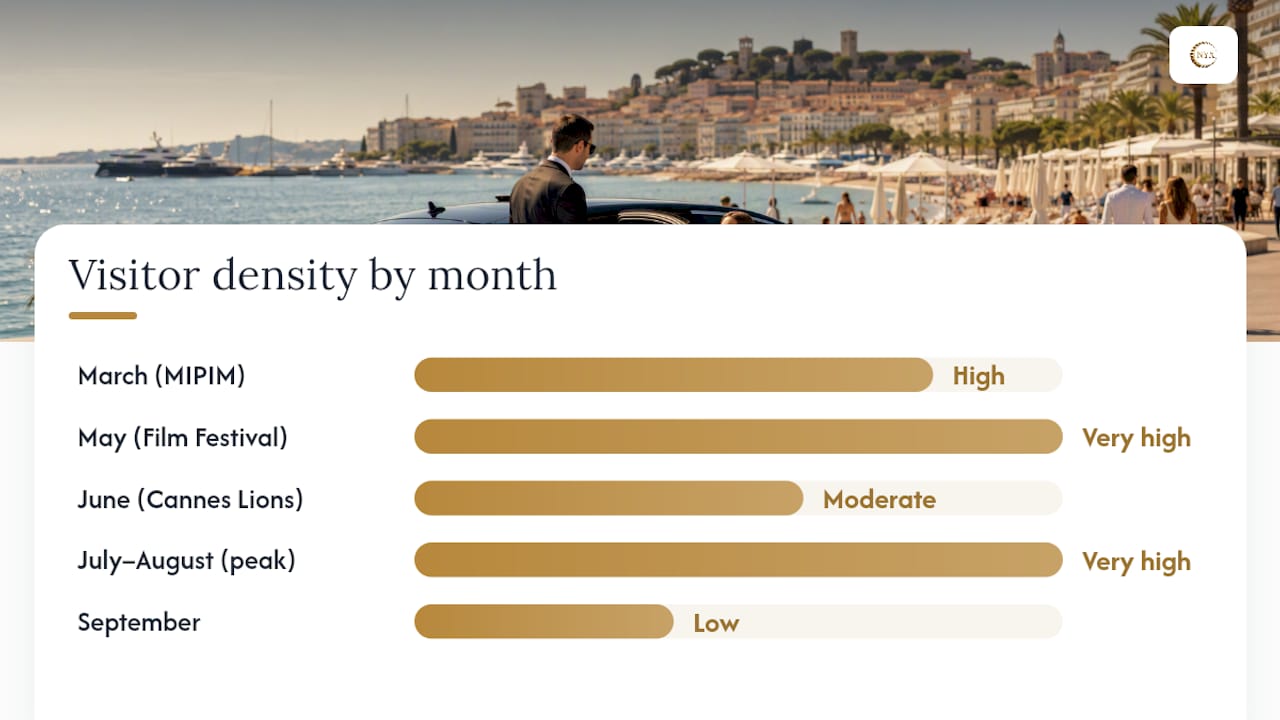
July and August remain the busiest purely leisure months, with beaches at their fullest between 11:00 and 16:00 on weekends. Arriving before 10:00 on any given day, even in peak season, generally secures a better choice of row before the lunchtime rush claims what remains. September offers close to the same weather with noticeably thinner crowds, and Cannes Lions in June brings another business-travel bump concentrated around specific hotel-adjacent beaches rather than the whole Croisette.
Weekday visits consistently beat weekends for space, and the hour after lunch service ends, typically from around 14:30 onwards, tends to see a natural lull before the evening aperitivo crowd arrives.
Do any beaches run sunset parties or live music?
Several Croisette venues extend their offering well beyond the standard sunbed and lunch format once the calendar turns towards summer evenings. La Mandala and So Beach are the two most consistently associated with evening entertainment, running DJ sets and sunset gatherings that draw a crowd distinct from their daytime sunbed clientele. Bijou Plage extends its own day into evening dining, with an aperitivo slot running from 17:00 to 19:00 ahead of dinner service until 22:30, and last reservations accepted at 22:30.
Larger concessions occasionally host branded events tied to the festival calendar, particularly during Cannes Lions and the Film Festival, when beaches double as venues for industry parties rather than purely public bookings. These events typically require a separate reservation from a standard day pass, and availability during festival weeks can close out entirely if a private brand event has taken over the venue for the evening.
Anyone hoping to combine a beach day with an evening event should confirm directly with the venue whether the daytime and evening offerings run as one continuous booking or two separate reservations, since this varies by beach and by season.
Every established Cannes private beach maintains its own booking channel, and going direct is usually faster than working through a third-party platform. Bijou Plage lists full contact details and an online reservation system on its official site, covering lunch, aperitivo and dinner slots. La Plage du Festival operates its own reservations page and, as one of the Croisette’s largest concessions, recommends booking ahead for anything during high season.
Ciro’s, as part of Le Majestic, runs its beach bookings through the Hôtels Barrière reservation system, which also covers its restaurant service. CBEACH publishes hours and contact details on its own venue page, while Rado Plage’s official site covers its Croisette pontoon and classic beach club service.
For venues without a dedicated online booking system, a phone call to the beach directly remains the standard route, and hotel concierge desks along the Croisette maintain relationships with most of the major concessions, which can occasionally unlock availability not shown publicly. Whichever channel you use, confirming the exact row, time and cancellation terms in writing, even by text or email, avoids disputes on arrival during a busy festival week.
Why the smartest beach plan starts with the journey, not the sunbed
Most guides to Cannes beaches treat the booking as the hard part and the arrival as an afterthought. That gets the priority backwards during any event week. A confirmed front-row reservation at La Plage du Festival is worth nothing if you are still stuck in traffic on the Boulevard Carnot when your slot opens, and Croisette parking during the Film Festival or MIPIM disappears faster than most sunbed inventory does.
The conventional advice, book early and hope for good traffic, ignores that traffic during these weeks is entirely predictable, not random. Every operator quoted here, from Bijou Plage to Ciro’s, expects congestion and plans reservation slots around it. Visitors rarely do the same with their own transport.
My honest read: fix your arrival method before you fix your beach choice, not after. Decide how you are getting there with the same certainty you apply to the sunbed booking, and the rest of the day sorts itself out far more easily than most guides suggest.
— Dany
Book your Cannes beach transfer with a fixed 2026 rate
Booking the beach is only half the plan. Transponyx handles the other half: a fixed-rate Mercedes-Benz chauffeur that gets you from Nice NCE, your hotel or Monaco to the Croisette without the parking search or the taxi-rank wait that eats into festival mornings.
The Nice NCE to Cannes run takes roughly 30 to 40 minutes outside peak congestion, and Transponyx quotes it as a fixed price confirmed at booking, with no surge pricing during the Film Festival, MIPIM or Cannes Lions. A couple heading to Bijou Plage travels comfortably in a Standard Sedan; a family of five with beach gear for a day at Ciro’s or La Plage du Festival generally fits a Van 7 pax; larger groups heading to a beachside industry event during MIPCOM can take a Van 8 pax. Every booking includes 60 minutes of free airport waiting time, flight monitoring, and a bilingual licensed driver, with child seats available on request.
Reserve as early as possible for festival dates through Transponyx’s Nice airport transfer page, by phone on +33 6 10 30 71 84, or by comparing options on the luxury chauffeur services guide before your next Cannes booking.
Sources
FAQ
What are the typical prices for private beaches in Cannes?
Prices vary by row and season, with front-row sunbeds costing noticeably more than second-row spots, and operators typically include a mattress, umbrella and towel in the base fee. Exact rates are set by each venue and are not published as a single fixed tariff across the Croisette.
How much does it cost to privatise a private beach?
Full-beach privatisation for events or shoots requires a separate negotiation with the venue and typically carries a minimum spend well above a standard day pass, with several weeks’ notice recommended in season.
How do I book a private beach in France?
Book directly through the venue’s own site or by phone, such as Bijou Plage’s online system or La Plage du Festival’s reservations page, or ask your hotel concierge, since many properties hold direct relationships with Croisette beaches.
What does a sunbed cost at a Cannes private beach like Bijou Plage?
Individual sunbed prices are set and updated by each venue rather than published as a single Croisette-wide figure; contact Bijou Plage directly for its current day-pass rate before booking.
Is it better to book a chauffeur than rely on taxis for beach access during festivals?
A pre-booked, fixed-rate chauffeur removes the two biggest festival-week risks, unpredictable traffic and vanished parking, which is why Transponyx confirms fares at booking with no surge pricing, unlike metered taxis competing for the same congested drop-off points.