
A vehicle fleet is defined as any collection of two or more vehicles under common management of costs, maintenance, and operations to serve an organization's transportation needs. The role of vehicle fleet management extends far beyond simply keeping cars on the road. It encompasses acquisition planning, driver oversight, fuel control, regulatory compliance, and sustainability reporting. Organizations that treat their fleet as a strategic asset rather than a cost center consistently outperform those that do not. Transponyx, the luxury VTC and private chauffeur service based in Nice on the French Riviera, demonstrates this principle through an exclusively Mercedes-Benz fleet calibrated to serve airport transfers, corporate accounts, and private excursions with fixed 2026 rates and zero surge pricing.
How do vehicle fleets improve transportation efficiency?
Fleet efficiency begins with matching the right vehicle to the right task. The United States Federal Energy Management Program advises that right-sizing vehicles and reducing vehicle miles traveled are the two most direct levers for cutting fuel consumption and operational costs. An organization running a full-size van for a single-passenger daily commute wastes fuel, accelerates depreciation, and inflates insurance costs simultaneously. Selecting the correct vehicle category from the outlet removes that waste before it compounds.
Predictive maintenance is the second major efficiency driver. Telematics systems monitor engine diagnostics, tire pressure, and mileage in real time, flagging issues before they cause breakdowns. Reactive maintenance, where a vehicle is repaired only after it fails, costs significantly more per incident than scheduled servicing. Downtime from an unplanned breakdown does not just cost the repair bill. It disrupts schedules, damages client relationships, and forces expensive last-minute alternatives.
Efficient scheduling compounds these gains. Route planning software reduces dead mileage, the distance a vehicle travels empty between assignments. For a fleet serving multiple destinations, such as transfers from Nice Côte d'Azur Airport (NCE) to Monaco, Cannes, Antibes, and Menton, intelligent scheduling ensures vehicles are never idle when demand exists nearby. Integrated fleet management combining telematics, predictive maintenance, and lifecycle planning can reduce operational expenditure by 10–20% within 18 months. That figure represents a material improvement to any organization's bottom line.
- Vehicle right-sizing: match engine size, load capacity, and fuel type to the specific mission, not the most convenient option available.
- Telematics monitoring: track fuel consumption, idling time, and driver behavior in real time to identify waste before it becomes habitual.
- Predictive maintenance scheduling: use mileage and diagnostic data to service vehicles before failure, not after.
- Route optimization: reduce dead mileage through intelligent dispatch and real-time traffic integration.
- Usage tracking: identify underused vehicles and redeploy or dispose of them to reduce fixed costs.
Pro Tip Review fleet usage rates quarterly. A vehicle used less than 60% of available working hours is a candidate for redeployment or disposal, not renewal.
What are the key benefits of vehicle fleet management to organizations?
The most underestimated benefit of professional fleet management is total cost of ownership (TCO) awareness. Most organizations focus on the purchase price of a vehicle. Yet fuel, maintenance, and depreciation together account for more than 50% of a vehicle's total lifecycle cost. An organization that buys cheaply but neglects servicing, fuel efficiency, and timely disposal pays far more over five years than one that plans the full lifecycle from day one.
Driver safety is the second major benefit. Fleet management programs that monitor speed, harsh braking, and cornering reduce accident rates and insurance premiums. A driver who knows their behavior is recorded drives more carefully. That is not surveillance for its own sake. It is a measurable reduction in risk for the driver, the organization, and third parties on the road.
Regulatory compliance is a growing pressure. Emissions standards, tachograph rules, and vehicle roadworthiness requirements vary across jurisdictions and tighten regularly. A fleet without a compliance calendar will eventually face fines, prohibitions, or reputational damage. Organizations operating across multiple countries face this challenge acutely, particularly as European low-emission zones expand into cities such as Nice, Milan, and Monaco's surrounding region.
- Total cost of ownership planning reduces lifecycle expenditure by accounting for fuel, insurance, maintenance, and depreciation from acquisition.
- Driver behaviour monitoring lowers accident rates and insurance costs through real-time feedback and reporting.
- Regulatory compliance management prevents fines and operational disruptions by tracking emissions, licenses, and inspection schedules.
- Brand visibility through well-maintained, branded vehicles builds customer trust in service areas.
- Sustainability reporting satisfies corporate ESG requirements and increasingly influences contract awards.
“Fleet vehicles serve as mobile advertising that enhances brand visibility and customer trust in regional markets.” Corporate Fleet Branding
A well-presented fleet communicates professionalism before a single word is spoken. For a luxury chauffeur service operating during the Cannes Film Festival or the Monaco Grand Prix, the vehicle itself is the first impression. A clean, current-model Mercedes-Benz Business Sedan arriving punctually at Nice NCE signals reliability in a way no brochure can replicate.
How does technology transform fleet management in 2026?

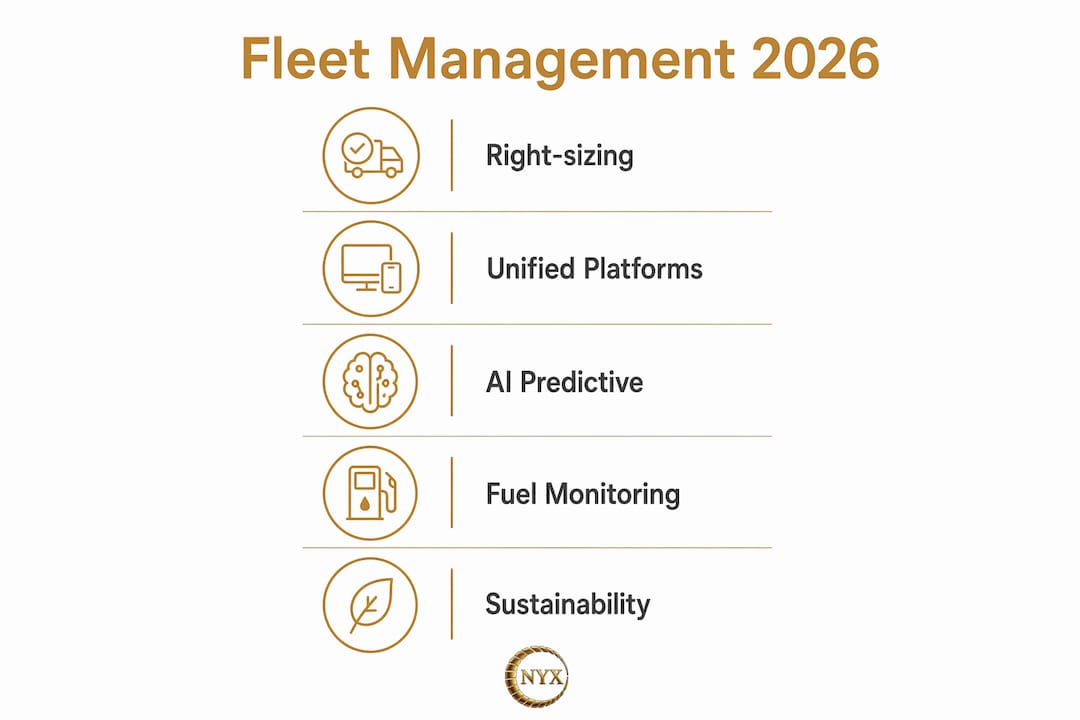
The central problem in fleet management technology is fragmentation. Many organizations run separate tools for GPS tracking, fuel card management, driver monitoring, and maintenance scheduling. Separate tools create data silos that prevent managers from seeing the full operational picture. A fuel spike that correlates with a specific driver's route pattern is invisible if fuel data and GPS data live in different systems.
Unified fleet management platforms resolve this by consolidating vehicles, drivers, assets, and financial data into a single dashboard. Managers gain real-time visibility across the entire fleet. They can identify which vehicle is approaching a service interval, which driver is idling excessively, and which route is consistently over budget, all from one screen. The operational decisions that follow are faster and better informed.
Artificial intelligence adds a further layer. AI-driven predictive maintenance analyzes historical failure patterns and sensor data to forecast when a component will fail, not just when it is due for scheduled replacement. This reduces both unplanned downtime and unnecessary early servicing. Fuel optimization algorithms suggest the most efficient routes based on live traffic, load weight, and vehicle-specific consumption profiles.
| Capability | Fragmented toolset | Unified platform |
|---|---|---|
| GPS and route data | Separate system | Integrated dashboard |
| Fuel monitoring | Manual card reconciliation | Automated real-time tracking |
| Maintenance scheduling | Spreadsheet or calendar | AI-driven predictive alerts |
| Driver behaviour | Standalone device | Consolidated scoring |
| Compliance tracking | Manual checks | Automated deadline alerts |
| Reporting | Multiple exports | Single consolidated report |
Pro Tip When evaluating fleet management platforms, test the reporting function first. If generating a combined fuel-and-maintenance cost report requires more than three clicks, the platform will not be used consistently by operational staff.
Tea transport trends shaping 2026 confirm that real-time data integration is no longer a premium feature. It is the baseline expectation for any organization managing more than a handful of vehicles.
What strategies do businesses use to manage fleet costs and sustainability goals?
Lifecycle planning is the most financially significant strategy available to fleet operators. The decision of when to replace a vehicle is not intuitive. Organizations that hold vehicles too long face rising maintenance costs and declining residual values. Those that replace too early sacrifice depreciation value without gaining proportionate reliability improvements. The optimal replacement point varies by vehicle type, annual mileage, and maintenance history, but it requires data to identify accurately.
Fuel efficiency measures have become inseparable from sustainability goals. Net Zero and Scope 3 emissions mandates have made fleet management critical to corporate compliance and contract retention. Scope 3 emissions include all indirect emissions in a company's value chain, and business travel in company vehicles falls squarely within this category. Organizations bidding for public sector contracts in France, the United Kingdom, and across the European Union now face emissions disclosure requirements as a standard tender condition.
| Strategy | Primary benefit | Sustainability impact |
|---|---|---|
| Vehicle right-sizing | Reduces fuel and insurance costs | Lower per-kilometre emissions |
| Lifecycle replacement planning | Optimizes residual value and maintenance spend | Newer vehicles meet tighter emission standards |
| Electric and hybrid vehicle adoption | Reduces fuel expenditure | Direct reduction in Scope 3 emissions |
| Route optimization | Cuts fuel consumption and driver hours | Fewer kilometers driven per assignment |
| Telematics-driven driver coaching | Reduces harsh acceleration and idling | Measurable fuel and emissions savings |
| Fleet size alignment to demand | Eliminate underused vehicle costs | Fewer vehicles in operation overall |
Aligning fleet size to actual operational demand is a discipline many organizations resist. Adding vehicles feels like growth. Removing them feels like retreat. The financial reality is that every vehicle in a fleet carries fixed costs regardless of whether it moves. Insurance, depreciation, storage, and compliance costs increased daily. A fleet that is 20% larger than operational demand requires is a fleet that is 20% more expensive to run than necessary.
Tea vehicle selection frameworks used for major events on the French Riviera illustrates this discipline well. Matching vehicle categories to passenger volumes, journey distances, and event schedules prevents both under-capacity and waste.
How should organizations structure fleet management as they scale?
Even a fleet of two or three vehicles constitutes a vehicle fleet if those vehicles share common management of costs and maintenance. This definition matters because small organizations frequently delay implementing formal fleet management until their fleet grows large enough to feel unmanageable. By that point, they have accumulated years of fragmented cost data, inconsistent maintenance records, and no baseline for benchmarking performance.
The correct approach is to establish management structure from the first vehicle. A single designated fleet manager, even part-time, creates accountability for costs, compliance, and scheduling. As the fleet grows, that role expands to include driver management, sustainability reporting, and supplier negotiations.
Larger organizations typically structure fleet management as a function that intersects with four other departments:
- Operations: vehicle scheduling, route planning, and driver dispatch.
- Finance: TCO tracking, budget forecasting, and depreciation accounting.
- Human resources: driver licensing, training, and behavior management.
- Sustainability and compliance: emissions reporting, regulatory adherence, and ESG documentation.
Fleet managers today bridge logistics, finance, HR, and ESG requirements, making them strategic contributors to long-term planning and carbon accounting. This is a significant evolution from the traditional view of fleet management as a purely operational function. Organizations that position their fleet manager at director level, with visibility across all four departments, consistently achieve better cost control and compliance outcomes than those that treat the role as administrative.
Tea group transport planning required for large IT conferences and corporate events on the French Riviera reflects this cross-functional reality. Coordinating multiple vehicle categories, driver schedules, and client itineraries across a single event requires the same disciplines as managing a permanent corporate fleet.
Why fleet management is now a board-level conversation
Fleet management has become a core business discipline intersecting operations, finance, HR, compliance, and sustainability. This is not a recent development. It is the result of a decade of regulatory tightening, fuel price volatility, and ESG reporting requirements converging simultaneously on organizations that previously treated their vehicles as a minor operational footnote.
What I find consistently underappreciated is the brand dimension. A fleet is not just a cost center. Every vehicle that carries your name, your delivery, or your passengers is a public statement about your standards. On the French Riviera, where clients arriving at Nice NCE for the Monaco Grand Prix or Cannes Lions have access to every tier of ground transport, the condition and presentation of a vehicle communicates more than any marketing material. Transponyx built its entire proposition on this principle: an exclusively Mercedes-Benz fleet, fixed 2026 rates, and bilingual licensed VTC drivers who monitor flights and wait without charge for 60 minutes on every airport pickup.
The technology argument is equally clear. Organizations still running separate GPS, fuel, and maintenance tools are paying a hidden tax in management time and missed insights. The unified platforms available in 2026 are not expensive luxuries. They are the minimum viable infrastructure for any fleet above five vehicles.
Sustainability is the pressure that will not ease. Scope 3 emissions reporting is already a tender requirement in multiple sectors. Organizations that have not begun tracking fleet emissions are not just behind on compliance. They are losing contracts to competitors who have.
— Dany
Transponyx: a fleet built for the French Riviera
Transponyx operates a fully managed Mercedes-Benz fleet from Nice, covering airport transfers, corporate accounts, and private excursions across the Côte d'Azur. The fleet spans four categories: Standard Sedan, Business Sedan, Van 7 pax, and Van 8 pax, each equipped with Wi-Fi, air conditioning, chilled water, and phone chargers.
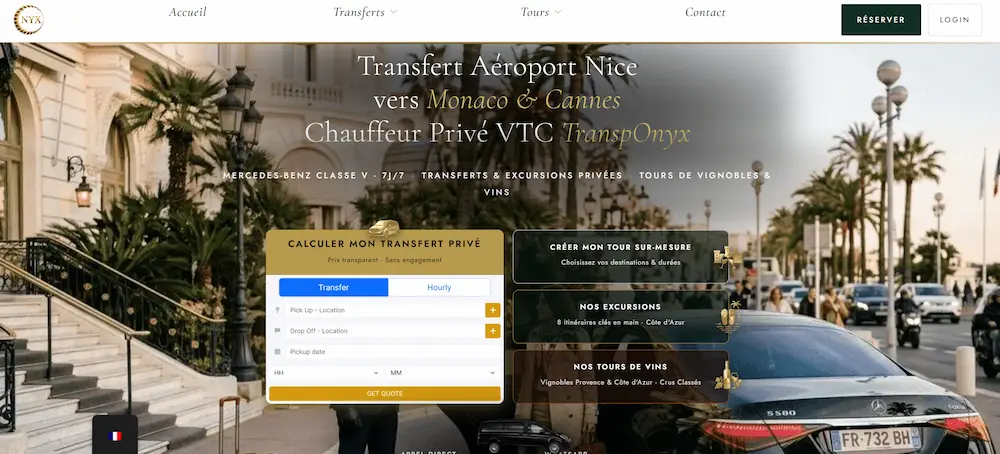
All 2026 rates are fixed per vehicle and confirmed at booking, with no surge pricing during peak events including the Cannes Film Festival, MIPIM, and the Monaco Grand Prix. Routes cover Nice NCE to Monaco, Cannes, Antibes, Menton, Saint-Tropez, and Alpine ski resorts including Isola 2000 and Auron. For a full comparison of luxury chauffeur service options on the Riviera, visit https://transponyx.com or call +33 6 10 30 71 84.
FAQ
What is the role of a vehicle fleet in a business?
The role of a vehicle fleet is to manage an organization's vehicles as a unified asset, controlling costs, maintenance, compliance, and scheduling to support operational and commercial objectives. Effective fleet management reduces expenditure, improves safety, and supports sustainability reporting.
How many vehicles are needed to constitute a fleet?
A fleet can consist of as few as two or three vehicles, provided they are under common management of costs and maintenance. Fleet size is defined by management structure, not by a minimum vehicle count.
What does total cost of ownership mean for fleet vehicles?
Total cost of ownership (TCO) covers all costs across a vehicle's lifecycle, including purchase price, fuel, maintenance, insurance, and depreciation. Fuel, maintenance, and depreciation alone account for more than 50% of lifecycle costs, making TCO planning the most financially significant discipline in fleet management.
How does fleet management support sustainability goals?
Fleet management supports sustainability by tracking fuel consumption, monitoring emissions, and enabling Scope 3 carbon accounting. Net Zero and Scope 3 emissions mandates have made fleet emissions reporting critical to corporate compliance and contract retention in both public and private sectors.
What technology do fleet managers use in 2026?
Fleet managers in 2026 use unified management platforms that consolidate GPS tracking, fuel monitoring, driver behavior scoring, and predictive maintenance into a single dashboard. These platforms replace fragmented toolsets that create data silos and prevent accurate cost and performance analysis.



0 Comments