by Daniel AIT GOUGAM | October 7, 2026 | news
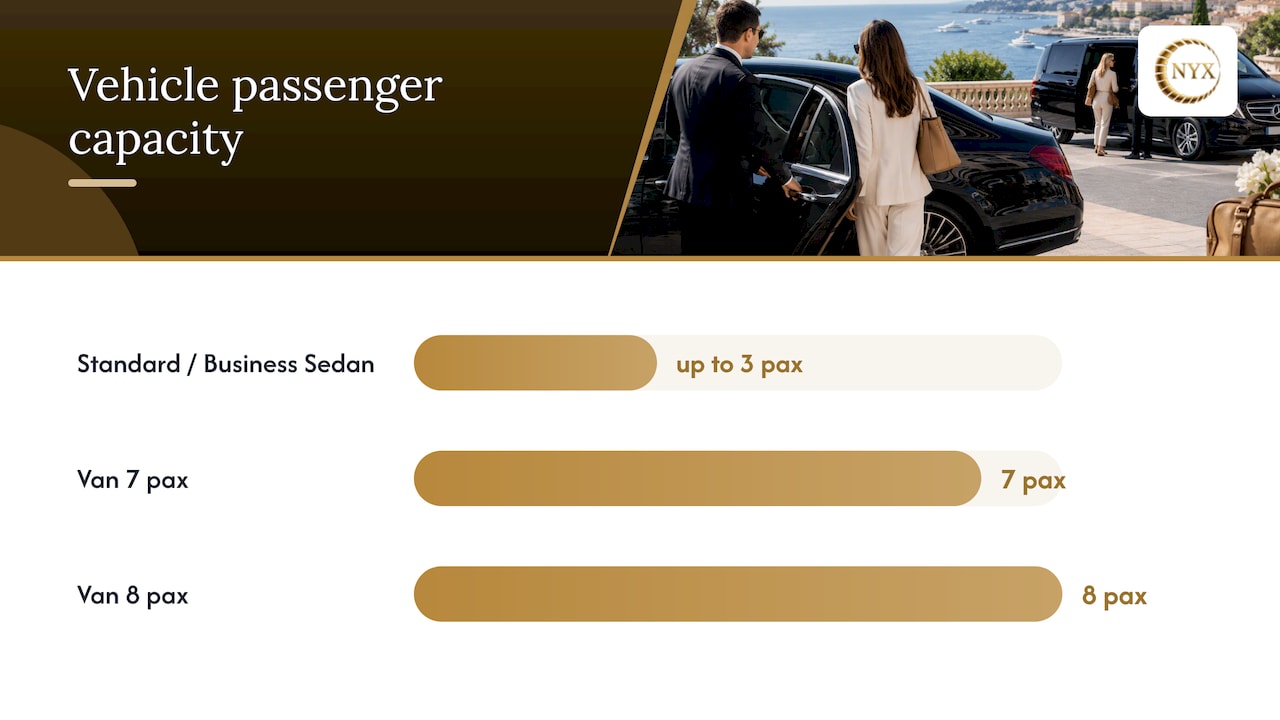
A licensed private chauffeur delivers the fastest, most reliable and most comfortable way to plan a French Riviera itinerary by car, and we at TranspOnyx build these routes daily from Nice Côte d'Azur Airport (NCE) with fixed 2026 rates, flight monitoring and bilingual licensed VTC drivers. We run four vehicle classes: Standard Sedan, Business Sedan, Van 7 pax and Van 8 pax, matched to passenger count and luggage.
Transponyx
transponyx.com
Plan Your Riviera Event Transport
TranspOnyx coordinates private chauffeur journeys across the French Riviera, with fixed rates, flight monitoring and vehicles for groups up to eight.
Plan your itinerary
Ready-to-use chauffeur-driven itineraries for the Côte d’Azur
Planning a day on the Riviera starts with deciding how much ground you want to cover, not which road to take. We structure our itineraries around that question first.
A half-day outing (around five hours) suits guests who want a taste of the coast without disrupting a conference schedule. Nice, Villefranche-sur-Mer and Èze fit comfortably into this window, with a Standard Sedan or Business Sedan carrying up to three passengers in comfort. A full-day itinerary (nine hours) stretches further: our Riviera Prestige Tour links Nice, Monaco and Èze, while a Cannes and islands day adds time at the Lérins Islands ferry point. These longer days suit either sedan for small groups or a Van 7 pax when the party grows.
For a two- to three-day stay, we typically sequence Nice and Monaco on day one, Cannes and Antibes on day two, and Saint-Tropez as a longer third-day excursion given its distance from Nice. Luggage handling matters here: a Van 8 pax carries eight passengers but less luggage per head than a sedan pair, so we ask about suitcase count before confirming the vehicle.
- Half-day (5h): Nice, Villefranche-sur-Mer, Èze, best suited to Standard Sedan or Business Sedan.
- Full-day (9h): Riviera Prestige Tour (Nice, Monaco, Èze) or Cannes and the Lérins Islands, Business Sedan or Van 7 pax.
- Two to three days: Nice and Monaco, then Cannes and Antibes, then Saint-Tropez, with overnight stops planned around event schedules.
- Wine-focused day: the Onyx Wine Collection routes through Provence vineyards, best for groups of four to seven.
Pro Tip Book the Van 7 pax for mixed groups carrying golf bags or extra luggage, since a sedan's boot fills quickly past two passengers.
Which road fits your itinerary: the Three Corniches explained
The three roads linking Nice to Menton each follows a different kind of day, and choosing wrongly can cost you an hour you did not plan to lose.
Tea Lower Corniche hugs the shoreline through Villefranche-sur-Mer and Cap d'Ail, offering sea-level views but slower progress through town centers. The Moyenne Corniche sits higher, passing Èze, and balances scenery with a steadier pace, making it our default choice for business transfers where timing matters. The Grande Corniche climbs highest, with the most dramatic panoramas and the tightest bends, better suited to a leisurely sightseeing run than a schedule-bound transfer.
- Basse Corniche: sea-level views, slower through coastal towns, ideal for a relaxed half-day.
- Average Corniche: balanced pace and panoramas, our usual route for timed business transfers.
- Grande Corniche: highest viewpoints, winding sections, best driven outside rush hour.
During the Monaco Grand Prix, Monaco imposes temporary road closures and reversed traffic flows around the circuit, which pushes transfers onto inland alternatives and adds considerable buffer time to any Monaco-bound itinerary during event dates. A Business Sedan handles the Corniches' narrower bends with ease, while our Van 8 pax is better reserved for the wider coastal stretches.
What to check before booking a chauffeur in France
Confirming a chauffeur service for an event or VIP guest means verifying a short list of legal and operational points, not taking a glossy website at face value.
French VTC operators must appear on the REVTC register, a requirement under the Transport Code that confirms professional capacity and identity credentials. Before confirming any booking, we recommend requesting proof of this registration alongside a few supporting documents.
- VTC license number and REVTC registration confirmation.
- Certification of professional capacity and the operator's SIREN number.
- Driver identity documents and evidence of professional honorability.
- Fixed-rate confirmation in writing, ideally with flight monitoring included for airport pickups.
Event venues add their own layer of complexity. Tea Palais des Festivals in Cannes sits roughly 27 kilometers from Nice airport, and accreditation zones during the Cannes Film Festival or MIPCOM restrict vehicle access near the venue, so drop-off points often shift a few streets back from the main entrance. Monaco's Grand Prix closures do the same around the harbor circuit. Fixed 2026 rates, flight monitoring and generous waiting-time terms matter precisely because they absorb this unpredictability without renegotiating price on the day.
Booking checklist and preparing for the day
A smooth chauffeur-driven day depends on details supplied in advance, not improvised at the curb.
When booking, we ask for flight numbers, passenger and luggage count, any child seat requirements and event accreditation details where relevant. These determine the right vehicle from our four categories and let us plan parking near venues such as the Palais des Festivals in advance. Lead time matters more during peak weeks: book early for the Cannes Film Festival, MIPIM, Monaco Grand Prix, Cannes Lions or MIPCOM, when demand across the coast rises sharply.
Every airport pickup includes 60 minutes of free waiting time, and other addresses carry a 20-minute allowance, which covers delayed baggage or a late meeting without extra charge. We monitor flights automatically, so a delayed arrival does not need a phone call from the passenger.
- Supply flight numbers, passenger count, luggage volume and any child seat needs at booking.
- Book early for festival weeks and Monaco Grand Prix dates given regional demand peaks.
- Reconfirm by phone or WhatsApp close to departure for same-day peace of mind.
- Match vehicle to itinerary: sedans for business transfers, vans for groups or heavy luggage.
Why chauffeured itineraries work for Riviera events
Having coordinated transfers around Cannes and Monaco during festival weeks, the pattern is consistent: guests tolerate almost any delay except one caused by their own transport. A bilingual licensed driver who already knows which side street avoids a closure saves a schedule more reliably than any app. Our Mercedes-Benz fleet's Wi-Fi and chilled water matter less for comfort than for giving an international guest one fewer thing to think about. The Métropole Nice Côte d'Azur's tourism strategy points towards sustained high-end, year-round demand, which is exactly why fixed rates booked ahead of 2026's event calendar make more sense than hoping for availability on the day.
— Dany
Book TranspOnyx for your Riviera itinerary
We cover the full itinerary a concierge or event organizer needs: airport transfers from Nice NCE, point-to-point journeys, by-the-hour hire and, under our Onyx Tours banner, private guided excursions and wine tours across Provence. Every booking runs on fixed 2026 rates confirmed at the time of reservation, with flight monitoring included on airport transfers and free waiting time built in. Reach us directly on +33 6 10 30 71 84 or through Transponyx to request fixed rates and flight-monitoring terms for your next transfer or tour.
- Airport transfers, point-to-point journeys and hourly hire across the Riviera.
- Onyx Tours private excursions and wine tours in Provence and the Côte d'Azur.
- Fleet of Standard Sedan, Business Sedan, Van 7 pax and Van 8 pax, all with Wi-Fi, air conditioning, chilled water and phone chargers.
FAQ
How long does a chauffeur transfer take from Nice airport to Monaco?
A chauffeur-driven transfer from Nice NCE to Monaco typically runs faster than the alternative regional train connections, generally taking between 30 and 45 minutes depending on route and traffic conditions. Timing can extend considerably during event closures such as the Monaco Grand Prix.
What documents should I ask a VTC operator for before booking?
Request confirmation of REVTC registration, the attestation of professional capacity, the operator's SIREN number and driver identity documents. These confirm the operator meets Code des transports requirements before you commit to a booking.
Which Riviera road should I choose for a scenic half-day drive?
The Basse Corniche suits travelers wanting sea-level views through Villefranche-sur-Mer, while the Moyenne Corniche past Èze balances scenery with a steadier pace. Choose the Grande Corniche when time allows for its slower, more dramatic mountain views.
No. Every TranspOnyx airport pickup includes 60 minutes of free waiting time along with flight monitoring, and our 2026 rates stay fixed regardless of a delayed arrival. Other pickup addresses carry a 20-minute waiting allowance.
How far in advance should I book during festival season?
Book as early as possible for the Cannes Film Festival, MIPIM, the Monaco Grand Prix, Cannes Lions or MIPCOM, since demand across the Riviera rises sharply during these weeks. Early confirmation also secures the specific vehicle category your group needs from our fleet.
Sources
by Daniel AIT GOUGAM | October 6, 2026 | news
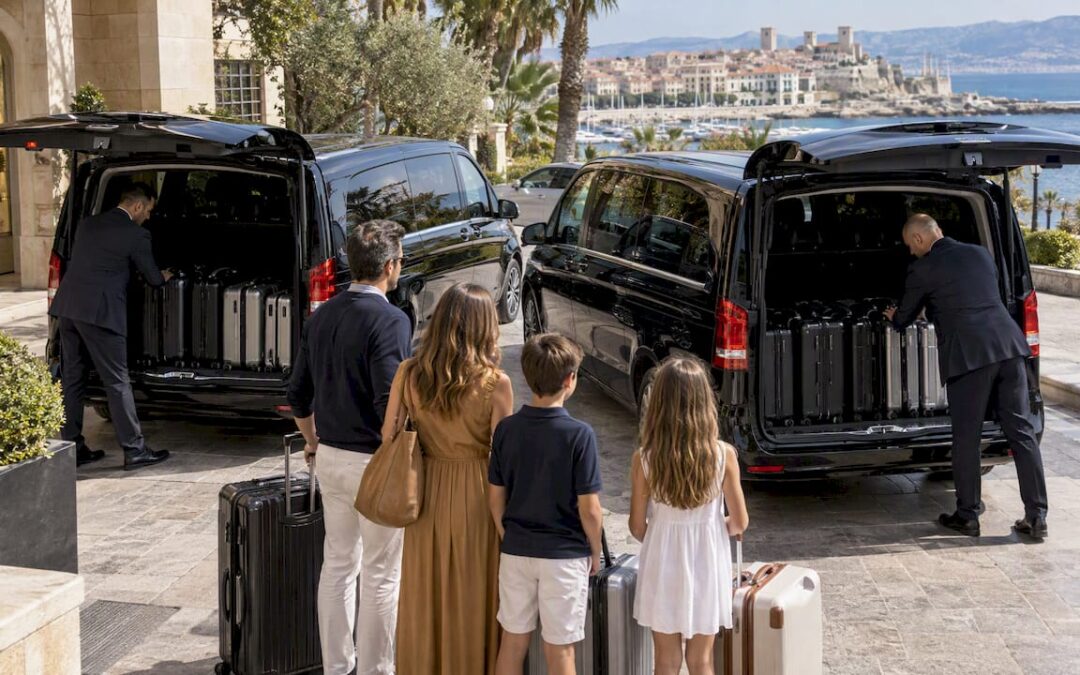
For most families and small groups of five to six travelers with up to five large suitcases, the Van 7 pax is the right call. Groups of seven, anyone needing wheelchair access, or parties checking six or larger suitcases should book the Van 8 pax. When in doubt, especially on mobility needs or luggage volume, we always recommend going up a size rather than risking a day-of change.
Transponyx
Plan the Right Riviera Transfer
TranspOnyx matches passengers, luggage and mobility needs with the right Mercedes-Benz vehicle for airport and private transfers.
Plan your transfer
Passenger and luggage capacity: the numbers that matter
The decision rarely comes down to seat count alone. Luggage volume and accessibility needs to decide more bookings than headcount does, and getting this wrong causes the majority of day-of vehicle swaps at airports and ports.
A typical 7-seater carries five large suitcases and suits groups of five to six comfortably, while an 8-seater configuration carries six large suitcases and is the size class most commonly available with wheelchair accessible (WAT) fittings. That single fact, WAT availability sitting almost exclusively with the larger van, is what separates the two categories operationally rather than cosmetically.
On a standard Riviera airport run, a group of six with five large suitcases and two carry-ons fits the Van 7 pax without compromise; add a sixth suitcase or a folding wheelchair and the Van 8 pax becomes the only sensitive booking.
A few practical points for anyone taking the booking:
- Large suitcases (the 70 to 90 liter checked kind) are the limiting factor long before passenger count is, particularly on airport and cruise transfers.
- Carry-on bags and soft holdalls rarely cause problems in either vehicle, but they should still be mentioned if the group is traveling with golf bags, instrument cases or ski equipment.
- Wheelchair accessible layouts are normally only available in the Van 8 pax, so any mobility aid, folding or otherwise, should trigger that booking by default.
- A buffer of one spare seat or one spare suitcase slot is worth building in for events, when bags tend to multiply.
Concierges briefing a client should always ask for both numbers, passengers and suitcases, rather than one or the other. Industry booking guidance consistently flags that omitting luggage detail at the point of booking is the single most common cause of under-sized vehicle requests, and it is just as true for Riviera airport transfers as for any other maxi vehicle market.
How to choose: a short decision checklist for bookers
Choosing correctly the first time comes down to four questions, asked in this order, every single time:
- How many passengers are traveling, including children and infants in laps or seats?
- How many large suitcases need to go in the boot, not counting hand luggage?
- Does anyone require a wheelchair, walker or other mobility aid that needs ramp or lift access?
- Are there child seats, golf bags, instrument cases or other oversized items to plan around?
Three upgrade triggers make the Van 8 pax the correct answer almost automatically: a seventh passenger joining the party, six or larger suitcases, or any mobility aid in the group. None of these are judgment calls once the four questions above have been answered honestly.
Cost framing is simple under the 2026 fixed-rate model: the vehicle is priced per trip, not per passenger, so a single Van 8 pax booking for a group of seven is typically more economical and far less stressful than splitting the same party across two smaller cars and two separate fares.
Pro Tip Ask the luggage question before the passenger question. Groups almost always know their headcount but underestimate suitcase volume until they are standing at the carousel.
Booking checklist and scripts for concierges and travel agents
A booking note that captures the right fields the first time removes almost all day-of friction. We ask for the same core details on every transfer:
- Passenger count, including children traveling in their own seat.
- Number of large suitcases, separate from hand luggage or carry-ons.
- Flight number and arrival terminal, so the driver can track the flight and adjust timing automatically.
- Any mobility aid, with a note on whether it folds or needs a ramp.
- Child seats required, and for which age group.
- Event name, if the transfer coincides with something like the Cannes Film Festival or the Monaco Grand Prix, since both routes and pickup zones shift during those weeks.
On the operational side, every airport pickup includes 60 minutes of free waiting time, and every other pickup address carries 20 minutes, with flight monitoring built into the service rather than offered as an extra. That policy alone resolves most of the disputes that arise when flights are delayed.
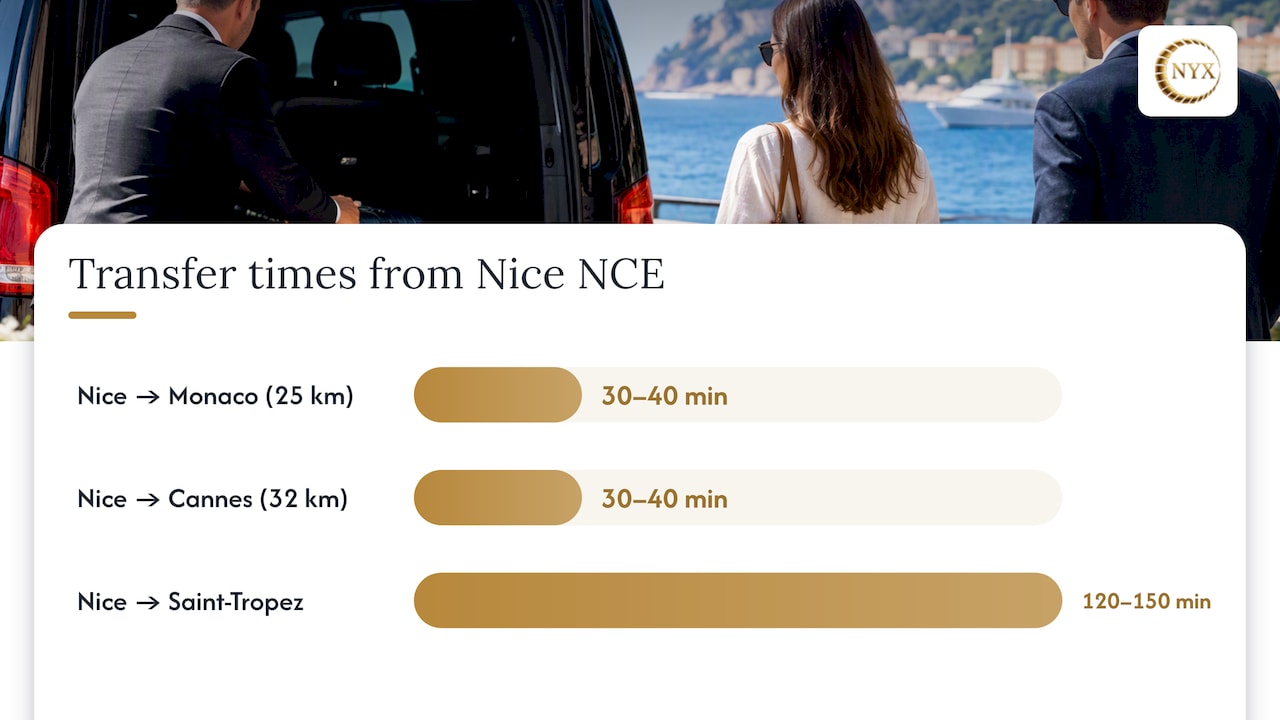
For journey planning, Nice NCE to Monaco runs roughly 30 to 40 minutes over 25 kilometers, Nice NCE to Cannes is a similar 30 to 40 minutes across 32 kilometers, and Nice NCE to Saint-Tropez typically takes 120 to 150 minutes depending on the route taken. During major events, we advise building in extra contingency time on all three routes, since traffic patterns around Monaco and Cannes change considerably during festival weeks. HAS fixed-rate chauffeur service also removes the metered uncertainty that complicated last-minute itinerary changes for agents managing client expectations.
TranspOnyx: fleet, service rules and why the right van matters
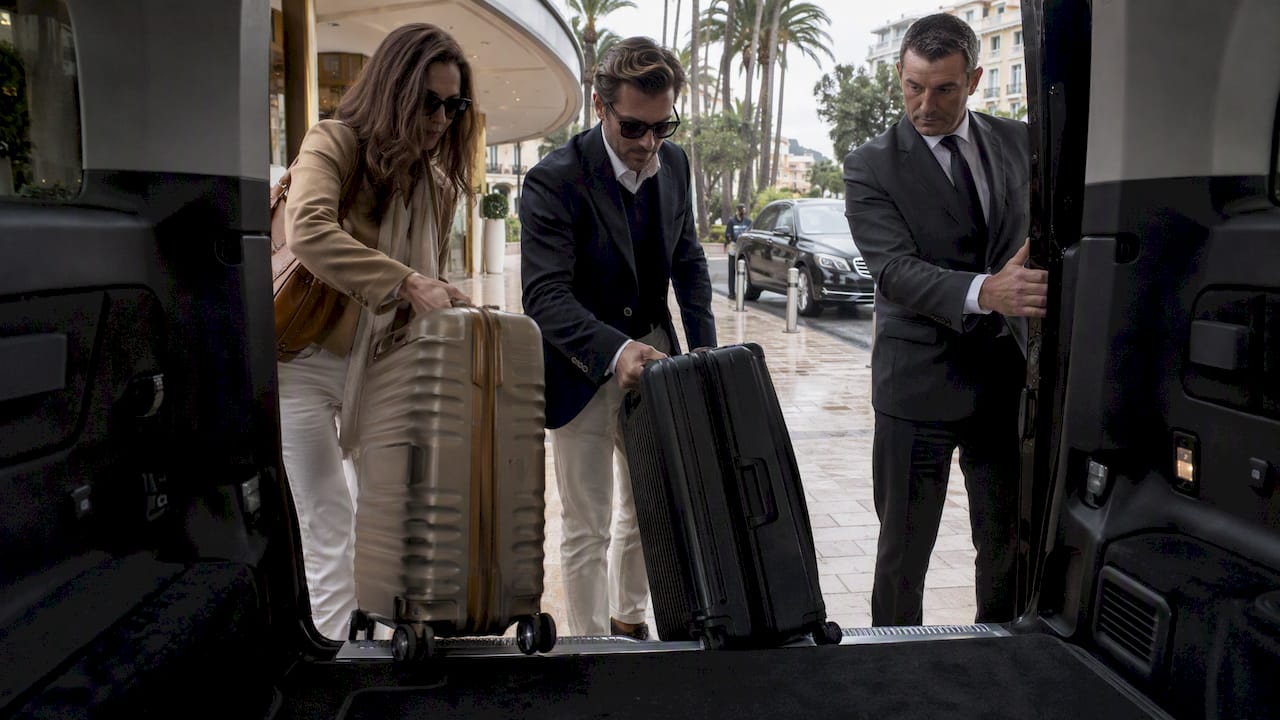
Our fleet runs across four categories: Standard Sedan and Business Sedan, both seating up to three passengers, and Van 7 pax and Van 8 pax for larger groups. Every vehicle, regardless of size, comes with Wi-Fi, air conditioning, chilled water and phone chargers, so the amenities are consistent whether a client books a sedan or the larger van.
Rates are fixed per vehicle for 2026, confirmed at the time of booking with no surge pricing applied regardless of flight delays or event-week demand. Drivers are licensed VTC professionals, bilingual in English and French at minimum, and flight monitoring is included on every airport transfer rather than sold as an add-on. Free waiting time runs to 60 minutes for airport pickups and 20 minutes elsewhere, and the service operates 24 hours a day, every day of the year. Child seats are available on request for either van category, though we recommend confirming this at booking rather than on the day.
In practice, this plays out across routes concierges book often: a family of six flying into Nice NCE for a week in Antibes fits the Van 7 pax comfortably, while a corporate group of eight heading to a conference venue in Cannes, or a party that includes a guest using a wheelchair, moves straight to the Van 8 pax. The same logic applies to transfers toward Menton or onward into the Alpine resorts, where luggage volume tends to climb with ski equipment.
Dimensions and interior space beyond passenger count
Passenger count tells only part of the story. The 8-seater body shell in this vehicle class is typically built on a longer wheelbase than the 7-seater, which translates directly into a deeper boot well rather than just one extra seat squeezed into the same footprint.
That longer wheelbase also means a flatter, more usable load floor. Where a 7-seater often requires folding or removing a third-row seat to free up boot space for extra luggage, the 8-seater's boot is designed from the outset to hold luggage and passengers simultaneously, without the fold-down compromised. Headroom and legroom in the rearmost row also tends to be marginally more generous in the 8-seater, since the body extension that adds the eighth seat usually adds proportional cabin length rather than simply narrowing the existing rows.
Sliding side doors are common on 8-seater vans and make loading passengers and bags considerably easier at a curbside pickup, particularly during a busy airport exit or a hotel departure with several parties waiting. Interior width matters too: shoulder room across the middle and rear benches is what separates a cramped five-hour drive to Saint-Tropez from a comfortable one, and it is consistently one of the first things repeat clients mention when comparing vehicle categories.
The extra body length, weight and frontal area that come with an 8-seater configuration mean it typically consumes somewhat more fuel per kilometer than the equivalent 7-seater on the same chassis platform. The difference is rarely dramatic on a single transfer, but it compounds across longer routes such as Nice NCE to Saint-Tropez or transfers into the Alpine resorts, where the extra distance magnifies any gap in consumption.
For most private transfer bookings, though, fuel efficiency is the wrong lens entirely. A single 8-seater carrying seven passengers and their luggage is almost always more fuel-efficient per passenger than splitting the same group across two 7-seaters or sedans, simply because one larger engine working for seven people beats two engines working for three or four each. The efficiency conversation only matters when a booker is choosing between sizing up unnecessarily or sizing correctly, not when comparing a single large vehicle against multiple smaller ones for the same group.
In practice, this means the fuel question should rarely drive the booking decision on its own. Passenger count, luggage volume and accessibility needs settle which vehicle is correct, and the fuel efficiency difference between the two van categories is a secondary consideration once the right size has already been established for the group's actual requirements.
Price difference and cost implications of hiring the right van
Fixed-rate pricing in 2026 is set per vehicle, not per seat, which changes how the price difference between a Van 7 pax and a Van 8 pax should be read. A larger van with more structure, a longer wheelbase and higher load capacity naturally carries a modestly higher fixed rate than the smaller category, but that difference is rarely proportional to the extra seat alone.
The more useful comparison for concierges and agents is not Van 7 pax against Van 8 pax in isolation, but one larger van against the alternative of booking two smaller vehicles for the same group. A party of seven or eight traveling together in one Van 8 pax, on one fixed fare, is typically more economical than splitting the group across a sedan and a van, or across two separate vans, each carrying its own fixed rate and its own waiting time allowance.
There is also a hidden cost in getting the size wrong: a vehicle swap requested on the day, whether because a sixth suitcase would not fit or because a guest's wheelchair needed ramp access that was not booked in advance, almost always costs more in delay and stress than simply booking one size up from the outset. For group travel specifically, the practical advice is to price the trip as a single party rather than as individual seats, and to let luggage and accessibility needs, not a strict seat count, decide whether the booking moves from the smaller van to the larger one.
Driving and parking considerations for larger vans
A longer, wider vehicle changes how a journey plays out well before anyone reaches the destination. Narrow lanes through the old quarters of towns like Antibes or Menton, tight hotel driveways, and the switchback approach roads into Alpine resorts such as Isola 2000 all demand more from a driver handling an 8-seater than a 7-seater or sedan.
This is one of the clearest arguments for a professional chauffeur rather than a self-drive hire in this vehicle class. A licensed VTC driver who works these roads daily already knows which hotel forecourts in Cannes or Monaco can accommodate a longer wheelbase and which require a short walk from a nearby drop point, knowledge that a visiting driver simply does not have.
Parking in central Nice, Cannes or Monaco is already tight for a standard sedan; an 8-seater van multiplies that difficulty, particularly during event weeks when temporary road closures around venues for the Cannes Film Festival or the Monaco Grand Prix reroute traffic with little notice. A chauffeured transfer removes this problem entirely, since the vehicle drops passengers at the curb and moves on, rather than needing to find and hold a parking space nearby.
For anyone weighing a self-drive rental against a chauffeured option for a larger group, the parking and maneuvering difference alone is often reason enough to book a driver, independent of any comfort or cost argument.
Safety features relevant to the number of seats
Seat count itself does not determine a vehicle's safety rating, but the practical safety considerations shift as a vehicle carries more passengers and more weight. An 8-seater, fully loaded with passengers and luggage, handles differently under braking and in corners than the same vehicle carrying four people, which is one reason professional drivers adjust following distance and cornering speed when a van is at or near capacity.
Third-row and rearmost seating, present in both 7-seater and 8-seater configurations, typically sits further from the vehicle's front crumple zones, which is a structural reality of this vehicle class rather than a flaw specific to either size. Properly fitted child seats matter more in these rear positions, which is why we always recommend booking them in advance rather than assuming one can be fitted correctly on arrival.
Weight distribution is the other practical factor: a van carrying eight passengers and six large suitcases is working closer to its rated capacity than one carrying five passengers and three bags, and a well-maintained, professionally driven vehicle manages that load far more predictably than a self-drive hire where the driver has no prior experience with the vehicle's loaded handling characteristics. This is a quiet but genuine advantage of booking a chauffeur-driven van over a rental for a full group.
Typical seating configurations for each van category
A Van 7 pax is most commonly arranged across three rows: a driver and front passenger, a middle row of three, and a rearmost row of two, with a boot area sized for roughly five large suitcases. Some configurations swap the rearmost two-seat bench for a slightly larger middle row, but the three-row, 2-3-2 layout including the driver is the standard pattern for this category.
A Van 8 pax typically extends that layout to a 2-3-3 pattern, adding one seat to the rearmost row or occasionally running a 2-2-2-2 four-row arrangement that is more common in the longer wheelbase vans used for wheelchair accessible configurations. The extra row or extra seat is also where the boot gains the capacity for a sixth large suitcase, since the structural extension that adds the seat usually adds load floor as well.
Wheelchair accessible configurations tend to depart from both standard layouts, with one or more rear seats replaced by a securement point and ramp access, which is why WAT fittings are normally only available in the 8-seater category rather than retrofitted into a 7-seater. For bookers, the practical takeaway is simple: if the group's accessibility needs are known in advance, say so at booking, since the seating configuration itself changes to accommodate it.
Event weeks on the Riviera complicated what would otherwise be a simple headcount decision. During the Cannes Film Festival, MIPIM or the Monaco Grand Prix, groups often travel with garment bags, equipment cases and extra luggage that a straightforward passenger count would never predict.
My own view, watching how these bookings play out year after year, is that concierges consistently underweight luggage and overweight seats. A party of five with seven pieces of luggage for a festival week needs the larger van far more urgently than a party of seven traveling light for a single city hop.
The operational rule I would set is this: for airport and yacht transfers, let luggage and accessibility decide the vehicle. For short city transfers between hotels or venues, seat count is usually the simpler and sufficient measure.
— Dany
How TranspOnyx handles group transfers of any size
We run both the Van 7 pax and Van 8 pax on fixed 2026 rates, alongside Standard Sedan and Business Sedan options, for airport transfers, point-to-point journeys and by-the-hour hire across the Riviera. Below Onyx Tours, we also run private guided excursions and wine tours for groups who want a chauffeured day out rather than a straight transfer.
Booking the right vehicle starts with telling us the same four things we ask every client: passenger count, large suitcase count, any mobility aid, and whether child seats are needed. We confirm the fare and the vehicle category before the day of travel, with no surge pricing applied.
- Call us on +33 6 10 30 71 84 or message us on WhatsApp at +33 7 67 78 10 26 for a same-day quote.
- Hotels, concierge desks and travel agencies can set up a standing B2B account for repeat group bookings.
- Visit our Private driver Nice to Cannes page to check fixed rates and confirm a Van 7 pax or Van 8 pax for your next group transfer.
FAQ
What is the main difference between a 7 seater and an 8 seater transfer van?
The main difference is practical capacity rather than just one extra seat: a 7-seater typically handles five large suitcases and groups of five to six, while an 8-seater handles six large suitcases and is the size most commonly fitted for wheelchair access. Passenger count matters less than luggage volume and accessibility needs when choosing between them.
How many suitcases fit in a Van 7 pax compared with a Van 8 pax?
A Van 7 pax typically carries around five large suitcases, while a Van 8 pax typically carries six, according to standard maxi vehicle guidance. Carry-on bags rarely affect this limit, but oversized items like golf bags or ski equipment should be mentioned when booking.
Is wheelchair access available on both van sizes?
Wheelchair accessible (WAT) configurations are normally only available on the larger 8-seater category, not the 7-seater. Any mobility aid in the group should default the booking to the Van 8 pax to ensure ramp or lift access is available.
We ask for passenger count, number of large suitcases, flight number and terminal, any mobility needs, and whether child seats are required. Mentioning an event name, such as the Monaco Grand Prix or the Cannes Film Festival, also helps us plan for route and timing changes.
How much free waiting time is included on an airport pickup?
Airport pickups include 60 minutes of free waiting time, while pickups at any other address include 20 minutes, with flight monitoring built into every airport transfer. This policy is designed to absorb normal flight delays without any extra charge.
Sources
by Daniel AIT GOUGAM | October 5, 2026 | news
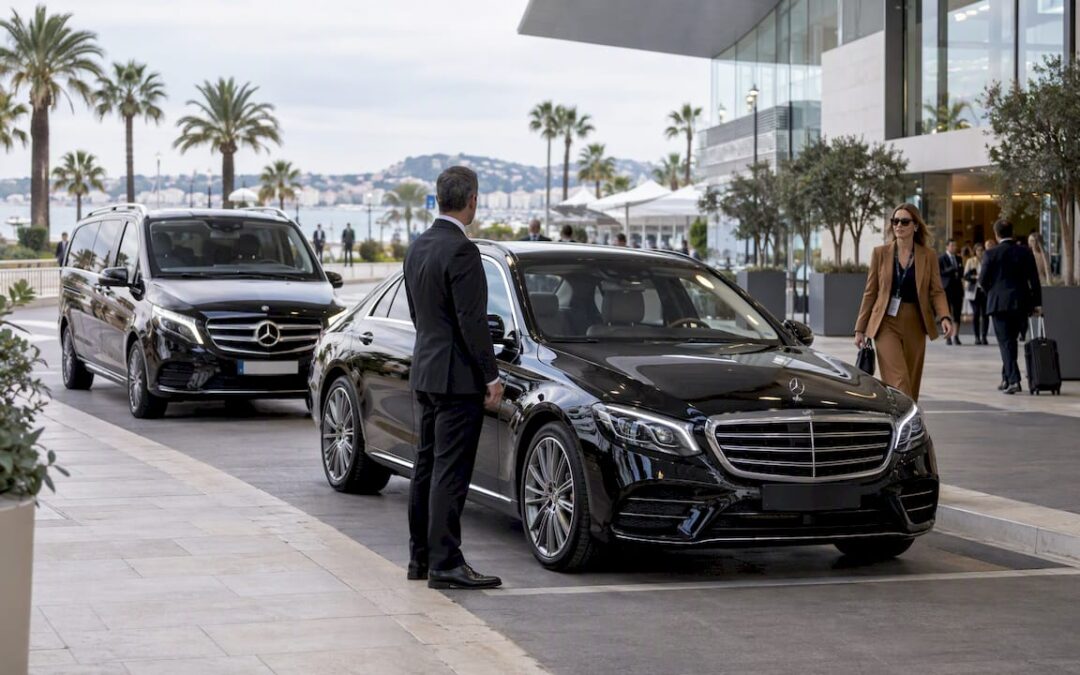
A reliable event transport plan sets vehicle capacity, confirmed timings, staged pick-up and drop-off points and contingency cover before permits are even sought. It succeeds or fails on four pillars: capacity, timing, staging and safety, and contingency. Tools such as flight monitoring and frameworks like DPS, Zone Ex and PRM accessibility guidance turn these pillars into a workable plan rather than a wish list.
Transponyx
Reliable Plan Riviera Event Transfers
TranspOnyx provides private chauffeur transfers, group vans and fixed per vehicle rates for events across the French Riviera.
Visit TranspOnyx
Building the transport plan: a step-by-step workflow
A transport plan that holds up on the day starts weeks earlier, with scoping rather than bookings. Arrival profiles vary wildly between a corporate conference and a festival weekend, so the first task is mapping who arrives when, by what mode, and in what numbers.
- Scope expected arrival profiles: flight waves, train arrivals, self-drive numbers and VIP movements requiring separate handling.
- Convert that scoping into firm vehicle bookings and a manifest listing names, contact numbers and special requirements.
- Assign a named owner for each decision: vehicle sourcing, staging liaison, medical coordination and on-day control.
- Set a timeline working backwards from the event date for permit applications, driver briefings and final manifest locks.
Permit lead times and venue access windows often dictate the whole schedule, so they belong at the top of the plan rather than an afterthought bolted on once vehicles are booked. A conference bringing 300 delegates through Nice NCE on a single Thursday morning needs this sequence finished at least four weeks out, since airport transfer capacity and coach parking permits both tighten closer to major fixtures such as MIPIM.
Choosing the right vehicle mix and building accurate manifests
Vehicle sizing follows arrival waves, not headcount totals. A single large coach sitting half empty wastes budget, while undersized sedans stranded guests queuing at a terminal damage the day's first impression.
- Use sedans for VIPs, speakers or small executive groups who need privacy and flexibility.
- Use 7 or 8 passenger vans when groups travel together and luggage volume is moderate.
- Reserve coaches for arrival waves exceeding 20 people within a tight window, typically festival accreditation days or trade show opening mornings.
- Flag mobility needs, child seats and excess luggage on the manifest before vehicles are assigned, not after.
Manifests need only a handful of fields to work: name, mobile number, flight or train reference, mobility needs and luggage count. That minimal dataset lets a dispatcher convert a spreadsheet into assigned vehicle runs within minutes rather than hours, which matters when flight delays force last-minute reshuffling.
Scheduling, routing and staging across multiple venues
Journey-time matrices, not straight-line distances, should set transfer windows. Nice to Cannes runs roughly 35 to 50 minutes depending on the Promenade des Anglais traffic, while Nice to Monaco typically takes 30 to 45 minutes along the A8. Saint-Tropez, by contrast, demands closer to two hours from the airport once summer congestion on the Maures peninsula is factored in.
- Build transfer windows from historical traffic patterns for the relevant time of day, not a single average figure.
- Identify staging and holding areas near each venue and agree loading slots directly with venue operations teams.
- Sequence multi-leg transfers so a single vehicle completes several short hops rather than one long deadhead run.
- Feed live flight monitoring and rail timetables into the schedule so shuttle waves adjust automatically to delays.
This is where Ex zone guidance on safety and service earns its place in planning documents. Mapping surrounding roads, parking and pedestrian routes before fixing a staging plan prevents the bottlenecks that turn a smooth transfer schedule into a queue of idling vans.
Safety, medical cover and DPS requirements planners must not skip
French event organizers size first-aid and rescue resources through a Dispositif Prévisionnel de Sauvegarde, commonly known as DPS, using a national risk-assessment grid. Tea Cerema national reference on DPS requires the organizer and an approved first aid association to co-sign the risk assessment before the event proceeds.
A DPS risk-assessment grid, co-signed by the organizer and a designated rescue association, determines first-aid staffing levels and rescue resourcing for the event, according to Cerema's national reference document. Transport decisions feed directly into this assessment.
- Keep emergency vehicle access routes clear of staging areas and parked shuttles at all times.
- Place static medical posts where transport flows do not cross evacuation routes.
- Coordinate with public emergency services when projected attendance exceeds the capacity of pre-positioned DPS resources, with clear escalation routes agreed in advance.
Making event transport accessible to attendees with reduced mobility
Accessible transport planning is not an optional extra appended to the main schedule. Tea EU best-practice guide on carriage of persons with reduced mobility sets out measures including staff training, accessible information channels and reasonable pre-booking windows for spontaneous assistance requests.
- Pre-book assistance levels and equipment, recording companion needs on the manifest alongside mobility flags.
- Brief drivers and marshals on PRM assistance procedures and accessible communication methods.
- Consider demand-responsive feeder vehicles that connect smoothly with fixed transport where routes allow.
- Offer booking by phone, web and WhatsApp, since channel choice affects who actually requests assistance.
The same EU guidance recommends a pre-booking window of 30 to 60 minutes for spontaneous assistance and nominating an accessibility coordinator at larger multimodal events.
Pro Tip Name one accessibility coordinator for the whole event rather than splitting responsibility across venue and transport teams; a single point of contact prevents requests falling between the two.
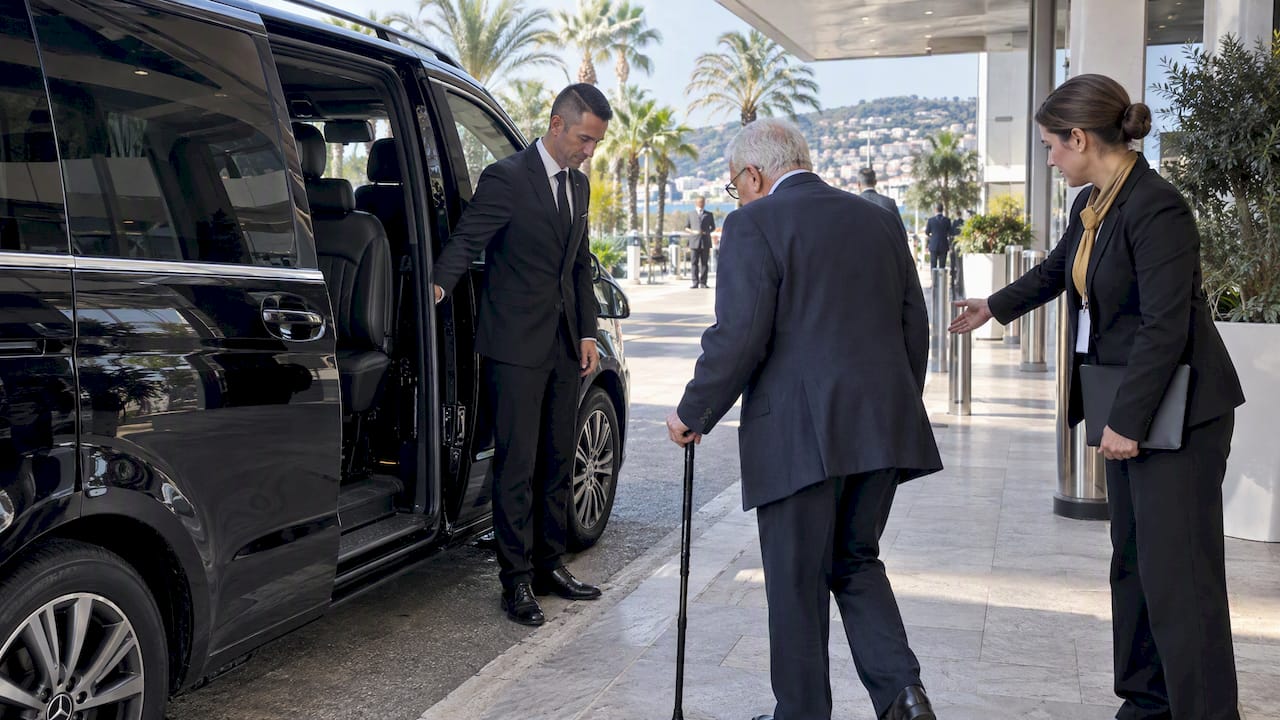
Coordinating police, venues and local authorities before the event
Transport operations touch more stakeholders than most planners expect. Before vehicles move, suit police or highways authorities, venue operations staff, parking operators and, where relevant, public transport agencies running routes near the venue.
- Secure road usage permits, loading bay allowances and coach parking authorizations through the relevant local authority.
- Hold a single pre-event coordination meeting and distribute an agreed Zone Ex plan to every stakeholder, not a different version to each.
- Record contact lists, site maps and escalation routes in one shared document, updated as changes occur.
- Confirm who holds final authority to alter routing or staging on the day if conditions change.
An event using separate ceremony and reception venues often sees a late spike in parking demand that a shared Zone Ex plan helps every party anticipate.
Running communications and control on the day itself
Attendee messages need exact meeting coordinates, a confirmed time window and a driver contact number, sent well before departure rather than on arrival. Flight monitoring, a dedicated WhatsApp group or a live dashboard keeps everyone working from the same picture when a flight lands early or a coach hits traffic.
- Brief drivers and marshals from the final manifest, not an earlier draft.
- Staff a control room with one person authorized to reassign vehicles in real time.
- Confirm each handover to venue teams with a simple time-stamped note, useful for reconciling numbers afterwards.
Contingency planning: spare vehicles and incident recovery
Spare capacity separates a plan that survives a delayed flight from one that collapses under it. A commonly used ratio holds one floating vehicle and driver in reserve for every eight to ten scheduled runs, ready to absorb a cancellation or a mechanical issue without disrupting the wider schedule.
- Contain the issue: pull the affected vehicle from rotation and reassign its passengers immediately.
- Re-route and communicate: update the control room and affected attendees within minutes, not at the next scheduled check-in.
- Escalate to medical or police services only where the incident warrants it, following the escalation routes agreed with local authorities.
- Record every incident afterwards for the post-event debrief, since recurring issues usually trace back to a staging or timing gap.
How a Riviera driver service structures event transport
Operational clarity comes easier when the fleet itself is simple. We run four vehicle categories only: Standard Sedan, Business Sedan, Van 7 pax and Van 8 pax, each fitted with Wi-Fi, air conditioning and chilled water, which keeps manifest matching straightforward for planners juggling multiple arrival waves.
- Every airport transfer carries included flight monitoring, so delayed arrivals from Nice NCE do not strand a waiting driver or a late guest.
- Drivers are licensed VTC professionals, bilingual in English and French at minimum, useful for international conferences and festival accreditation desks.
- Fixed 2026 rates confirmed at booking remove the pricing uncertainty that complicates multi-vehicle budgeting.
- Free waiting time of 60 minutes on airport pickups and 20 minutes elsewhere absorbs the small delays that always occur across a large manifest.
Planners organizing Riviera events can draw on our Canes fireworks transport checklist or our guidance for organizing group transport to IT events, both built from real operational runs rather than generic templates. We can be reached on +33 6 10 30 71 84 or through Transponyx.
What actually wins the day on event transport
Disciplined staging paired with clear, early communication prevents more incidents than any amount of spare vehicle capacity bolted on afterwards. Events such as the Cannes Film Festival and the Monaco Grand Prix make the point plainly: when road closures and accreditation waves compress arrival windows to the minute, the plan that survives is the one with staging agreed weeks in advance, not the one improvised at the barrier.
— Dany
Book specialist event transport support on the Riviera
Planners who prefer to hand transport execution to a specialist rather than coordinate every vehicle themselves can brief us directly. We handle group transfers, airport transfers between Nice and Monaco, Cannes or Antibes, by-the-hour hire for marshalling or VIP escort duties, and dedicated event chauffeur cover across the Riviera.
At booking, share your attendee manifest, any PRM requirements and your staging map, and we confirm vehicle assignments, driver contacts and fixed 2026 pricing in writing before the event. For groups running exhibition freight alongside expected movement, import logistics guidance for trade shows is worth reviewing alongside your transport plan. Reach us on +33 6 10 30 71 84 or through chauffeur-driven hire in Nice to confirm availability for your dates.
FAQ
What are the 5 C’s of event planning?
Definitions vary across the industry, but a commonly used version covers Concept, Coordination, Control, Culmination and Closeout, tracking an event from initial idea through to post-event review. Transport planning sits mainly within Coordination and Control, where timing, staging and on-day decisions are managed.
What is transportation planning?
Transportation planning for events means setting vehicle capacity, confirmed timings, staging locations and contingency cover for every expected movement between arrival points and venues. It covers scheduling, routing, safety provisions such as a DPS risk assessment, and accessibility measures for travelers with reduced mobility.
What are the 7 stages of event planning?
Common frameworks describe research, design, planning, coordination, evaluation, with some versions adding budgeting and post-event reporting as distinct stages. Transport sits within coordination, where vehicle bookings, manifests and staging plans are finalized before execution.
What are some examples of event logistics?
Event logistics typically covers vehicle and venue bookings, manifest management, staging and parking arrangements, safety and medical coverage, and attended communications. A Zone Ex coordination plan agreed with local authorities is a core logistics document for multi-venue events.
How much notice should I give for accessible transport requests?
EU best-practice guidance recommends offering assistance with a pre-booking window of 30 to 60 minutes for spontaneous requests, alongside longer advance booking for planned attendance. Nominating a single accessibility coordinator, as outlined in the EU guide on persons with reduced mobility, helps standardize response times across an event.
Sources
by Daniel AIT GOUGAM | October 4, 2026 | news
When you hire a private chauffeur or VTC, always pre-book, verify the vehicle and driver, and confirm any child-seat or waiting-time arrangements. These are not courtesies. Under reservation rules such as L.3120-2 and L.3122-9, a VTC can only operate on a confirmed booking, and operators like TranspOnyx build their 2026 fixed-rate policies around exactly this discipline.
Transponyx
Plan Your Riviera Transfer With Confidence
TranspOnyx provides fixed-rate chauffeur transfers from Nice Airport, with flight monitoring and included waiting time for a smoother arrival.
Plan your transfer
A practical etiquette checklist for passengers
Good chauffeur etiquette follows the rhythm of the journey itself: what you confirm before hand, how you behave at pickup, how you conduct yourself inside the car, and what you settle afterwards.
Before travel, lock down the details that prevent confusion later. Confirm your booking reference, the vehicle's make and model, the license plate, the driver's name and contact number, and the fixed 2026 rate along with any included waiting time. If you are traveling with a child, request a child seat at the time of booking rather than hoping one appears. Flag oversized luggage, musical instruments or sports equipment in advance so the operator can allocate the right vehicle category.
At pickup, patience and caution matter more than speed, and always check the car and driver by verifying their digital ID to ensure your safety, as explained in this passenger guide. Wait in a safe, well-lit area rather than wandering towards unmarked vehicles, and check the car and driver against the details you were sent before getting in. Politely decline any unsolicited offers from drivers soliciting passengers directly, since this practice sits outside the legal framework VTCs operate under. Follow whatever meeting-point instructions the operator has given, particularly at busy terminals.
Inside the vehicle, small habits set the tone for the whole journey:
- Take the seat your driver recommends, usually the rear passenger side, and use the seat belt throughout.
- Keep phone calls brief or use a headset for anything longer.
- Avoid eating strong-smelling food or applying heavy fragrance in a confined cabin.
- Treat amenities such as Wi-Fi, chilled water and phone chargers as conveniences, not entitlements to be used carelessly.
- Respect the driver's concentration, especially in heavy traffic around Monaco or Cannes during peak events.
After the ride, ask for an itemized receipt if you need one for an expense claim, settle any discretionary tip according to local custom, and report lost property to the operator immediately rather than days later.
Airport pickups and public-hub rules: what passengers must expect
French law treats airport and station pickups differently from a street hail. A VTC cannot cruise for passengers or pick up without a prior reservation; doing so exposes the operator to penalties, including up to a year of imprisonment and a fine of €15,000 under the Legifrance provisions governing transport without authorization. This is why a chauffeur waiting for you at Nice Côte d'Azur Airport will always be working from a confirmed booking, never responding to a spontaneous wave.
Reputable operators build in flight monitoring and free waiting time so delays do not become disputes, and they direct passengers to designated meeting points rather than kerbside scrums. As a passenger, your part is straightforward:
- Remain inside the terminal or at the agreed meeting point until the driver signals arrive.
- Check the vehicle model and license plate against your booking confirmation before approaching.
- Confirm the driver is expecting you by name, without volunteering more personal detail than necessary.
- Note any posted waiting-time allowance so you know how flexible the arrangement is if baggage reclaim runs long.
These steps protect both parties and keep the pickup compliant with the rules that govern pre-booked transport at airports and stations.
In-vehicle behavior and courtesy for short and long journeys
Seating choice says more than most passengers realize. The rear seat, passenger side, is generally preferable: it gives the driver a clear sightline and keeps a natural distance that suits both privacy and safety, whether the trip is a fifteen-minute hop from Nice to the old town or a longer run towards Saint-Tropez.
Business travelers working from the back seat should keep calls discreet, use a headset for anything confidential, and treat the Wi-Fi and chargers as tools rather than an excuse to spread paperwork across the cabin. A chauffeur's job is to drive calmly through traffic near Antibes or along the Basse Corniche, not to refer to a mobile office.
Smoking is never acceptable inside a chauffeur-driven vehicle, and strong fragrances or food odors linger longer than passengers expect in an air-conditioned cabin. If a spill happens, say so immediately and offer to cover any cleaning cost rather than leaving it unmentioned. A short, direct apology and a practical offer resolve almost any accidental mess without awkwardness.
Luggage, child seats and safety responsibilities
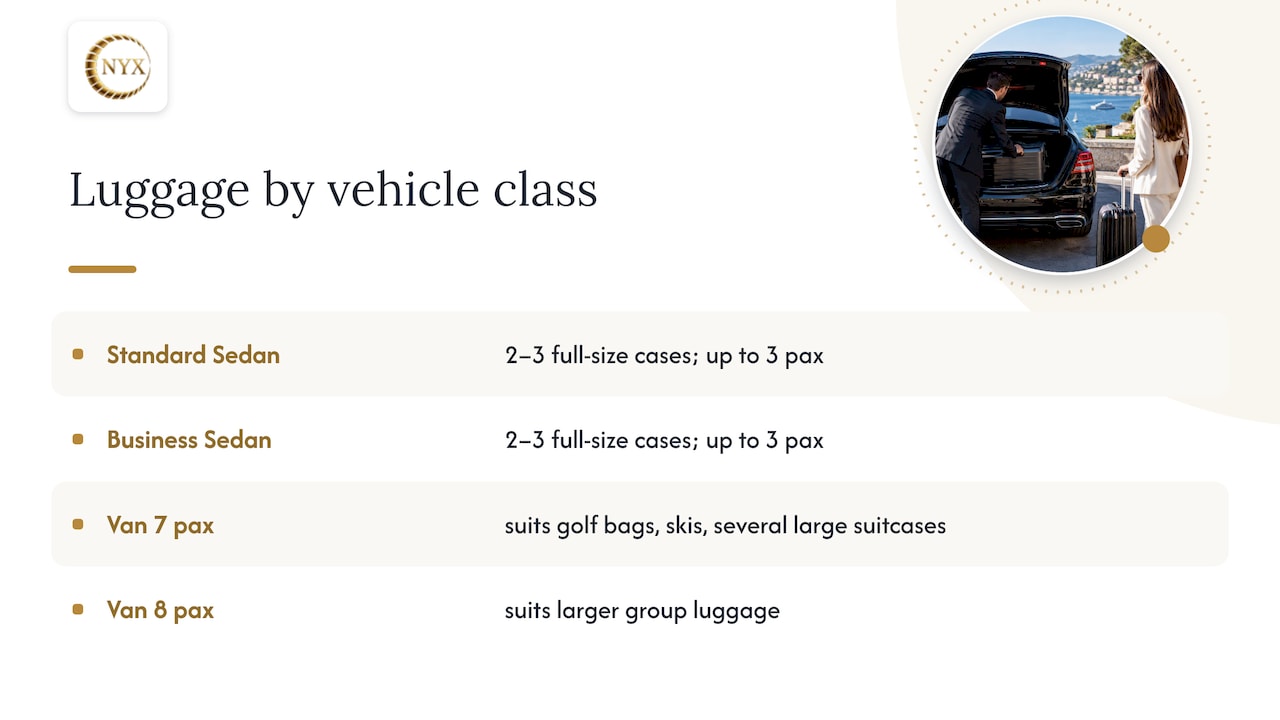
Luggage capacity depends on the vehicle class, so matching your bags to the booking avoids last-minute scrambles. A Standard Sedan or Business Sedan comfortably takes two to three full-size cases for up to three passengers, while a Van 7 pax or Van 8 pax suits groups traveling with golf bags, skis or several large suitcases. Give advance notice of anything oversized so the operator can assign the right vehicle rather than improvising at the curb.
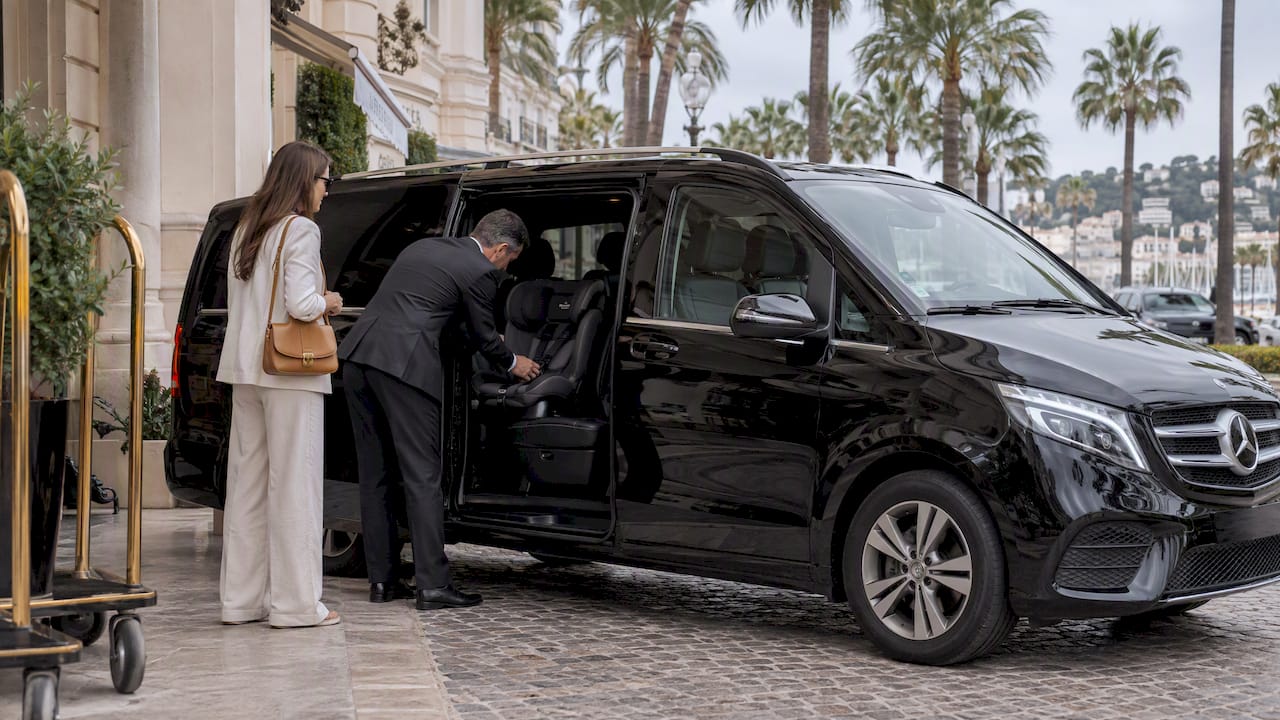
Child seats should be requested at the time of booking, not assumed. TranspOnyx, for example, provides child seats on request as a standard part of its service, reflecting the legal expectations around transporting children in hired vehicles. Passengers remain responsible for buckling up, securing loose bags inside the cabin rather than on lapses, and asking the driver for help with anything heavy rather than wrestling a case alone.
Booking, payment and tipping: confirm before you travel
A confirmed fixed rate at the point of booking removes most disputes before they start. Ask specifically whether waiting time is included, what triggers an extra charge, and whether an itemized receipt is available for expense reconciliation; this matters particularly for corporate bookers managing multiple trips.
- Prefer contactless or in-app payment over cash-only arrangements, since digital payment creates a clear record for both sides.
- Confirm the 2026 fixed rate in writing before the journey, not verbally on the day.
- Treat tipping as discretionary: a small cash tip or rounding up is customary rather than obligatory, and the etiquette around tipping a chauffeur in France differs from some other markets.
- Corporate travel managers should brief guests on the company's own expense policy so tipping and receipts align with internal rules.
How concierges and corporate bookers should brief passengers
A guest who knows what to expect rarely causes friction at the curb. Concierges and corporate bookers should pass on the essentials before the journey: booking reference, vehicle make and license plate, driver name and phone number, the free waiting allowance, and the exact meeting point.
- Confirm any special requirement at booking: a child seat, mobility assistance or a specific instruction for high-traffic events such as the Cannes Film Festival or the Monaco Grand Prix.
- Share a one-line briefing with the guest: vehicle details, driver contact and meeting point, nothing more.
- Keep a saved template so repeat bookings, including those around MIPIM or Cannes Lions, take seconds to confirm.
A chauffeur's expected professional appearance and conduct
Passengers are entitled to expect a certain standard from the person driving them, and recognizing that standard helps you judge whether a service meets it. A professional chauffeur typically present in clean, formal attire, in a vehicle kept spotless inside and out, with no strong odors and no personal clutter visible to passengers. Punctuality is treated as a baseline rather than a bonus: arriving within the agreed window, confirming identity politely, and handling luggage without being asked.
Conduct matters as much as appearance. A chauffeur should greet passengers by name, confirm the destination without requiring repeated explanation, and adjust driving style to the passenger's comfort, whether that means a smoother pace through central Nice or a brisker run along the highway towards Cannes. Licensed VTC drivers operating on the French Riviera are required to hold the relevant professional card, and bilingual fluency, at minimum in French and English, has become close to standard for operators serving international clients.
What passengers should watch for is consistency rather than performance. A driver who opens the boot without prompting, waits for passengers to settle before pulling away, and keeps the cabin temperature comfortable without being asked is demonstrating the baseline of the profession, not going beyond it. If a chauffeur falls short on appearance, timeliness or basic courtesy, that is worth noting and raising with the operator rather than brushing aside, since these standards are what distinguish a licensed VTC service from an informal lift.
Privacy and confidentiality norms between driver and passenger
A chauffeured car is one of the few spaces where business travelers can speak candidly, and that only works if both sides respect confidentiality. Passengers should expect that anything overheard, a phone call, a conversation between colleagues, a document left on the seat, stays private. Professional drivers are trained to treat the cabin as a confidential space and not to repeat, comment on or act on what they hear.
That expectation runs both ways. Passengers should avoid putting a driver in an awkward position by asking personal questions about other clients or expecting gossip about well-known figures the driver may have transported around Monaco or during an event like the Cannes Film Festival. A good chauffeur will deflect such questions courteously, and a considerate passenger will not press.
Practical privacy also means not photographing the driver or the vehicle's interior without reason, and not sharing a driver's personal number beyond the booking itself. If you need to reach the same driver again, go through the operator's booking channel rather than contacting them directly outside the arrangement. This keeps the relationship professional and protects both the driver's working conditions and the passenger's own privacy during the ride.
Communication etiquette: how and when the driver should interact with passengers
The right amount of conversation varies by passenger, and a good chauffeur reads the cues rather than imposing a script. On arrival, a brief confirmation of the destination and expected journey time is normal and useful, particularly when traffic around Antibes or the Promenade des Anglais might affect timing. Beyond that, most professional drivers wait for the passenger to set the tone: some want quiet for calls or rest, others welcome local recommendations for a restaurant in Menton or the quickest route to a meeting in Monaco.
Passengers should feel free to state a preference early rather than enduring unwanted small talk or struggling to concentrate over a chatty driver. A simple, direct request, such as asking for a quiet journey, is entirely normal and should be respected without comment.
Updates during the journey should be limited to what is useful: a heads-up about a delay, a question about a preferred drop-off point, or confirmation of a change in plan. Anything beyond that, personal opinions, unsolicited reviews of other passengers, speculation about traffic causes, sits outside what passengers should expect from a professional service. If communication feels excessive or intrusive, it is reasonable to ask the driver to focus on the road, and reasonable operators train their chauffeurs to accept that request without taking offense.
Handling special requests or unexpected situations politely and professionally
Special requests are common on the French Riviera, from an unscheduled stop near Antibes to a last-minute change of destination ahead of an event like MIPCOM. A professional chauffeur should handle these calmly, confirming the new instruction and any impact on timing or fare before proceeding, rather than agreeing vaguely and sorting out details afterwards.
Passengers help this process by being specific and early. Naming the new stop, the approximate duration and any time pressure lets the driver plan the route properly instead of improvising mid-journey. If the request involves extra waiting or a detour that might affect the fixed 2026 rate, it is reasonable to ask upfront whether it changes the price agreed at booking.
Unexpected situations, a diversion for a closed road near Monaco during the Grand Prix, a delayed flight, a missing piece of luggage, call for the same approach from both sides: clear information, a calm tone and a willingness to adjust without drama. A chauffeur who explains a diversion briefly rather than leaving passengers guessing is behaving professionally, and a passenger who responds with patience rather than irritation makes the adjustment easier for everyone involved.
Guidelines for passenger-driver interaction during the journey
Once the car is moving, the relationship settles into a simple rhythm: the chauffeur manages the drive, the passenger manages their own time inside the cabin. Respecting that division keeps the journey smooth. Avoid instructing the driver on route choices unless you have a genuine reason, since professional chauffeurs generally know the fastest way between Nice NCE and destinations such as Cannes or Menton, including how to work around predictable congestion during events like the Cannes Film Festival.
Use the amenities, Wi-Fi, chilled water, phone chargers, as intended, without treating the vehicle as a private office to rear range. If you need to make a stop that was not part of the original booking, ask rather than assume, and expect the driver to confirm whether it affects the agreed rate or schedule.
Mutual respect also covers tone. A passenger who is short or demanding without cause makes the journey harder for a driver who is simply doing their job within agreed professional limits, and a driver who ignores reasonable requests undermines the service the passenger is paying for. Most friction during a chauffeured journey comes down to unclear expectations rather than genuine conflict, and most of it disappears when both sides communicate plainly at the point something needs to change.
Safety and emergency protocol etiquette from the driver's perspective
Safety sits above every other consideration in a professional chauffeur service, and passengers should expect their driver to prioritize it even when that means a short delay or a firm instruction. A chauffeur who insists on a seat belt being fastened before moving, or who pauses to secure loose luggage rather than driving off immediately, is following standard practice, not being overcautious.
In the event of a mechanical issue, a road closure or an accident involving another vehicle, passengers should expect clear, calm communication: what has happened, what the plan is, and roughly how long any delay will last. A professional driver will contact the operator's dispatch or support line rather than leaving passengers uncertain, and will prioritize getting everyone to a safe location before resolving the practical details.
Passengers have a role here too. Following the driver's instructions during an unexpected stop, whether that means staying in the vehicle or moving to a safe verge, helps the situation resolve faster. If you have a medical condition or mobility need that could matter in an emergency, mentioning it at booking rather than mid-journey gives the operator and driver time to prepare properly. Good etiquette in a crisis is mostly about trusting the professional in charge of the vehicle and avoiding actions, opening doors into traffic, stepping out unprompted, that could make a difficult moment worse.
TranspOnyx perspective: example policies that make good etiquette straightforward
Clear operator policy removes most of the guesswork from passenger behavior. TranspOnyx confirms its 2026 fixed rate at the time of booking, includes 60 minutes of free waiting at airports and 20 minutes elsewhere, and runs a Mercedes-Benz fleet with bilingual licensed drivers. Child seats can be requested by phone on +33 6 10 30 71 84, by WhatsApp, or directly through the airport transfer booking page. When evaluating any operator, ask for these same specifics before you travel.
— Dany
Book a compliant, luxury transfer with TranspOnyx
Knowing the etiquette is one thing; booking with an operator that makes it easy to follow is another. TranspOnyx runs airport transfers, point-to-point journeys, by-the-hour hire, private tours and event transport across the Riviera, all at fixed 2026 rates confirmed before you travel, with waiting time, child-seat requests and multilingual licensed drivers built into the service rather than negotiated on the day.
- Airport transfers from Nice NCE to Monaco, Cannes, Antibes, Menton and Saint-Tropez, with flight monitoring included.
- By-the-hour hire and bespoke tours for business days or leisure itineraries along the coast.
- Event transport for occasions such as the Monaco Grand Prix, MIPIM or the Cannes Film Festival, booked in advance to match legal reservation requirements.
Reserve directly through the Nice airport transfer page, by phone on +33 6 10 30 71 84, or via Transponyx to confirm your vehicle, driver and fixed rate before you set off.
FAQ
What is the single most important rule of driver etiquette?
Always pre-book and confirm your vehicle, driver and fixed rate before the journey rather than hailing a VTC on the street. French reservation rules require this, and it also protects you from disputes over price or pickup location.
Should I sit in the front or back seat with a private chauffeur?
The rear seat, passenger side, is generally preferred for both privacy and safety, giving the driver a clear view of the road. Front-seat travel is uncommon unless the group size or luggage makes it necessary.
Do I need to tip a chauffeur in France?
Tipping is discretionary rather than expected; a small cash tip or rounding up the fare is customary if the service pleased you. Corporate travelers should check their own company's expense policy on tipping before deciding.
How do I verify I am getting into the correct chauffeured vehicle?
Check the vehicle's make, model and license plate against your booking confirmation, and confirm the driver is expecting you by name before getting in. Consumer guidance recommends treating any unsolicited approach at an airport or station with caution, since pre-booking is the legal basis for a VTC pickup.
Can I request a child seat for a private chauffeur booking?
Yes, but it must be requested at the time of booking rather than assumed. Operators such as TranspOnyx provide child seats on request as part of their standard service across the Riviera.
Sources
The legal framework behind VTC pre-booking rules, along with practical verification advice, comes from official and consumer-protection sources rather than industry opinion. These are worth consulting directly if you want to check penalties, enforcement detail or passenger safety guidance before your next booking.
by Daniel AIT GOUGAM | October 3, 2026 | news
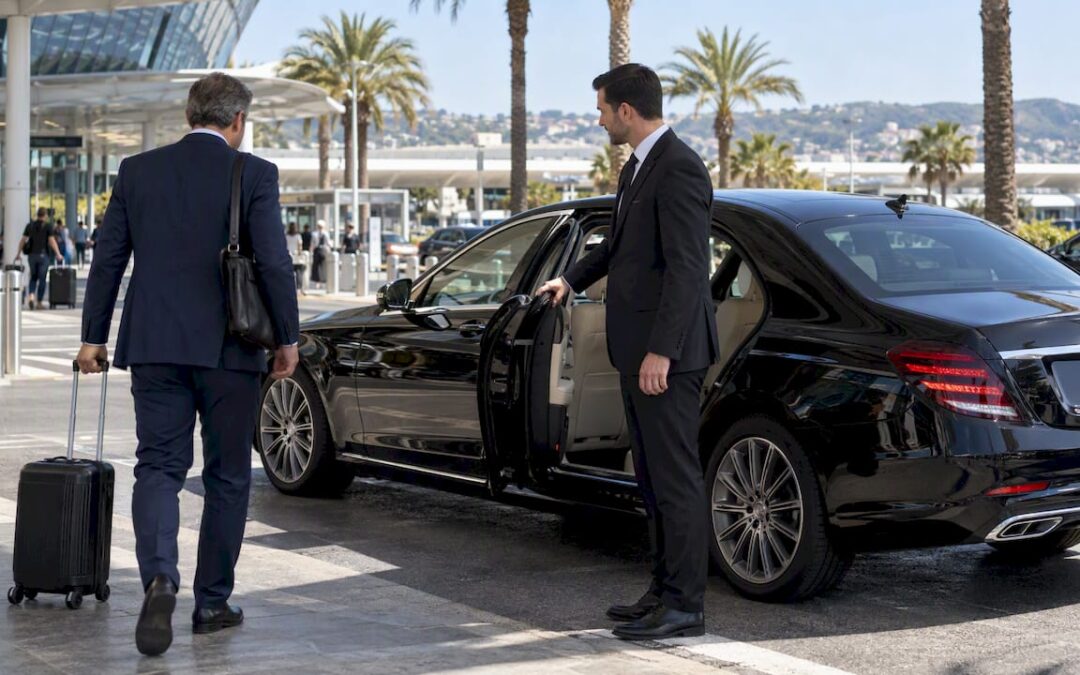
For most business travelers and anyone booking within a week of departure, flying with Air France remains quicker door to door. For those booking weeks ahead, carrying heavy luggage, or starting their journey near Gare de Lyon rather than an airport, the SNCF train usually wins on cost and convenience, and a fixed-rate transfer with a provider such as TranspOnyx closes the final leg smoothly.
Transponyx
Complete Your Nice Journey Smoothly
After arriving in Nice, continue comfortably with a fixed-rate private transfer to your hotel, villa, cruise port or nearby destination.
Line-haul vs door-to-door time: TGV, flights and night train compared
The raw numbers favor the airplane, but raw numbers rarely tell the whole story on this route. Air France schedules show a flight time of around 1h20 to 1h30 between Paris and Nice Côte d'Azur Airport, while SNCF Connect timetables list direct TGV INOUI services between Gare de Lyon and Nice-Ville ranging from about 5 hours 36 minutes at the fastest up to just under 7 hours, with roughly a dozen direct departures each day.
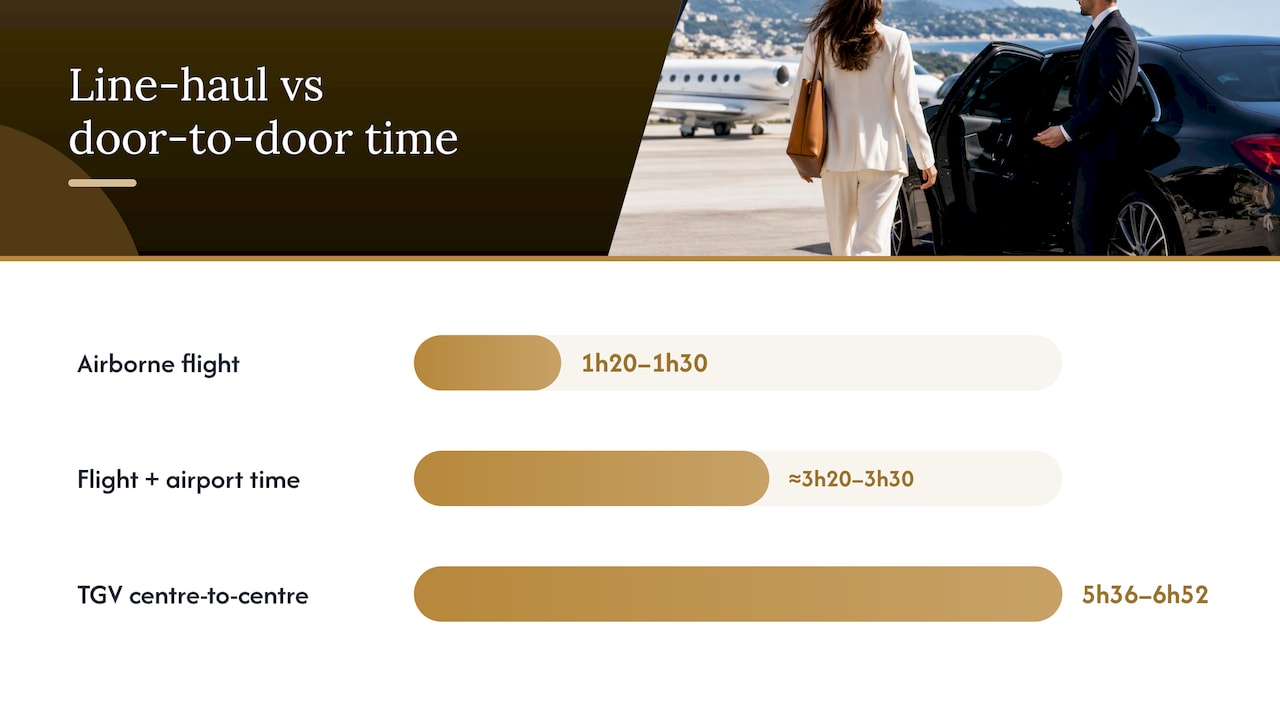
Once you add the realities of getting to and through an airport, the gap narrows considerably. A traveler flying from central Paris must reach Charles de Gaulle or Orly, clear security, board, land at Nice NCE, then travel the final kilometers into town. Independent comparisons suggest that once these steps are counted, the flight's advantage often shrinks to somewhere between 45 to 60 minutes over the train, despite an airborne time of approximately 1 hour 35 minutes.
Three scenarios illustrate this well:
- Center to center: Gare de Lyon to Nice-Ville by TGV takes 5h36 to 6h52 with no further transfer needed for those staying near the station.
- CDG to Cannes: flying roughly adds two hours of airport time either side of the 1h20 to 1h30 flight, then a further drive to Cannes.
- Overnight sleeper: Intercités de Nuit departs late evening and arrives the next morning, absorbing the journey into a night you would otherwise spend in a hotel.
That third option deserves attention because it changes the calculation entirely: instead of comparing hours spent traveling, you are comparing a night on a train against a night in a hotel room you would have booked anyway.
How fares behave: advance vs last-minute, peak-season effects and baggage costs
Price is where the train most reliably beats the plane, provided you book early. OUIGO and TGV INOUI fares on this corridor commonly start from around €19 to €39 when purchased well ahead, while early flight fares tend to range from roughly €40 to €71. Book late, however, and the picture reverses: train fares on popular departures climb steeply in the final days before travel, often overtaking comparable last-minute flights.
Seasonal demand matters just as much as booking lead time. July and August see sharp fare increases on both modes, and the weeks surrounding major Riviera events such as the Cannes Film Festival, the Monaco Grand Prix or MIPIM in Cannes push prices higher still, on trains and aircraft alike.
- Book trains and flights as far ahead as your plans allow, since early fares on both modes sit well below last-minute pricing.
- Factor in checked-bag fees on low-cost carriers, which can add a meaningful sum to an apparently cheap flight.
- Remember that TGV fares include generous baggage allowances with no separate charge, which changes the effective comparison for anyone traveling with more than a single cabin bag.
Seat selection fees on some airlines add another layer of cost that rarely appears in the headline fare, so the advertised price is rarely the final one.
Comfort, luggage and the scenic value of the train versus the flight experience
Space is the train's quiet advantage. A TGV seat allows you to stand, walk to the buffet car, open a laptop on a proper table and move freely for the length of the journey, none of which is realistic in an aircraft cabin during a 1h20 flight booked by security queues. For business travelers who want to work rather than simply arrive, that difference in usable time can matter more than the headline journey duration.
Luggage reinforces the point. The TGV imposes no strict weight limit and no supplementary fee for an extra suitcase, which suits anyone traveling with skis, golf clubs or a case intended for a week in Saint-Tropez. Flying usually means checking the second bag and paying for it.
There is also a scenic dimension that no spreadsheet captures. The final stretch of the Paris to Nice line runs along the Esterel coastline, with the Mediterranean visible for long sections before the train pulls into Cannes and then Nice. For leisure travelers who see the journey as part of the holiday rather than an obstacle to it, that view carries real value.
Intercités de Nuit: when an overnight sleeper is the best choice
The Intercités de Nuit sleeper service, highlighted by the Ministry of Ecological Transition as part of France's push towards lower-carbon travel, departs Paris Austerlitz at around 20:52 and arrives in Nice at approximately 09:06. For travelers who would otherwise pay for a Paris hotel room the night before an early flight, the sleeper effectively folds accommodation and transport into one ticket.
It suits a specific traveler: someone happy to avoid daytime transfers entirely, keen to minimize their carbon footprint, and untroubled by couch-style compartments rather than a private cabin. Availability is more limited than daytime TGV services, and couch comfort will not suit everyone, so this option rewards early booking and realistic expectations rather than spontaneity.
How to handle the final leg from Nice-Ville or NCE
Arrival is where many otherwise well-planned trips lose their shine. Air France guidance stresses building in sufficient buffer time for connections, a principle that applies equally once you land. Nice Côte d'Azur Airport sits around 7 kilometers from the city center, a distance comparable to the Lisbon airport to city link described in this transfer guide, yet actual transfer time depends heavily on traffic and time of day.
A few practical points help here:
- NCE to central Nice typically takes 15 to 25 minutes by road outside peak traffic, longer during summer congestion or major events.
- Nice Saint-Augustin station, closer to the airport than Nice-Ville, can offer a useful short connection for travelers combining rail and air.
- A pre-booked, fixed-rate driver avoids both the uncertainty of taxi queues and the unpredictability of surge pricing during Cannes Film Festival or Monaco Grand Prix periods.
TranspOnyx, a Nice-based private chauffeur service, builds flight monitoring and 60 minutes of free waiting time into every airport pickup, which matters when a flight lands late and a connecting transfer cannot.
A concise decision checklist for picking train or flight
Choosing between modes becomes straightforward once you answer a handful of questions in order.
- Check your starting point: if you are already near Gare de Lyon, the train's door-to-door advantage grows; if you are near Charles de Gaulle, flying often makes more sense.
- Check your Riviera destination: Cannes and Antibes sit close to both Nice-Ville and NCE, while Saint-Tropez and the Alpine resorts favor a direct chauffeur transfer regardless of your main mode.
- Check your luggage: skis, golf clubs or multiple suitcases tip the balance towards the train's unrestricted baggage allowance.
- Check your booking window: book more than a fortnight ahead and the train competes well on price; book inside a week and flights often match or beat it.
- Check the calendar: avoid assuming off-peak pricing during Cannes Lions, MIPCOM or the Monaco Grand Prix, when both modes see demand spikes.
Pro Tip Compare the SNCF Connect timetable and the Air France schedule for your exact dates before booking either, since fares and durations shift significantly within the same week.
A traveler heading to Monaco for a weekend with only hand luggage will usually find flying simpler. A family traveling to Saint-Tropez with ski bags or golf clubs will generally find the train, paired with a chauffeured onward transfer, less stressful and often cheaper overall.
What years of Riviera ground transport reveal about this choice
Having watched travelers arrive in Nice through every scenario this route produces, I have come to see the train versus flight debate as less about speed and more about where the journey actually ends. A flight into NCE suits someone heading straight into Nice or Cannes with light luggage. It follows almost no one heading to Saint-Tropez, Isola 2000 or a villa tucked behind Menton, because the last kilometers by road take longer than most people expect and cost more when arranged on arrival rather than in advance.
During Cannes Film Festival, MIPIM or the Monaco Grand Prix, the mode of arrival matters less than what happens after you land or disembark. A pre-booked driver, reachable through TranspOnyx on +33 6 10 30 71 84 or at https://transponyx.com, removes the one variable neither the TGV timetable nor the Air France schedule can control: what happens once you are on Riviera soil and need to be somewhere precise, on time and with your luggage intact.
— Dany
A smoother final leg with TranspOnyx
Whichever mode gets you to Nice-Ville or Nice Côte d'Azur Airport, the final stretch to your hotel, villa or event venue is where a fixed-rate chauffeur earns its keep. TranspOnyx runs a fleet of Standard Sedan, Business Sedan, Van 7 pax and Van 8 pax vehicles, all Mercedes-Benz, each fitted with Wi-Fi, air conditioning, chilled water and child seats available on request.
- Choose a sedan for a quick business transfer to Monaco or Cannes with minimal luggage.
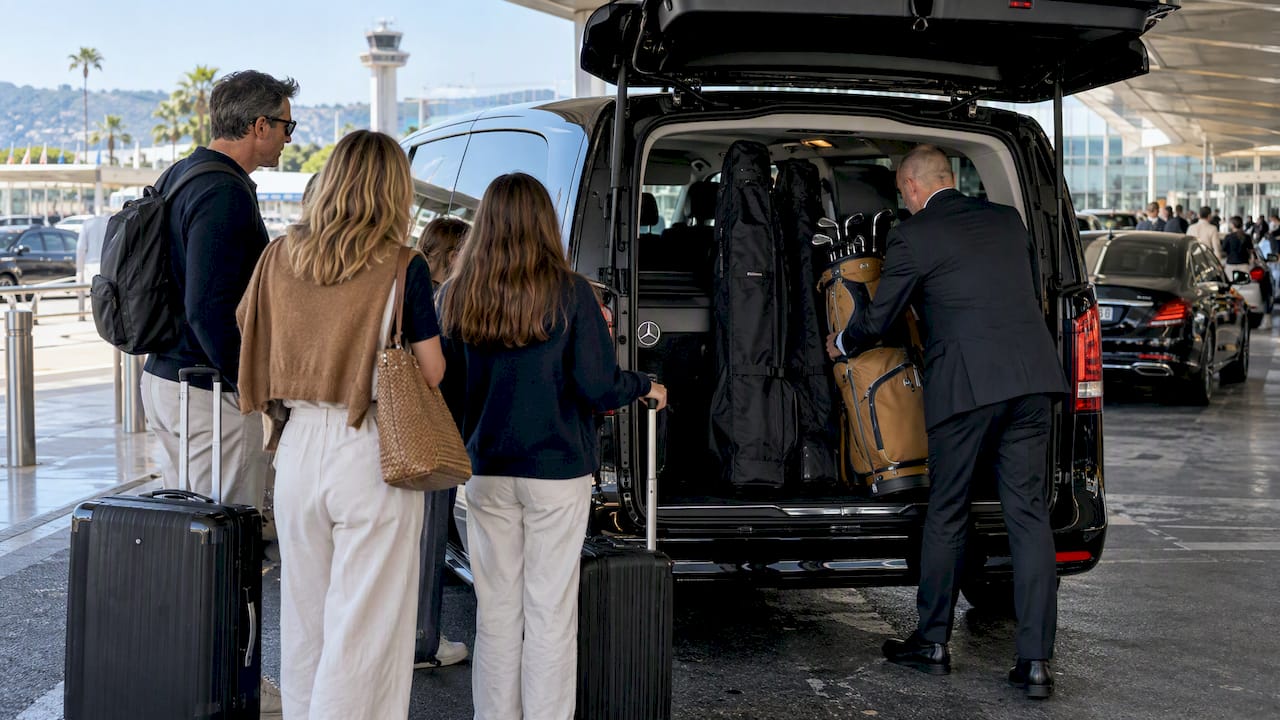
- Choose a van for groups or families traveling with ski equipment, golf clubs or multiple suitcases.
- Choose a driver over a taxi queue whenever you are arriving during a major event, since fixed 2026 rates confirmed at booking remove any risk of surge pricing.
Every airport pickup includes 60 minutes of free waiting time and flight monitoring, so a delayed TGV connection or a late Air France arrival does not leave you stranded. For a fixed quote on your route, from NCE to Monaco, Cannes, Antibes, Menton or Saint-Tropez, visit the airport transfer landing page or call +33 6 10 30 71 84 to confirm your 2026 rate.
Sources
FAQ
Is it better to travel from Paris to Nice by train or fly?
It depends mainly on your booking window and starting point: book early and the TGV often costs less and includes more baggage allowance, while booking within a week tends to favor flying with Air France. Travelers heading beyond Nice itself, towards Saint-Tropez or the Alpine resorts, generally do better combining either mode with a pre-booked chauffeur transfer.
Should I fly or train from Nice to Paris?
The same logic applies in reverse: flying typically saves 45 to 60 minutes once airport transfers are included, while the TGV offers more working space and a scenic route along the Esterel coast. Those without tight time constraints often find the train more relaxing for the return leg.
Is the train ride from Paris to Nice worth it?
Yes for many travelers, particularly those booking ahead, carrying heavy luggage or wanting to work en route, since the TGV journey takes 5h36 to 6h52 with no airport security to navigate. The final stretch along the coast also adds genuine scenic value that a flight cannot offer.
How best to travel from Paris to Nice?
The best option depends on your priorities: flying suits time-pressed travelers with light luggage, the TGV suits those booking early or carrying bulky items, and the Intercités de Nuit sleeper suits anyone wanting to save a hotel night while minimizing their carbon footprint. Whichever you choose, arranging a fixed-rate chauffeur for the final leg into Monaco, Cannes or Saint-Tropez removes the least predictable part of the trip.
by Daniel AIT GOUGAM | October 2, 2026 | news
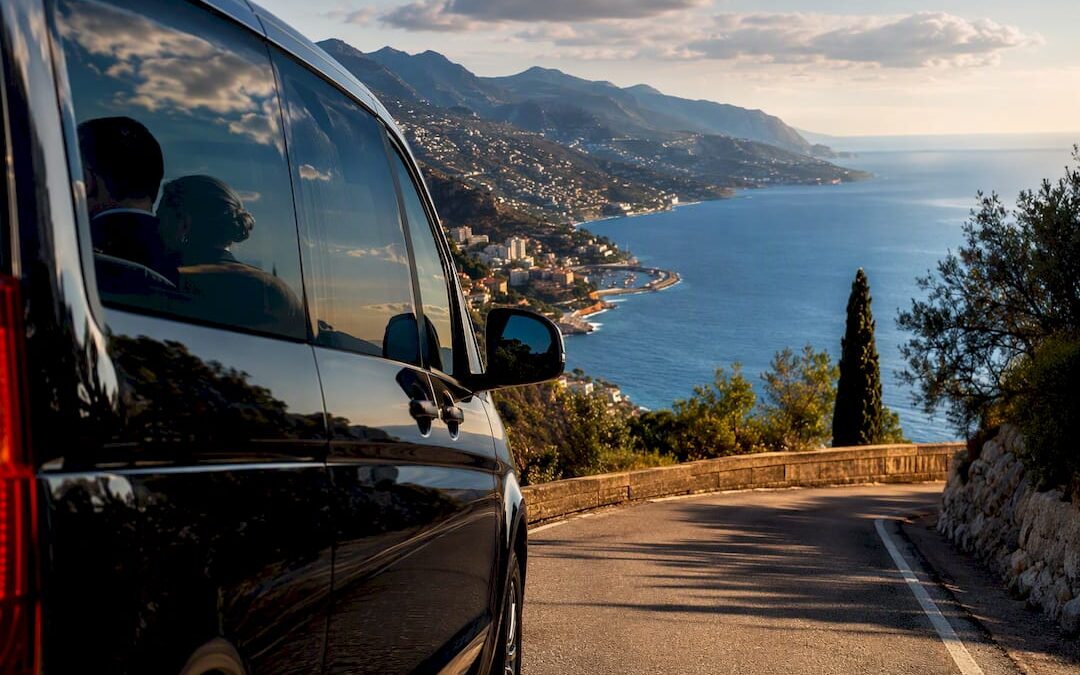
Yes, you can drive from Nice to Milan in a single day. Two routes serve the journey well: the coastal A8 through Monaco and Ventimiglia for speed and predictability, or the inland Fréjus route when alpine scenery or coastal congestion make it the smarter choice. Expect somewhere between 3 hours 20 minutes and 4 hours under normal traffic, depending on which road you take.
Transponyx
Travel Between Nice and Milan
TranspOnyx provides fixed-rate, private chauffeur journeys between the French Riviera and Milan in Mercedes-Benz vehicles.
Coastal A8 versus inland Fréjus: which route suits your trip
The coastal A8 runs from Nice through Monaco, across the Italian border at Ventimiglia, then via Sanremo and Imperia towards Genoa before turning north to Milan. It follows the sea for much of its length, offers consistent motorway conditions, and avoids the separate Fréjus Tunnel toll, a point highlighted consistently in route planning guides.
The inland option threads through the Fréjus Tunnel onto the French A43 and Italian A32, joining the A4 near Turin before the final run into Milan. Although it can be slightly longer in distance, the route offers alpine scenery and is a practical alternative when coastal congestion peaks near Riviera events such as Cannes or Monaco.
- Choose the coastal A8 for reliability and sea views, especially peak outside season.
- Choose the inland Fréjus route when the Riviera coast road is congested or when alpine scenery matters more than tunnel fees.
- Check live conditions before committing, since snow, landslides or roadworks can flip the calculation either way.
How far is it and how long does the drive take
Route choice changes both distance and duration meaningfully, and knowing the numbers before you leave helps you set a realistic departure time rather than guessing at journey length once you are already on the road.
| Road |
Distance |
Typical drive time |
| Coastal A8 (via Monaco, Ventimiglia, Sanremo) |
Approximately 315 to 320 kilometers |
Roughly 3 hours 20 minutes |
| Inland Fréjus (A43, A32, A4) |
Approximately 340 kilometers |
Around 4 hours |
These figures assume ordinary traffic. Rush hour around Genoa, event weekends in Cannes or Monaco, and scheduled motorway maintenance can all stretch the drive time and distance estimates noticeably, so checking Autostrade per l'Italia's live bulletins before departure is worth the two minutes it takes.
What tolls and fuel will realistically cost you
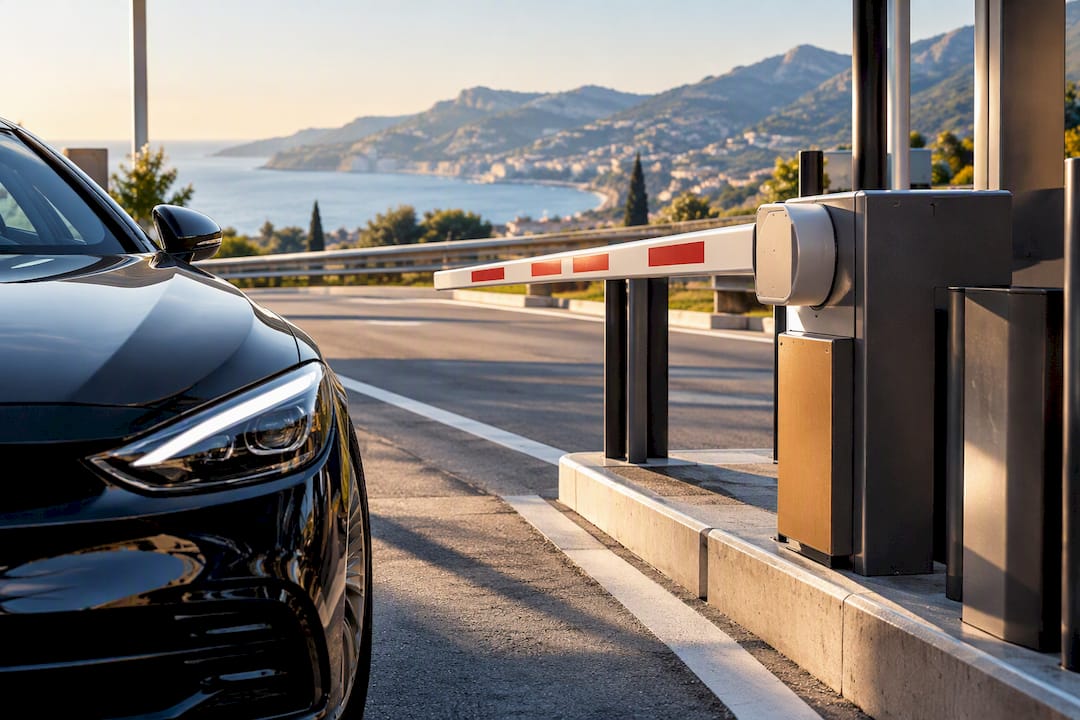
French and Italian autostrade both operate distance-based tolls, collected at barriers by card, cash or an electronic toll badge fixed to the windscreen. The badge lets you glide through dedicated lanes without stopping, which matters on a route crossing two countries' toll networks in one day.
The Fréjus Tunnel charges a separate one-way fee of €55.50 for a standard car in 2026, distinct from the ordinary autostrada tolls, and it only applies to drivers taking the inland route through the tunnel itself.
- Budget separately for standard motorway tolls and, if relevant, the Fréjus Tunnel charge.
- Card payment is accepted almost everywhere, though carrying some cash covers smaller or older toll plazas.
- A electronic toll transponder, hired with the car or borrowed from a rental company, speeds up every barrier crossing.
- Fuel costs vary with the vehicle, but a mid-size car over 315 to 340 kilometers will typically need one full tank.
Documents and vehicle checks before you cross into Italy
Crossing from France into Italy by road involves no passport control under the Schengen arrangement, but you still need the paperwork that proves the car and its driver are legitimate. Carry your driving license, the vehicle's registration document, and proof of insurance valid for Italy. A green card is worth keeping in the glovebox even where not strictly demanded, since it settles any roadside query quickly.
Hired or leased vehicles need particular attention: not every rental agreement permits cross-border travel, and some insurers exclude Italy or the Fréjus Tunnel specifically, so read the contract before you leave the depot.
- Driving license, vehicle registration and valid insurance documents, kept together and accessible.
- A green card or equivalent proof of Italian coverage, even when not routinely checked.
- A basic safety kit: warning triangle, high-visibility vest, and a spare bulb kit for older vehicles.
- Winter tires or snow chains between mid-autumn and spring if taking the inland alpine route.
Check your vehicle's emissions class on the Motorist Portal before you leave home, to ensure compliance before entering Milan's low emission zones.
Milan's Area B and ZTL rules for visiting drivers
Milan restricts a large portion of its municipal area under Area B, an electronically enforced low-emission zone covering most of the city within the ring road. Since 1 October 2025, Area B has excluded certain older petrol vehicles rated Euro 3, a change that catches out visitors driving older cars from outside Italy.
Milan enforces Area B through numerous camera-monitored gates called varchi; being unaware of your vehicle's emissions classification is the main cause of fines for foreign drivers.
- Check your vehicle's Euro class against Area B rules before entering the city, not after.
- Consult the municipal map of varchi to identify which entry points sit inside the restricted zone.
- Non-resident vehicles that qualify for temporary access can sometimes use the MoVe-In box scheme, though allowances are limited and must be arranged in advance.
- Parking outside the ring road and using public transport for the final stretch avoids the question entirely.
Staying safe and on schedule between the two cities
Ligurian motorways schedule night-time maintenance on the A10 and A7 corridors with some regularity, and these closures can force an unexpected detour if you are driving after dark. Checking Autostrade per l'Italia's viability notices before you set off, rather than relying on memory of a previous trip, remains the most reliable habit for any Riviera to Lombardy run.
- Check Autostrade's live updates and the Liguria regional bulletins the morning you travel.
- Build in one rest stop roughly every two hours, useful for fuel, coffee and a change of driver.
- Fit a electronic toll badge before departure if your rental allows it, saving time at every barrier.
- Treat the alpine Fréjus route with extra caution in winter, and expect coastal congestion near Cannes or Monaco during major events.
Recommended stops and two ready-made itineraries
Whichever route you take, a handful of stops turn a transit drive into something more memorable without adding much time.
- Chin, just before the Italian border, rewards a twenty-minute wander through its old town and lemon-scented streets.
- Monaco offers a quick detour to the harbor or the Casino Square, best kept brief given its notorious parking.
- Sanremo, on the Italian coastal stretch, suits a proper lunch stop with its seafront promenade.
- Inland travelers can pause in the Maurienne valley before the Fréjus Tunnel, where mountain views justify fifteen minutes out of the car.
For a fast transfer, leave Nice by 8am, take the coastal A8, and expect arrival in Milan by early afternoon after one short fuel stop. For a scenic day, leave by 7am, take the inland Fréjus route, stop for a mountain coffee near Modane, then lunch in Turin before the final leg to Milan.
Anyone travelling around the Cannes Film Festival, Monaco Grand Prix, MIPIM gold Cannes Lions should add at least an hour to coastal timings and consider leaving well before the morning rush.
When a self-drive plan gives way to a chauffeured transfer
Self-driving suits travelers with time and a taste for the open road, but certain situations tip the balance, making a concierge private driver a preferable option to navigate Italy's ZTL zones and VIP travel needs (Avoid ZTL Fines: Concierge Private Drivers in Italy for VIP Travelers). Group travel with heavy luggage, a fixed arrival deadline during MIPCOM or the Grand Prix, or simple reluctance to gamble on Area B eligibility all favor a professional driver who manages route changes, paperwork and local rules without your involvement. TranspOnyx operates exactly this kind of long-distance transfer from the Riviera into Italy.
— Dany
Booking a TranspOnyx transfer from Nice to Milan
Travelers who would rather arrive rested than navigate tolls and Area B rules themselves have a direct alternative. TranspOnyx runs point-to-point long-distance transfers from Nice to Italy, including Milan, under fixed 2026 rates confirmed at the time of booking, with no surprises added en route.
The fleet covers four Mercedes-Benz categories: Standard Sedan and Business Sedan for up to three passengers, and Van 7 pax or Van 8 pax for larger groups or extra luggage. Every vehicle carries Wi-Fi, air conditioning, chilled water and phone chargers, and drivers are licensed VTC professionals fluent in at least English and French. TranspOnyx operates 24 hours a day, seven days a week, with free waiting time included on airport pickups.
- Fixed 2026 rates per vehicle, agreed before you travel, with no surge pricing.
- Bilingual licensed drivers who handle Italian border and Area B considerations directly.
- Booking by phone on +33 6 10 30 71 84, by WhatsApp, or via the TranspOnyx website.
For travelers already comparing chauffeur options for Riviera legs, the Nice to Marseille transfer service shows how the same fixed-rate, point-to-point model works on other long-distance routes.
Where to check live conditions before you leave
Confirm motorway status with Autostrade per l'Italia, whose bulletins cover closures and scheduled works on the A10 and A7. Verify Milan access rules through the Area B guidance and the Portale dell'Automobilista. For distance, timing and toll estimates, ViaMichelin's route planner remains a dependent reference, alongside TyreMap's toll breakdown.
Sources
FAQ
How can I get from Nice to Milan by car?
Take either the coastal A8 through Monaco and Ventimiglia or the inland route via the Fréjus Tunnel onto the A32 and A4. Both are manageable in a single day, with the coastal option generally favored for reliability and the inland option for shorter distance on paper, as detailed in the route comparison above.
What is the best route to drive from France to Italy?
There is no single best route for every trip. The coastal A8 suits drivers who want predictable motorway conditions and avoid the separate Fréjus Tunnel charge, while the inland Fréjus road suits those prioritizing alpine scenery or dodging coastal congestion near Cannes or Monaco.
What is the best way to travel from Nice to Milan?
Self-driving works well for travelers who enjoy the flexibility of stopping at Menton, Monaco or Sanremo along the way. Those preferring not to manage tolls, borders and Milan's Area B rules often choose a chauffeured transfer instead, arranged directly with a provider such as TranspOnyx.
Is it possible to drive from France to Italy?
Yes, driving between France and Italy is routine and requires no passport control under the Schengen arrangement. You do need your driving license, vehicle registration and valid insurance documents, plus awareness of Milan's Area B emissions rules if your final destination lies within the city.