
The Standard Sedan and Business Sedan reach most single-lane villa approaches without difficulty, provided the lane holds a width of roughly 2.4 meters or more. The Van 7 pax and Van 8 pax handle groups and luggage well but need wider turning space, so they can struggle on the hairpin lanes common above Saint-Jean-Cap-Ferrat or in the hills behind Menton. When a driveway is genuinely too narrow, the fix is rarely complicated: a kerbside meeting point, an authorized loading bay, a short assisted walk with luggage carried the last stretch. In Saint-Tropez, occasionally a dock handover.
The single most useful thing a traveler, concierge or hotel can do before arrival is send Transponyx the full address, GPS pin, gate code and a photo of the approach. That step, more than any vehicle choice, determines whether the transfer runs smoothly.
- Standard Sedan / Business Sedan: best default for single-lane villas, tight gates, formal entrances
- 7-pax van / 8-pax van: needed for groups or heavy luggage, but flag narrow lanes in advance
- No drive access: curbside pickup, loading bay, short walk, or dock transfer near the coast
Access snapshot: most narrow-lane villa transfers on the Riviera need only 5 to 20 extra minutes once the vehicle and meeting point are matched correctly in advance, according to Riviera peak-season transfer guidance.
Which vehicle suits a narrow villa approach?
Lane width, not engine size, decides which car gets to the gate. A Standard Sedan or Business Sedan measures close to the width of an ordinary family car, which lets it clear the stone walls, blind bends and single-track sections typical of hillside villas above Villefranche-sur-Mer or Eze. A van, by contrast, needs meaningfully more room to complete a three-point turn or reverse into a gateway, and that extra meter or so of swept width is exactly what a switchback lane will not give it.
Transponyx runs private driver services across the French Riviera using a fleet built entirely around this trade-off.
Standard Sedan and Business Sedan (up to 3 passengers each) follows the majority of villa transfers where the lane is genuinely single-track or the entrance sits behind a tight stone gateway. The Business Sedan adds a premium finish for clients who want the same maneuverability with a more formal arrival, useful for a business trip into Cannes or a discreet drop at a private estate near Antibes.
7-pax van and 8-pax van solve a different problem: family groups, wedding parties, or anyone traveling with ski bags or extra luggage from Isola 2000. Editorial guidance on Riviera transfers is consistent on this point: a business van suits families and larger luggage loads, but the same source warns against sending a full-size van up a single-track hill lane where it becomes, in practical terms, a liability rather than an asset, as Riviera peak-season transfer guidance notes.
A workable rule of thumb: if the lane measures under roughly a certain narrow width, book a Sedan. If the group size or luggage genuinely needs a van and the lane is tight, stage a luggage transfer at a wider point, or agree a drop location with the property manager before booking.
Pro Tip Ask the villa manager for the width of the tightest point on the approach, not the average width. One narrow pinch point near the gate is what stops a van, even if the rest of the lane is comfortable.
Where should the driver meet you if the gate is unreachable?
- Nearest public parking bay or lay-by. The most common fallback for hillside villas, usually adding only a five-minute walk with luggage carried by hand or trolley.
- Villa manager or concierge door. Many properties have a staffed side entrance that the driver can reach even when the main gate cannot take a car; confirm this point by name before the transfer, not on arrival.
- Authorized loading bay. Common in dense villages such as the old town areas near Antibes or Menton, where municipal loading zones allow a brief stop for luggage handling.
- Airport kerb at Nice NCE. For guests connecting straight to a villa transfer, this remains the standard, unproblematic starting point regardless of how narrow the destination lane is.
- Port or dock handover in Saint-Tropez. During peak season, the D559 approach into the peninsula becomes so congested that a boat transfer to a quayside point can genuinely outpace a car, a pattern local coverage of Saint-Tropez summer congestion documents in detail.
Licensed operators with municipal authorization can secure drop-offs in Saint-Tropez that generic transfer bookings simply cannot access, a point FFGR Monaco's Saint-Tropez guidance makes explicitly. Whichever point you choose, ask the property for written confirmation and a photo of the gate itself, not just a description. A photo settles disputes about width and surface before the driver is halfway up the hill.
How much extra time should you budget for narrow access?
Extra time depends on how far the vehicle has to stop short of the door, and how much help is needed once it does. A short walk with hand luggage typically adds a few minutes more. A gated approach that needs a call to property staff to open a barrier or unlock a side gate usually adds some additional time. Complex cases, an authorized access permit, a staged luggage transfer, or a dock handover in Saint-Tropez, can add substantially more time once waiting and coordination are included.
| Scenario | Typical extra time | Example location |
|---|---|---|
| Short walk, hand luggage | a few minutes | Hillside villa, Villefranche-sur-Mer |
| Gated approach, staff assistance needed | extra time added | Private estate, Antibes or Menton |
| Authorized access or dock transfer | significantly more time | Saint-Tropez peninsula, peak season |
Peak events multiply these figures sharply. During the Cannes Film Festival, MIPIM or the Monaco Grand Prix, road closures and diversions around Monaco and Cannes can turn a normal 35-minute transfer from Nice NCE into well over an hour, so event-driven transport scarcity is worth building into any booking made for those weeks. For Saint-Tropez in July and August, operators recommend booking at least three weeks ahead and arranging any municipal or venue authorization in advance, according to FFGR Monaco, because the peninsula's single main approach leaves almost no fallback route.
The buffer that saves the transfer: 60 minutes of free waiting time on every Transponyx airport pickup, with flight monitoring included as standard, absorbs most of the delay that narrow-lane access adds. Fixed 2026 per-vehicle rates mean none of that extra handling time triggers an overload.
What to send the driver before you arrive
Send this before booking confirmation, not on the day:
- Full postal address and a GPS pin, since some villa entrances sit some distance from the address a satnav returns
- Gate code or intercom instructions
- Preferred unloading spot, if the villa manager has already identified one
- Photos of the approach lane and the gate itself
- Direct contact for the property manager or housekeeper
Confirm these details 24 to 48 hours before arrival:
- Flight or train number, so flight monitoring can track any delay automatically
- Expected arrival time and number of guests traveling
- Luggage volume, plus any child seat or accessibility requirement
- Agreed waiting point if the driver cannot reach the gate
- A backup contact number for the day itself, in case plans shift
This checklist mirrors what serious Riviera operators ask for as standard practice, confirmed by editorial guidance on villa transfer logistics: exact address, access notes and a clear answer on where the car will actually stop.
Keeping the handoff smooth when the lane gets tight
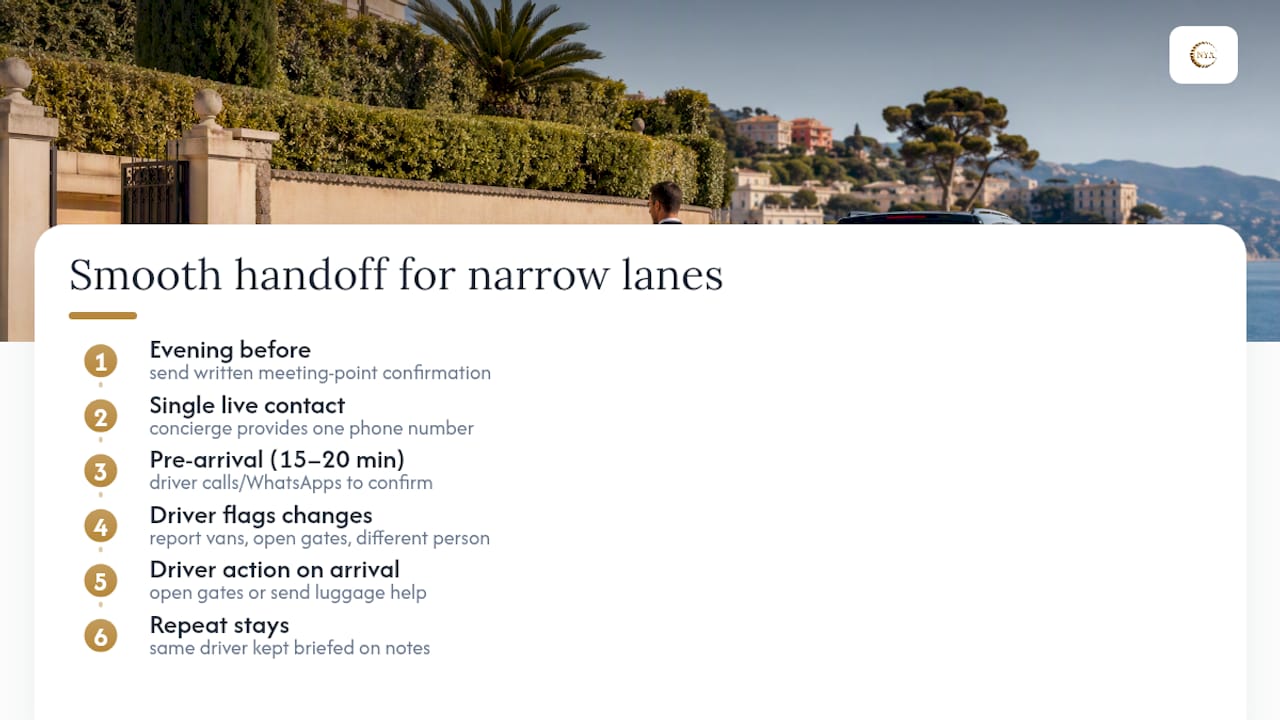
Good communication on the day matters more than any app or tracking link. The most reliable pattern is a short call or WhatsApp message from the driver roughly 15 to 20 minutes before arrival, confirming the exact meeting point agreed at booking and flagging anything that has changed, a delivery van blocking the lane, a gate left open, a different family member waiting outside.
For groups arriving from Nice NCE, this matters most in the final stretch: the driver knows the flight has landed through flight monitoring, but a second message once the vehicle is closed to the villa lets property staff open gates or send someone down to help with luggage. Transponyx drivers, all licensed VTC professionals and bilingual in English and French at minimum, are trained to make that call directly rather than leaving it to the guest to chase.
Concierges and hotels booking on a guest's behalf should ask for a single point of contact number that stays live throughout the transfer, not a booking reference passed between departments. Transponyx supports villa guest logistics through a dedicated villa rental service, which keeps the same driver briefed on access notes for repeat stays rather than starting from scratch each time. Written confirmation of the meeting point, sent the evening before rather than assumed, removes almost all of the friction that narrow-lane transfers otherwise create on the day.
Safety habits that matter on narrow Riviera lanes
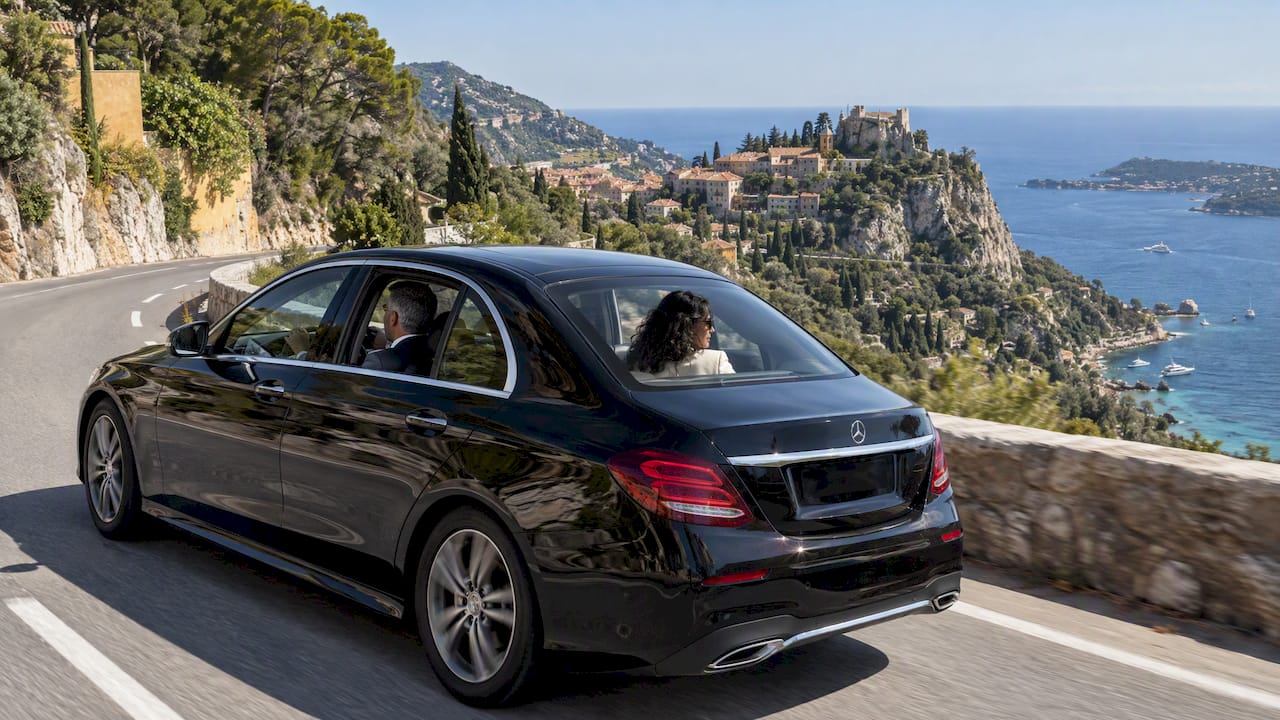
Speed is rarely the risk on these roads; visibility and judgment are. A lane that hugs a stone wall on one side and a drop on the other rewards a driver who knows exactly where the passing points are, and that knowledge tends to come from repetition rather than satnav guidance. Local driving knowledge of market days, back roads and short-cuts routinely saves more time than any difference in vehicle spec, as Riviera transfer guidance points out.
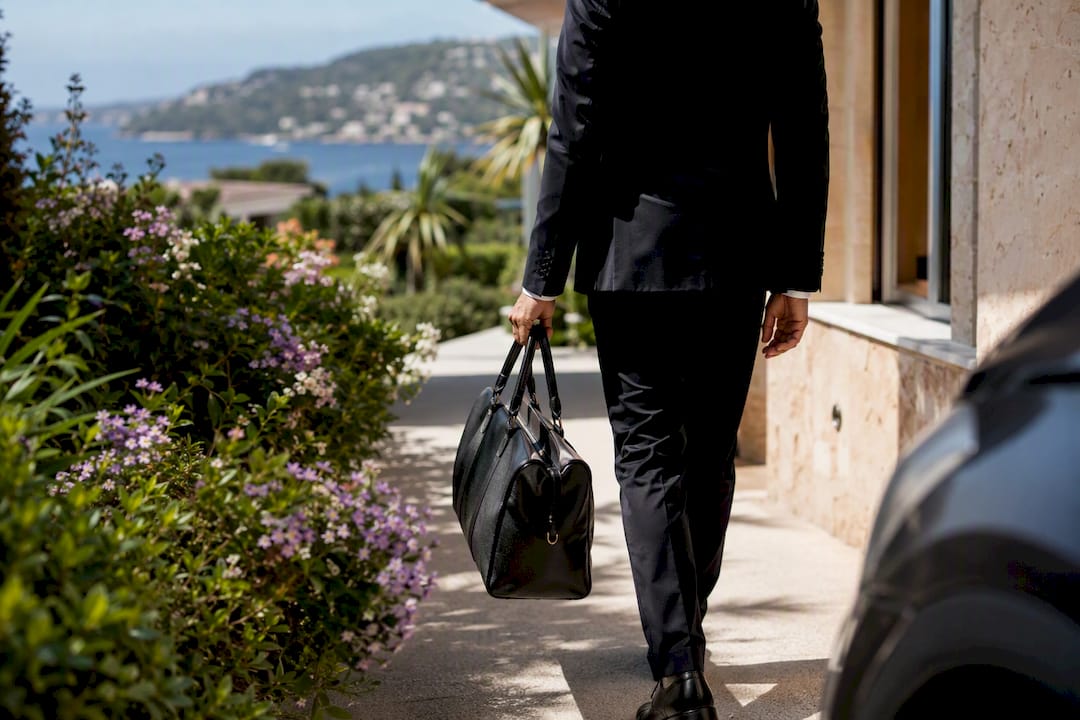
Luggage handling deserves the same care as the driving. On a steep or uneven approach, wheeled cases can tip or roll, so a driver carrying bags the final stretch on foot is safer, and faster, than trying to maneuver a case over gravel or cobbles. Passengers stepping out on a narrow lane should always exit on the wall side rather than the drop side where the road allows it, and children should be moved out of the vehicle first if the stop is on a bend with limited sightlines.
Night arrivals raise the stakes further: unlit gates and unmarked yards are common outside villages near Grasse or in the hills above Cannes. A driver who has made the same run before, rather than one navigating purely by GPS, tends to spot a hazard before it becomes a problem.
Author perspective: local knowledge decides the outcome
Guests flying into Nice NCE and heading straight to a villa above Cannes during festival week rarely appreciate how much depends on the driver's memory of that specific lane, not the satnav. The three things that actually determine a calm arrival: matching the vehicle to the lane, sending full access details before booking, and building in a time buffer rather than assuming a straight run. Transponyx builds its fleet and its booking process around exactly that discipline, with fixed 2026 rates and drivers reachable directly on +33 6 10 30 71 84.
Booking the right vehicle for your villa in 2026
Transponyx is the practical fix for narrow-lane villa access on the Riviera: instead of guessing which car will fit, you tell us the lane and we send the right one. The fleet covers every scenario this article has described, Standard Sedan and Business Sedan for tight single-lane approaches, Van 7 pax and Van 8 pax for groups and luggage where the lane allows it, alongside private guided tours and dedicated villa guest services for repeat stays.
Every booking comes with a licensed, bilingual VTC driver, flight monitoring on airport pickups, and fixed 2026 per-vehicle rates with no surge pricing, whatever the Cannes Film Festival or Monaco Grand Prix does to local traffic. The service runs 24 hours a day, so a late change to a gate code or arrival time never has to wait until morning.
Send your villa's address, gate code and an approach photo when you book through the Nice airport transfer page, or call +33 6 10 30 71 84 to talk through the lane before you commit to a vehicle. That single step is what turns a narrow-road villa transfer from a guessing game into a fixed, confirmed arrival.
Sources
FAQ
Can a Van 8 pax reach any villa on the Riviera?
Not always. Vans need more turning space than a lane under roughly 2.4 meters wide allows, so tight hillside approaches often call for a Standard Sedan or Business Sedan instead, with luggage staged if needed.
What happens if the driveway is too narrow for any vehicle?
The driver meets you at the nearest safe point, a kerbside bay, an authorized loading zone, or the villa's side entrance, and luggage is carried the final stretch on foot.
How much extra time should I add for a narrow-access villa?
Extra time varies: a few minutes for a short walk, more when property staff need to open a gate, and significantly more for authorized access or a Saint-Tropez dock transfer.
Does Transponyx charge extra for narrow-road access or waiting?
No. Transponyx applies fixed 2026 per-vehicle rates with no surge pricing, and includes 60 minutes of free waiting time on airport pickups and 20 minutes elsewhere.
What should I send the driver before arrival?
Send the full address, GPS pin, gate code, a photo of the approach and gate, and the property manager's contact number, ideally at booking rather than on the day.

0 Comments