
Choosing a luxury vehicle is a lifestyle decision, not simply a car purchase. The term “luxury vehicle” refers to any car that prioritizes superior comfort, advanced technology, and premium materials above baseline transport function. In 2026, the category spans everything from full-size executive saloons to electric grand tourers, and luxury vehicle selection increasingly reflects a buyer's values as much as their budget. This guide walks you through every factor that matters, from assessing your daily needs to understanding ownership costs, so you can make a confident, informed decision. Transponyx, a private chauffeur service operating daily across the French Riviera, works with this category of vehicle every day and understands what separates a satisfying purchase from a costly regret.
How to choose a luxury vehicle: start with your lifestyle
The most common mistake luxury buyers make is visiting a dealership before they have answered the most basic questions about their own lives. Discerning buyers match vehicle capabilities with personal needs and report measurably higher satisfaction than those who buy on brand prestige alone. That finding should shape every step of your research.

Clarify your daily driving patterns
Begin with your commute. A buyer who covers 200 kilometers per day on motorways has entirely different requirements from someone navigating the narrow streets of Antibes or the hairpin bends above Monaco. Commute length, passenger capacity, and urban versus off-road usage are the three variables that most reliably predict whether a vehicle will satisfy you in twelve months' time.
Passenger numbers matter more than buyers expect. A couple traveling between Nice Côte d'Azur Airport and Cannes needs nothing larger than a well-appointed saloon. A family of five attending the Monaco Grand Prix or the Cannes Film Festival needs genuine rear-seat space, not a marketing claim about it.
Consider the terrain. The Côte d'Azur combines coastal motorways, mountain passes to resorts such as Isola 2000 and Valberg, and congested urban centers. A vehicle that performs beautifully on the A8 autoroute may feel unwieldy on the Route de la Corniche. Identify your most frequent routes before you shortlist models.
Prioritize the right driving experience
Luxury buyers often conflate sportiness with quality. They are not the same thing. A grand tourer with a firm suspension tune delivers a different experience from an executive saloon with air suspension, and neither is objectively superior. The right choice depends on whether you value driver engagement or passenger comfort, and on whether your roads reward one over the other.
Pro Tip Before any test drive, write down the three journeys you make most often. Bring that list to the dealership and ask the sales representative to configure the test route to match at least one of them.
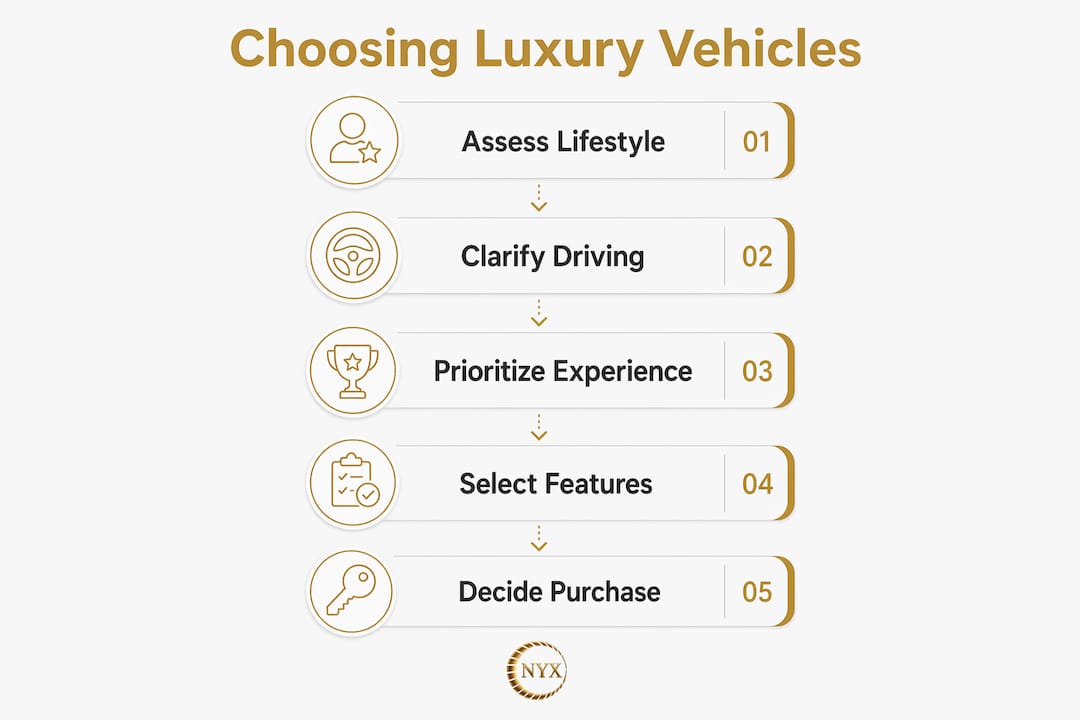
Satisfied luxury vehicle owners conduct rigorous self-reflection on commuting patterns and passenger needs before they set foot in a showroom. The buyers who skip this step are the ones who trade their vehicle within two years.
What features should you prioritize in a luxury vehicle?
The best luxury vehicle features in 2026 fall into four categories: safety technology, interior comfort, performance, and powertrain. Rank these categories for yourself before you begin comparing models, because no vehicle leads in all four simultaneously.
Safety and driver assistance systems
Adaptive cruise control is now standard across the luxury segment, but the quality of implementation varies considerably. Test drives should include both highway and city environments to evaluate how a system behaves in dense traffic versus open road conditions. A system that feels confident at 130 km/h on the A8 may hesitate or brake sharply in the stop-start traffic approaching Cannes during the Film Festival. Test it in both conditions before you commit.
Lane-keeping assist, blind-spot monitoring, and automatic emergency braking are the three systems that most directly affect daily safety. Evaluate each one on your actual roads, not on a smooth manufacturer test track.
Interior comfort and premium amenities
Multi-zone climate control, massaging front seats, and a premium audio system are the features that enhance daily vehicle satisfaction most consistently. Cosmetic extras that do not improve the experience, such as decorative trim packages or branded key fobs, add cost without adding value. Spend your options budget on what you will use every day.
Rear-seat comfort deserves specific attention if you carry passengers regularly. Legroom, seat angle, and individual climate vents matter far more to a rear passenger than the brand badge on the headrest.
Performance and powertrain
- Engine smoothness is the defining characteristic of a luxury powertrain. Refinement at idle and at motorway speed matters more than peak power output for most buyers.
- Sophisticated suspension separates a luxury vehicle from a performance car. Adaptive air suspension, available on most executive saloons, adjusts to road surface in real time and transforms the experience on the uneven roads above Menton.
- Fuel efficiency and electrification are no longer secondary considerations. Hybrid and fully electric options now cover the full luxury segment, and luxury vehicle choice in 2026 increasingly prioritizes electric capability as a form of future-proofing.
- Noise insulation is the feature buyers most frequently underestimate. Wind and road noise at motorway speed define long-distance comfort more than seat material.
Pro Tip Request a 48-hour extended test drive if the dealership offers one. One afternoon is not enough to evaluate a vehicle you will own for five years.
New, certified pre-owned, or used: which should you choose?
The purchasing path you choose affects your total cost of ownership as much as the model you select. Each option carries distinct advantages and specific risks.
The case for certified pre-owned vehicles
Certified pre-owned (CPO) luxury vehicles offer extended factory-backed warranties and multi-point inspections that reduce the risk associated with standard used models. Depreciation savings of 30–40% are common when choosing a three-year-old vehicle over a new equivalent. That saving is real money that can fund five years of servicing.
The critical caveat is that CPO programs vary significantly between manufacturers. Not all programs provide equal coverage, equal deductible amounts, or equal inspection depth. The CPO badge is a starting point, not a guarantee. Always request the full inspection report and the vehicle's individual service history before signing anything.
Buying new
A new vehicle gives you full manufacturer warranty, the latest technology specification, and the ability to configure exactly what you want. The trade-off is immediate depreciation. A luxury saloon loses a significant portion of its value the moment it leaves the forecourt. If you plan to keep the vehicle for ten years or more, that depreciation curve matters less. If you change vehicles every three to four years, buying new is the most expensive way to use a luxury car.
Buying used without CPO status
A standard used luxury vehicle carries the highest financial risk in the segment. Advanced driver assistance systems, air suspension, and proprietary infotainment platforms all require specialist diagnosis when they develop faults. Independent mechanics often lack the proprietary diagnostic equipment needed to service these systems, which forces owners back to authorized dealers at premium rates. Budget for that reality before you buy.
| Purchase path | Typical saving vs new | Warranty coverage | Risk level |
|---|---|---|---|
| New | None | Full manufacturer | Low |
| Certified pre-owned | 30–40% | Extended factory-backed | Medium |
| Standard used | 40%+ | None or third-party only | High |
The table above reflects general market patterns. Individual vehicles and programs vary. Always verify coverage terms in writing.
Understanding the full cost of luxury vehicle ownership
The sticker price is the least useful number in a luxury vehicle transaction. The total cost of ownership includes taxes, insurance, servicing, fuel, and financing charges, and for luxury models, each of those line items is higher than the equivalent for a mainstream vehicle.
Out-the-door pricing and hidden fees
Buyers frequently focus on monthly payments rather than total out-the-door cost, which creates the conditions for expensive surprises at the point of signing. Dealer fees, registration charges, delivery costs, and local taxes can add thousands to the final figure. Request a full written breakdown before any negotiation begins. The number that matters is the total amount you will pay, not the monthly installation.
Financing options
Cash purchase eliminates interest costs but ties up capital that could generate returns elsewhere. Spread payments through a finance agreement preserve liquidity but add interest over the term. Lease agreements offer lower monthly costs and regular model updates, but you build no equity and face mileage restrictions that can be punishing if your driving patterns change.
For buyers on the French Riviera who travel frequently between Nice, Monaco, and Cannes, mileage accumulates quickly. A lease with a restrictive annual cap can become expensive within the first year.
Insurance and maintenance
Some luxury models demand specialized insurance policies and premium maintenance schedules that standard policies do not cover adequately. Agreed-value policies, which pay the vehicle's insured value rather than its depreciated market value in the event of a total loss, are worth the additional premium for high-value vehicles.
Maintenance costs vary widely by brand. Luxury vehicle servicing frequently requires proprietary diagnostics and brand-specific parts, which restricts your choice of service provider and elevates costs. Factor authorized dealer servicing intervals into your annual budget from day one.
- Confirm whether your preferred model requires dealer-only servicing for warranty validity.
- Request a five-year maintenance cost estimate from the manufacturer before purchase.
- Check whether the manufacturer offers a prepaid service plan, which can reduce long-term costs.
- Verify that your insurer has experience with the specific model and its technology systems.
Steps to selecting and purchasing your ideal luxury vehicle
A structured approach to the purchase process prevents the two most common errors: buying the wrong vehicle and paying too much for the right one.
-
Set a firm total budget. Include purchase price, taxes, insurance, annual servicing, and fuel. A vehicle that fits your monthly payment but strains your annual budget is the wrong vehicle.
-
Research and shortlist models. Use your lifestyle assessment to filter by body style, powertrain, and passenger capacity. Reduce your shortlist to three models before visiting any dealership.
-
Schedule comprehensive test drives. Drive each shortlisted model on the roads you actually use. For Riviera buyers, that means coastal motorways, mountain approaches, and urban centers. A single dealership circuit proves nothing.
-
Arrange a professional inspection for used and CPO models. An independent inspection by a qualified technician costs a small fraction of the purchase price and can reveal issues the CPO badge does not disclose. Comprehensive inspection beyond the CPO badge is essential for any pre-owned luxury vehicle.
-
Compare financing offers from multiple sources. Your bank, the manufacturer's finance arm, and independent lenders will each offer different terms. The dealership's in-house finance is rarely the most competitive option.
-
Negotiate on total price, not monthly payment. Dealers are trained to anchor negotiations to the monthly figure. Negotiate the out-the-door price first, then discuss payment structure separately.
-
Review the contract in full before signing. Confirm warranty terms, servicing obligations, and any clauses that affect your ability to use an independent mechanic. If a term is unclear, ask for it in writing before you proceed.
What I have learned about buying luxury vehicles on the French Riviera
The Riviera changes how you use a luxury vehicle in ways that buyers from other markets rarely anticipate. The distances are short but the variety of road conditions is extreme. You might cover 30 kilometers in a day and travel from sea level to 1,600 meters, from a motorway to a single-track mountain road, from a hotel forecourt in Cannes to a ski resort car park above Auron. No single vehicle excels in every one of those environments.
What I have observed over years of covering luxury ground transport in this region is that buyers consistently overweight brand prestige and underweight ride quality on imperfect surfaces. The roads between Menton and the Italian border, or the approach to Saint-Tropez in summer, will expose a firm suspension tune in ways that a test drive in Monaco never will.
The other pattern I see repeatedly is buyers who underestimate the value of a well-chosen alternative to ownership for specific journeys. During the Monaco Grand Prix or MIPIM in Cannes, parking is scarce, traffic is severe, and the stress of driving a vehicle you have just paid six figures for through a congested event zone is real. HAS private chauffeur service for those specific occasions is not a concession. It is the most intelligent use of a luxury budget.
The buyers I respect most in this market are those who treat the purchase as a long-term relationship rather than a transaction. They read service records the way a lawyer reads a contract. They test drive in rain as well as sunshine. They ask the dealer what the vehicle costs to maintain at 80,000 kilometers, not just at delivery. That discipline is what separates a satisfying ownership experience from an expensive lesson.
— Dany
Transponyx: luxury ground transport while you decide and after you buy
Selecting the right vehicle takes time. During that period, and for the journeys where driving yourself is simply not the right choice, Transponyx provides private chauffeur services across the French Riviera with 2026 fixed rates confirmed at booking.
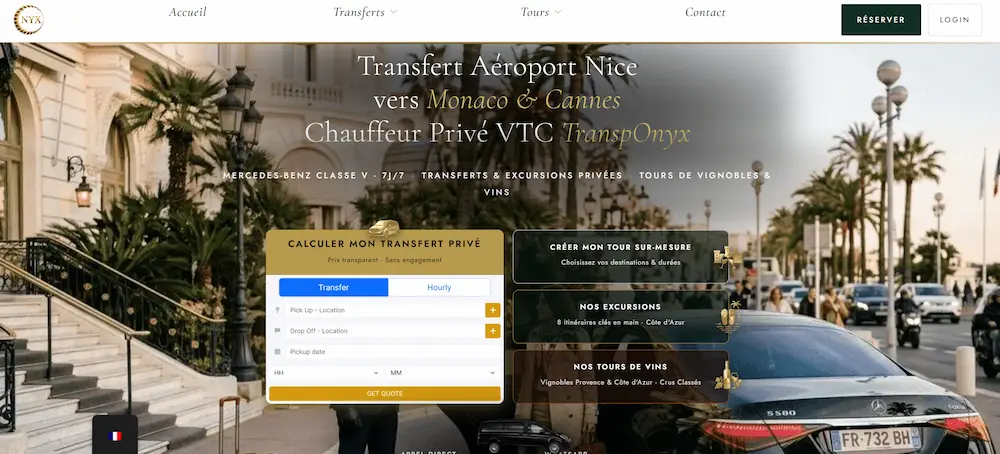
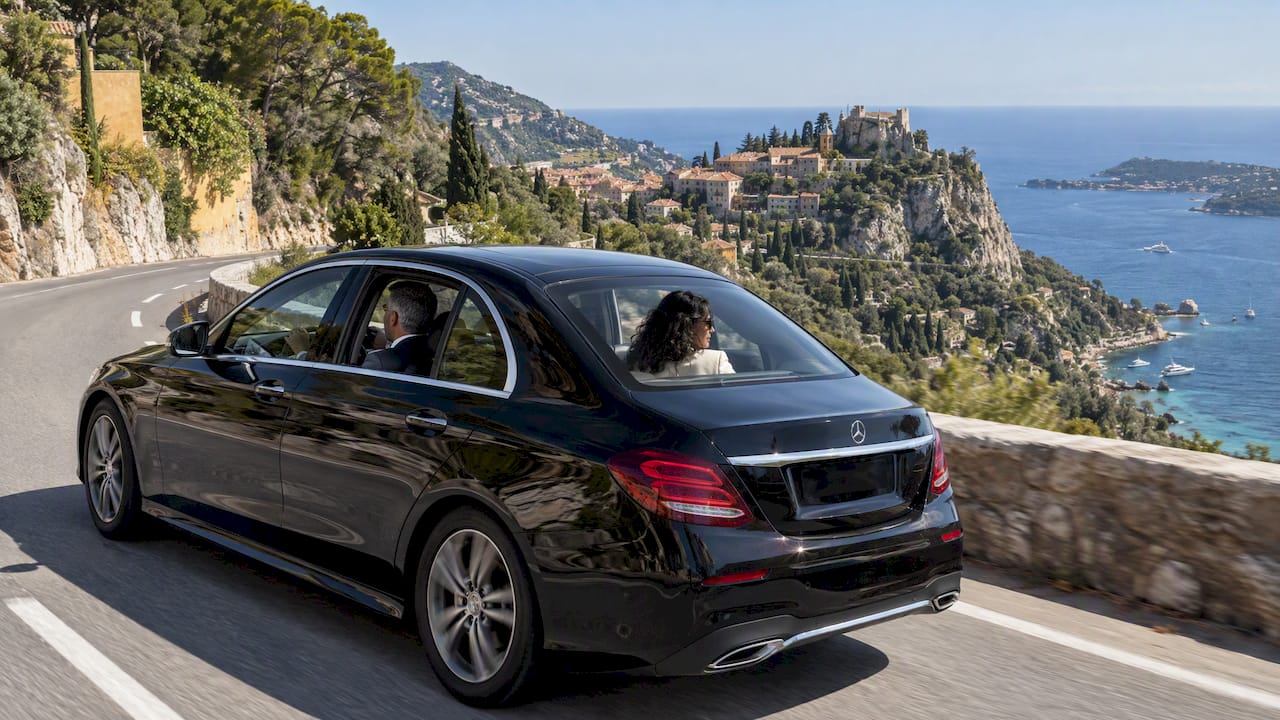
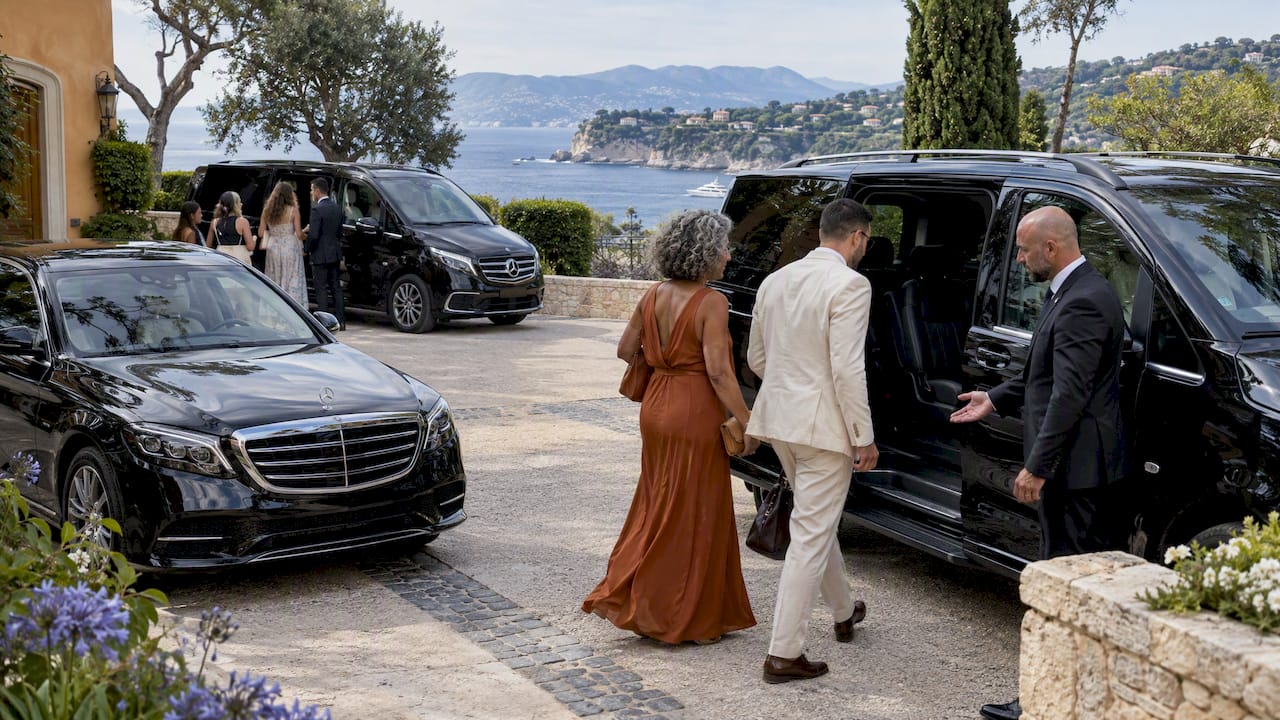
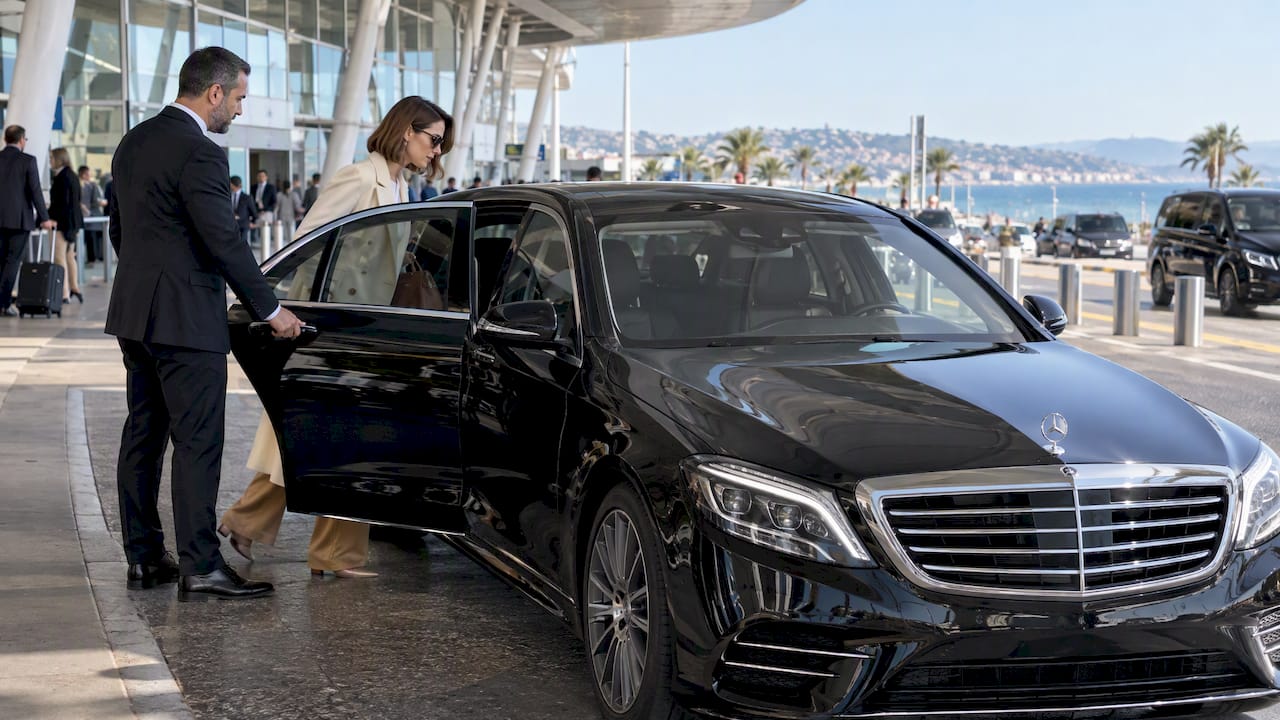
The fleet covers every group size, from the Standard Sedan and Business Sedan for up to three passengers, to the Van 7 pax and Van 8 pax for larger parties. All vehicles are Mercedes-Benz, equipped with Wi-Fi, air conditioning, chilled water, and phone chargers. Transponyx operates 24 hours a day, 7 days a week, covering Nice Côte d'Azur Airport transfers to Monaco, Cannes, Antibes, Menton, and Saint-Tropez, as well as long-distance routes to Milan and Provence. During major events including the Cannes Film Festival, Monaco Grand Prix, and Cannes Lions, fixed-rate transfers remove the uncertainty that event traffic creates. Book via transponyx.com or call +33 6 10 30 71 84.
FAQ
What defines a luxury vehicle in 2026?
A luxury vehicle is defined by superior comfort, advanced safety technology, premium materials, and a level of refinement that goes beyond baseline transport. In 2026, the category increasingly includes electric and hybrid powertrains as standard expectations.
How much should I budget beyond the sticker price?
Dealer fees, taxes, registration, insurance, and annual servicing typically add a substantial sum above the advertised price. Always request a full out-the-door cost breakdown in writing before negotiating.
Is a certified pre-owned luxury vehicle worth buying?
A CPO vehicle offers depreciation savings of 30–40% compared to new, with extended factory-backed warranty coverage. The quality of CPO programs varies by manufacturer, so always review the individual service record and inspection report before purchase.
How do I evaluate luxury vehicle features effectively?
Test drive each shortlisted model in the conditions you actually drive, including motorway, urban, and varied road surfaces. Focus on adaptive cruise control behavior, suspension quality, rear-seat comfort, and noise insulation rather than cosmetic options.
When does hiring a driver make more sense than driving?
During high-traffic events such as the Monaco Grand Prix or the Cannes Film Festival, a private chauffeur eliminates parking costs, traffic stress, and the risk of damage to a high-value vehicle. Transponyx provides fixed-rate transfers across the French Riviera for exactly these situations.
0 Comments