
Seamless travel is defined as the deliberate elimination of friction points across every stage of a journey, so that travellers move from origin to destination with confidence, comfort, and minimal disruption. In 2026, the importance of seamless travel has never been more pronounced. Biometric identification, fixed-rate private transfers, and structured travel routines are converging to reshape what passengers expect from every trip. For leisure travellers and event participants arriving at Nice Côte d’Azur Airport (NCE) for the Cannes Film Festival, the Monaco Grand Prix, or MIPIM, the difference between a fractured itinerary and a composed arrival is not accidental. It is the product of deliberate planning, reliable ground transport, and technology that removes the need to manage every detail manually.
What is the role of seamless travel in modern journeys?
Seamless travel is the infrastructure that allows a journey to function as a single, coherent experience rather than a series of disconnected transactions. The concept spans biometric check-in at departure, reliable connectivity in transit, and a confirmed vehicle waiting at arrivals. Each element depends on the others. Remove one, and the chain breaks.
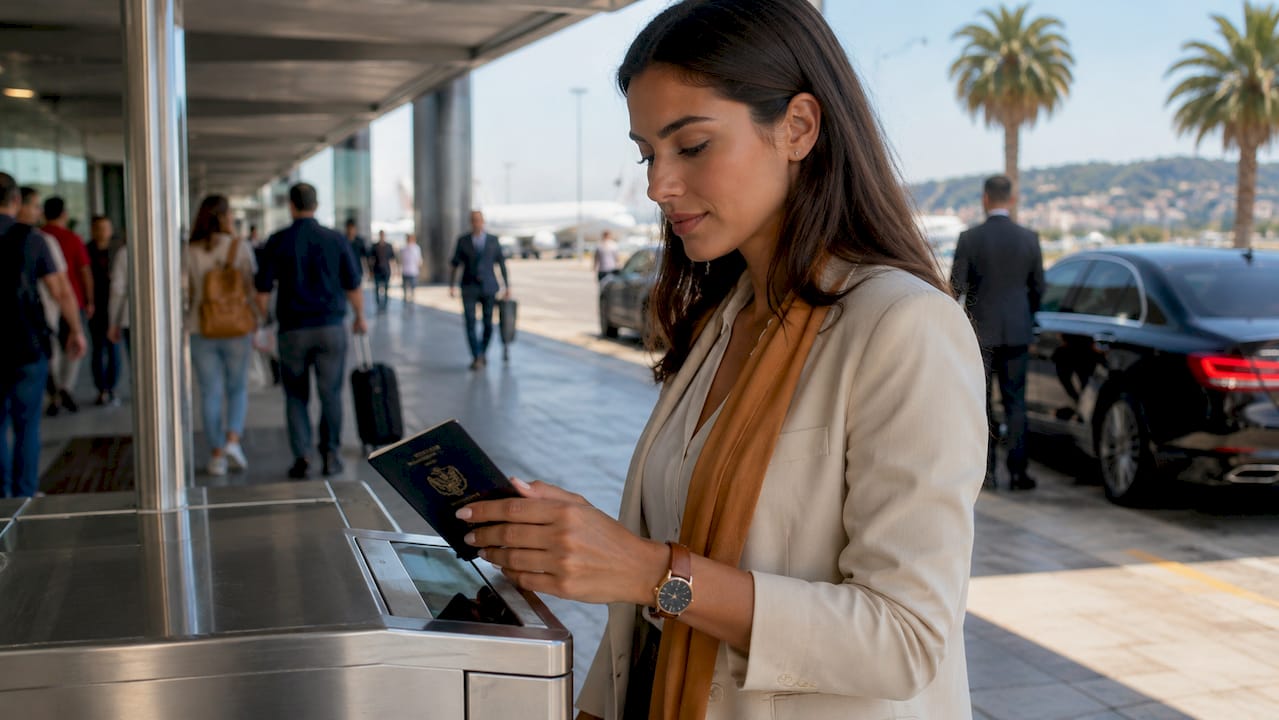
Connectivity failures cause anxiety and a breakdown in trust that is difficult to recover mid-journey. That finding explains why 90% of travellers rate connectivity as important or very important in 2026. Connectivity is no longer a comfort feature. It is the baseline expectation against which every other service is judged.
The benefits of smooth travel extend beyond convenience. When logistics are resolved in advance, travellers arrive at their destination with mental energy intact. That energy translates directly into better engagement at business events, sharper decision-making in meetings, and greater enjoyment of leisure experiences. For a delegate arriving in Cannes for Cannes Lions, the 30-minute transfer from NCE is not a footnote. It is the first impression of the entire trip.
Named entities that define this space in 2026 include Amadeus, FacePhi, and Transponyx, each addressing a different layer of the travel chain: document verification, biometric identity, and premium ground transport respectively.
How is biometric technology shaping the travel experience?
Biometric integration is the most structurally significant shift in travel since the introduction of online check-in. By mid-2026, passport-less trips are a reality, with industry leaders testing systems that replace physical passports, boarding passes, and hotel keys with a single biometric credential. Amadeus is among the companies projecting €50 million in annual savings from these systems. That figure reflects not just cost reduction but a fundamental redesign of how passengers move through airports and hotels.
The practical implications for travellers are considerable:
- Airport departures: Facial recognition at security and boarding gates removes the need to locate physical documents under time pressure.
- Hotel arrivals: Biometric room access means check-in completes in seconds, with no queue at the front desk after a long flight.
- Loyalty and payment: Unified digital identity links frequent flyer accounts, payment credentials, and preferences to a single biometric profile.
- Security: Biometric systems reduce identity fraud at border control, a benefit that also accelerates processing times for all passengers.
The shift towards biometric tap-and-go systems is making digital-first providers more attractive to travellers who value speed and discretion. FacePhi, a specialist in biometric identity verification, describes this as a paradigm shift: the travel industry is moving from fragmented document checks toward unified digital identity. That shift is not a future projection. It is happening at major European airports right now.
For event participants travelling to the French Riviera, biometric processing at NCE reduces the time between landing and reaching the arrivals hall. That time saving matters when a chauffeur is waiting and a conference session begins in 90 minutes.
Why are reliable airport transfers foundational to any trip?
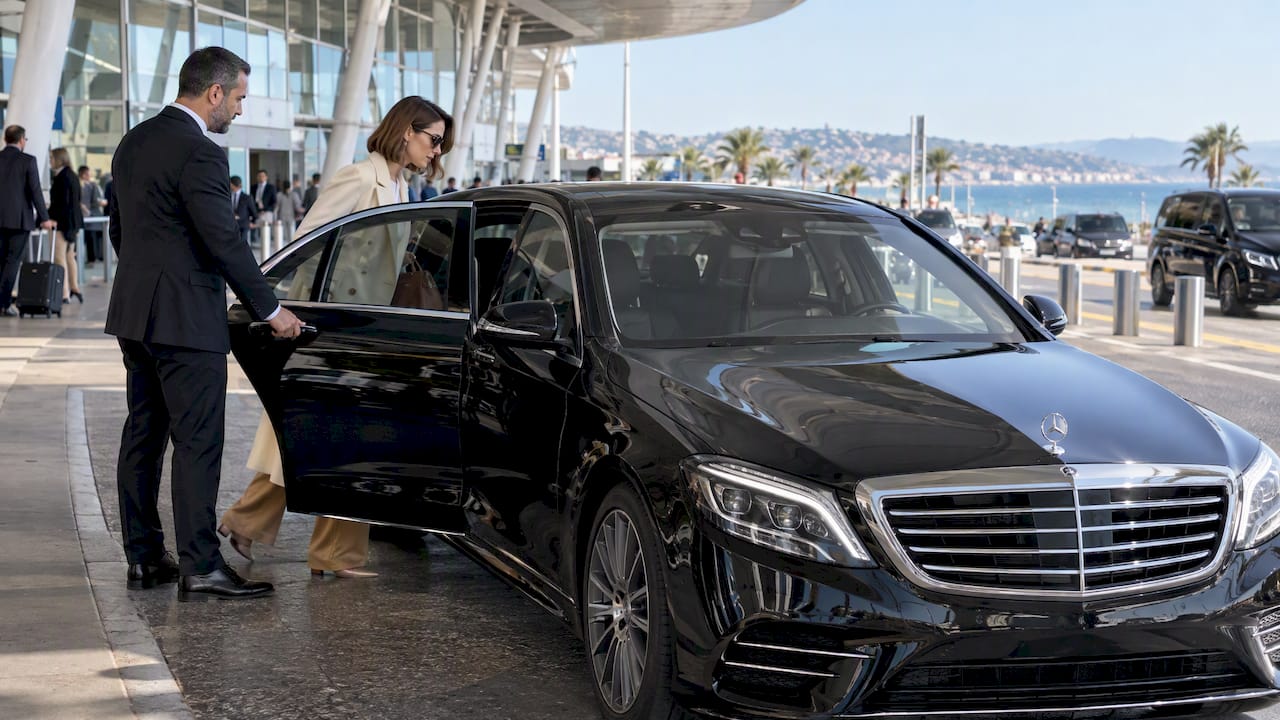
Pre-arranged transfers eliminate decision fatigue at the precise moment when travellers are most vulnerable to it: immediately after landing. A passenger who has crossed multiple time zones, navigated a connecting flight, and cleared customs is not in the best condition to negotiate a fare, locate a rank, or assess an unfamiliar driver. A confirmed vehicle with a named driver removes every one of those variables.
Fixed-rate pricing is the operational expression of this principle. When a traveller books an airport transfer in Nice with Transponyx, the rate is confirmed at the time of booking, per vehicle, with no surge pricing regardless of demand. For a Business Sedan from NCE to Monaco, the fare does not change because the Monaco Grand Prix weekend has filled every hotel on the Côte d’Azur. That predictability is not a minor convenience. It is a form of financial and psychological security.
The specific routes served by Transponyx illustrate the practical scope of this service:
- NCE to Monaco: approximately 25 kilometres, 30–40 minutes depending on traffic.
- NCE to Cannes: approximately 30 kilometres, 35–50 minutes.
- NCE to Antibes: approximately 20 kilometres, 25–35 minutes.
- NCE to Menton: approximately 35 kilometres, 40–50 minutes.
- NCE to Saint-Tropez: approximately 110 kilometres, 90–120 minutes.
- NCE to Isola 2000: approximately 90 kilometres, 90 minutes in normal conditions.
Every Transponyx airport pickup includes 60 minutes of free waiting time and real-time flight monitoring. If a flight lands early or late, the driver adjusts. The traveller never needs to send a message or renegotiate.
Pro Tip: Book your transfer before you book your hotel. Confirming ground transport first removes one of the most stressful variables from the entire itinerary, particularly for arrivals during major Riviera events when demand peaks sharply.
Reliable transport reduces travel anxiety by creating predictability, and travellers interpret predictability as safety. That psychological mechanism is why a confirmed chauffeur service consistently outperforms ad hoc alternatives in post-trip satisfaction surveys, not because the vehicle is more comfortable, but because the certainty it provides begins working before the passenger even boards the plane.
Do travel routines genuinely reduce stress?
Travel routines reduce decision fatigue by automating the logistical decisions that would otherwise consume mental energy throughout a journey. The research is direct: structured routines correlate with improved satisfaction and a stronger sense of control, even when conditions are imperfect. Structure does not constrain a trip. It creates the conditions under which genuine enjoyment becomes possible.
Consider how a well-constructed routine functions for a delegate attending MIPCOM in Cannes:
- Pre-departure: Boarding pass downloaded, transfer confirmed with Transponyx, hotel check-in completed digitally. No decisions required at the airport.
- Arrival at NCE: Driver waiting in arrivals with a name board. Luggage loaded. Wi-Fi connected in the vehicle before leaving the car park.
- Transfer to Cannes: 35–50 minutes of productive or restful time in a Business Sedan, with chilled water and phone chargers available.
- Hotel arrival: Biometric check-in or pre-assigned room key. No queue. No form-filling.
- Event day: Schedule confirmed the evening before. Transport for evening events pre-booked.
Each step in this sequence was decided before the journey began. On the day itself, the delegate makes no logistical decisions at all. That is the practical definition of structured travel comfort.
The deeper benefit is resilience. When a flight is delayed or a session overruns, a traveller with a structured routine has buffer time built in. Transponyx drivers monitor flights in real time, so a 45-minute delay at departure does not cascade into a missed connection at the other end. The routine absorbs the disruption rather than collapsing under it.
How does frictionless travel enhance event and destination experiences?
Luxury travel is defined by frictionless experiences where service unfolds without the guest needing to manage it actively. That definition has moved from the hospitality sector into ground transport, and the implications for event participants on the French Riviera are significant.
The table below compares the experience of two delegates attending the same Cannes Film Festival screening, arriving on the same flight from London Heathrow.
| Factor | Ad hoc taxi | Transponyx Business Sedan |
|---|---|---|
| Fare certainty | Unknown until arrival | Fixed at booking |
| Driver identification | App photo only | Named driver, name board |
| Waiting time included | None | 60 minutes free |
| Flight monitoring | None | Included |
| In-vehicle Wi-Fi | Not guaranteed | Standard on all vehicles |
| Language | French only | English, French, Italian, Spanish, Russian, Arabic |
| Arrival condition | Variable | Composed, rested |
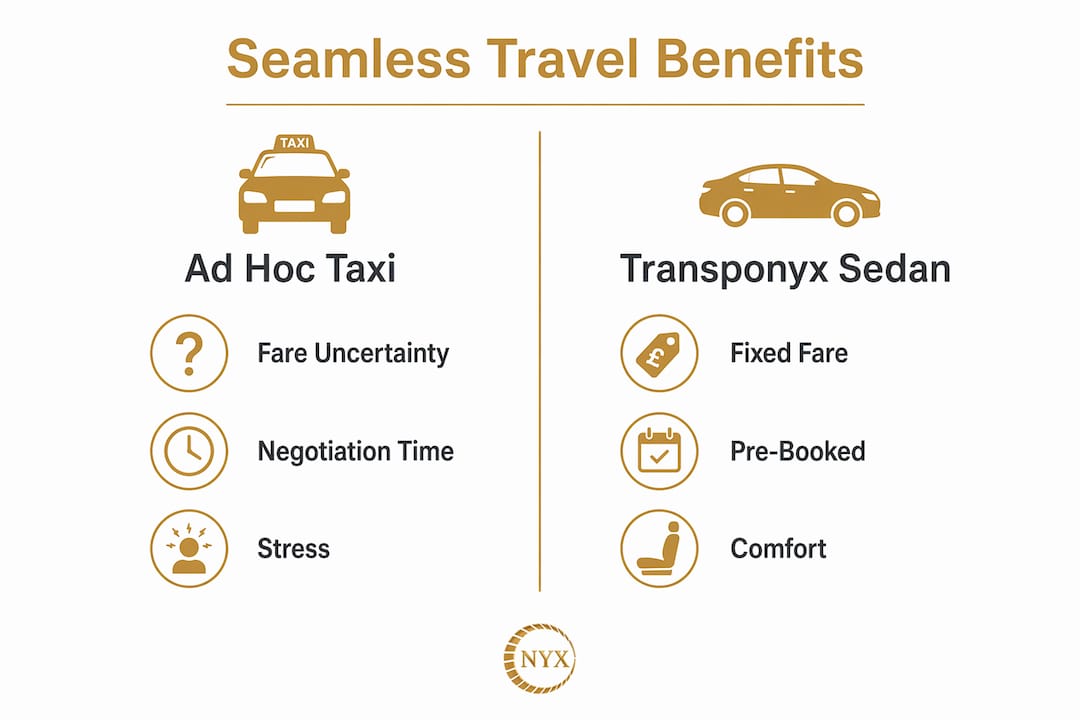
The delegate who arrives composed has a measurable advantage over the one who spent 20 minutes negotiating a fare in a busy arrivals hall. At events like MIPIM or Cannes Lions, where relationships are formed in the first hour of arrival, that advantage is not trivial.
For groups attending the Monaco Grand Prix, the Van 7 pax and Van 8 pax categories allow entire delegations to travel together in a single Mercedes-Benz vehicle, maintaining conversation and cohesion from NCE to the paddock. The alternative, splitting a group across multiple vehicles, fragments the experience before it begins.
Convenience in business travel is directly linked to performance and satisfaction. That connection is why corporate accounts and concierge services on the Riviera consistently specify pre-booked chauffeur transfers rather than leaving ground transport to chance. The luxury transport pillars that define premium ground transport in 2026 all point toward the same outcome: a traveller who arrives ready to engage.
My perspective on what seamless travel actually delivers in 2026
Having covered luxury ground transport on the French Riviera for many years, I have watched the conversation around seamless travel shift from aspiration to expectation. Travellers no longer describe a smooth transfer as a pleasant surprise. They describe a difficult one as a failure.
What strikes me most about 2026 is not the biometric technology, impressive as it is. It is the psychological architecture that reliable transport creates. A traveller who knows their driver is monitoring their flight, that the fare is fixed, and that 60 minutes of waiting time is built in, boards the plane in a fundamentally different state of mind. That state of mind carries through the entire trip. I have spoken to delegates at MIPIM and Cannes Lions who describe their Transponyx transfer as the moment the trip “clicked into place.” That is not marketing language. It is a precise description of what happens when logistics disappear from conscious attention.
The biometric developments from Amadeus and FacePhi are genuinely transformative, but they address the airport layer only. Ground transport remains the final and most personal stage of every arrival. A passenger can clear NCE biometrically in minutes and then spend 40 minutes in uncertainty outside the terminal. The two systems need to work together, and in my experience, the travellers who plan both in advance are the ones who arrive at their destination intact.
My honest view is that most travellers underestimate the cumulative cost of small frictions. A 15-minute queue here, an unexpected surcharge there, a driver who does not speak the language. None of these is catastrophic alone. Together, they erode the quality of the entire trip. The transport trends shaping 2026 all point toward removing those frictions systematically, and the services that do it best are the ones worth booking first.
— Dany
Plan your next Riviera arrival with Transponyx
For travellers and event participants arriving at Nice Côte d’Azur Airport, Transponyx provides fixed-rate, pre-booked chauffeur transfers across the French Riviera, with 2026 rates confirmed at booking and no surge pricing. The fleet covers every group size, from a Standard Sedan for solo travellers to a Van 8 pax for full delegations attending the Monaco Grand Prix or Cannes Film Festival.
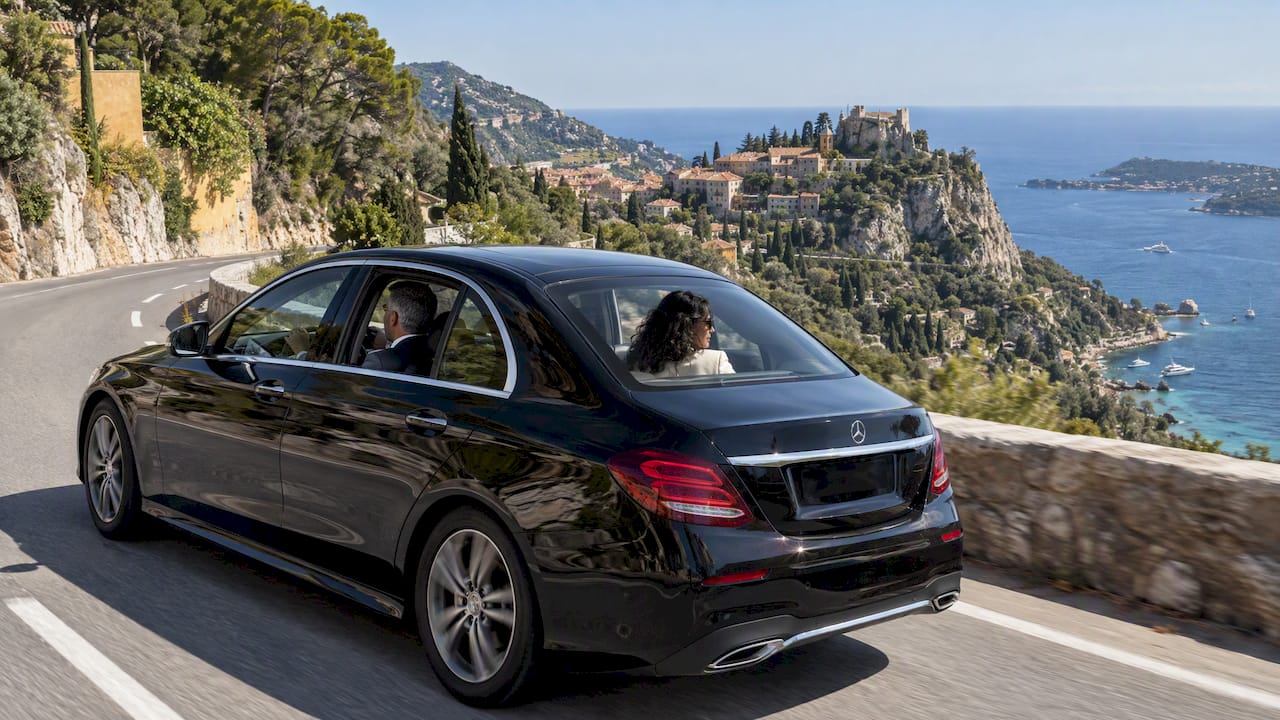
Every vehicle is a Mercedes-Benz equipped with Wi-Fi, air conditioning, chilled water, and phone chargers. Drivers are licensed VTC professionals, bilingual as a minimum, with flight monitoring included on every airport pickup. Compare the full range of luxury chauffeur options or book your Nice Airport transfer directly. Reach the reservations team at +33 6 10 30 71 84 or via WhatsApp on +33 7 67 78 10 26, or visit transponyx.com to confirm your 2026 rate.
FAQ
What does seamless travel mean in practice?
Seamless travel means every stage of a journey, from check-in to final destination, is pre-arranged so that no decision or delay interrupts the experience. It combines biometric technology, reliable ground transport, and structured planning to remove friction from the traveller’s path.
Why does reliable airport transfer matter so much?
Pre-booked transfers eliminate decision fatigue at the most vulnerable point of any trip: immediately after landing. Fixed-rate pricing and confirmed drivers remove financial uncertainty and the stress of locating transport in an unfamiliar arrivals hall.
How does biometric technology improve the travel experience?
Biometric systems replace physical passports, boarding passes, and hotel keys with a single digital credential, reducing processing time at airports and hotels. Amadeus projects €50 million in annual savings from these systems, which also accelerate passenger flow through security.
Do travel routines genuinely reduce stress?
Yes. Structured routines reduce decision fatigue by automating logistical choices before the journey begins, freeing mental energy for the experience itself. They also build resilience, so that delays and disruptions are absorbed rather than compounded.
What is the best way to achieve seamless travel on the French Riviera?
Book ground transport before departure, confirm a fixed-rate transfer from NCE with a licensed VTC provider such as Transponyx, and use digital check-in wherever available. Pre-arranging every logistical step means the journey from landing to destination requires no active management at all.

0 commentaires