
TL;DR:
- Effective city tours require clear goals, group profiling, and realistic expectations before planning begins.
- Choosing guides based on local knowledge, language skills, punctuality, and flexibility ensures a high-quality experience.
- Modular itineraries with built-in contingencies and thorough logistics coordination prevent common disruptions and improve guest satisfaction.
Imagine joining a Nice city tour expecting a smooth afternoon along the Promenade des Anglais, only to find your group waiting 20 minutes for a late guide, missing the Colline du Château at sunset, and returning to the hotel without clear answers. It happens more often than most tour planners admit. A poorly structured tour wastes time, frustrates guests, and reflects badly on every professional involved. This guide walks you through a precise, step-by-step method to organize memorable, high-quality city tours in Nice, whether you are managing a small leisure group, a corporate incentive trip, or a large international delegation.
Table of Contents
- Clarifying your tour goals and requirements
- Choosing and benchmarking the right tour guides
- Efficient design, modular tour itineraries
- Coordinating logistics and on-site delivery
- Improving city tour quality with measurement and feedback
- Our perspective: The overlooked essentials that set great city tours apart
- Ready to elevate your Nice city tour experience?
- Frequently asked questions
Key Takeaways
| Point | Details |
|---|---|
| Define clear goals | Success starts with a detailed understanding of group needs, interests, and logistical limits. |
| Use expert guides | Choose guides who score highly on local knowledge, language, and professionalism. |
| Modular itinerary plan | Break turns into flexible blocks and always prepare for the unexpected. |
| Emphasize real-time logistics | Smooth, on-time execution linked to preparation, backup plans, and constant communication. |
| Continuously improve | Collect feedback and update itineraries so every city tour gets better than the last. |
Clarifying your tour goals and requirements
Every successful city tour begins before a single booking is made. Effective tour planning begins by defining the type of experience and expectations for attendees, which means sitting down and answering some honest questions before you touch an itinerary template.
Start by identifying the basics of your group:
- Group size: Are you managing 4 people or 40? This affects transport choices, guide-to-guest ratios, and venue access.
- Age range and mobility: Seniors, children, or guests with disabilities require different pacing and accessible routes.
- Language needs: International groups often need bilingual or multilingual guides to ensure no one feels left behind.
- Trip purpose: Is this leisure sightseeing, an educational visit, a business incentive reward, or a corporate team-building event?
- Special interests: Some groups want food markets and local cuisine; others prefer architecture, history, or art galleries.
- Logistical constraints: Fixed arrival times, port or airport connections, and hotel locations all shape what is realistically possible.
Once you have these details, you can set realistic expectations and match the right resources to the right group. Spending time discovering Nice with city tours before planning also helps you understand what the city offers across different visitor profiles.
Here is a quick comparison to help you frame your tour type:
| Tower type | Typical group size | Key priority | Recommended pace |
|---|---|---|---|
| Leisure sightseeing | 2 to 15 | Enjoyment, photos | Relaxed |
| Corporate incentive | 10 to 40 | Prestige, networking | Structured |
| Educational group | 15 to 50 | Learning, engagement | Moderate |
| Family visit | 2 to 10 | Accessibility, fun | Flexible |
For groups mixing multiple profiles, such as families traveling with business colleagues, build the itinerary around the most constrained member. You will also want to think early about organizing group transport, since vehicle selection directly shapes your routing and timing options.
Choosing and benchmarking the right tour guides
With your tour's needs clearly outlined, the next step is selecting guides who will consistently deliver what your group expects. This is not a decision to make based on availability alone.
Use a structured, multi-criteria approach when evaluating guide candidates:
- Local cultural and historical knowledge: This is the foundation. Local knowledge ranks highest among guide-performance criteria, ahead of even language skills and punctuality.
- Language proficiency: Confirm fluency in the languages your group speaks. Partial fluency creates confusion and reduces trust.
- Punctuality and reliability: Ask for references or platform ratings. A guide who is late once will likely be late again.
- Environmental awareness: Responsible guides respect heritage sites and model good behavior for your guests.
- Flexibility under pressure: Guides who adapt gracefully to weather changes or unexpected closures are worth a premium.
To compare candidates objectively, use a simple scoring table:
| Criterion | Weight | Candidate A | Candidate B |
|---|---|---|---|
| Cultural knowledge | 30% | 9/10 | 7/10 |
| Language skills | 25% | 8/10 | 9/10 |
| Punctuality | 20% | 10/10 | 8/10 |
| Flexibility | 15% | 8/10 | 9/10 |
| Environmental responsibility | 10% | 7/10 | 8/10 |
Pro Tip: For corporate or international groups, prioritize guides who speak strong English and French plus at least one additional language. This signals professionalism and reassures executives who expect premium service. If you are organizing private sightseeing tours in Nice, confirm that your guide has direct experience with the specific neighborhoods and venues on your itinerary.
Always communicate openly with prospective guides about your flexibility expectations. Traffic on the Promenade, unexpected crowds near the Old Town, or afternoon summer storms are all real possibilities in Nice. A great guide has a Plan B ready before you even ask.
Efficient design, modular tour itineraries
Once the right guide is in place, crafting an itinerary that balances structure and flexibility becomes critical. Standardized, modular itineraries enable planners to meet group needs more efficiently and scale quality across multiple bookings.
Think of your itinerary in three blocks:
- Morning block (9:00 to 12:30): Cover high-energy attractions first. The Old Town (Vieux-Nice), the flower market, and Colline du Château are ideal before midday crowds arrive.
- Midday block (12:30 to 2:30 p.m.): Schedule lunch and a slower-paced activity. This is the natural energy dip for most groups and a good time for shorter indoor visits.
- Afternoon block (2:30 p.m. to 6:00 p.m.): Reserve the Promenade des Anglais, museum visits, or shopping areas for this period, when the light is beautiful and groups feel refreshed.
Pro Tip: Always preview your itinerary for gaps. Where are the restrooms near each stop? Are any sites temporarily closed for renovation? Does the route account for groups moving at a moderate pace? These small details prevent frustrating delays. For larger or more complex groups, explore premium transportation options in Nice early, since vehicle type affects routing options.
Each itinerary block should include:
- Precise arrival and departure times
- Estimated travel time between stops
- Ticketing notes and pre-booking requirements
- Safety notes for each venue
- A contingency option if a stop is unavailable
For seamless transfers between stops, especially for corporate groups or delegations, review how seamless event transport can remove logistical pressure from your planners.
Coordinating logistics and on-site delivery
Design alone is not enough. Flawless delivery on the day of the tour is where real value comes from. On-site execution should anticipate pacing, group energy, route changes, and safety to prevent the most common group-management failures.
Before departure, run through this checklist:
- Confirm transport arrangement and vehicle capacity
- Verify ticket reservations and venue access windows
- Share the itinerary with all stakeholders, including the guide and driver
- Identify alternate routes in case of traffic or closures
- Distribute emergency contact information to all group leaders
Important: Always build at least 10 to 15 minutes of buffer time into each transition. Nice is a vibrant, busy city, and even the most precise plan encounters surprise delays. Buffer time is not wasted time; it is professional margin that protects your schedule.
When the group arrives, brief everyone clearly. Explain the day's program, set safety expectations, identify meeting points if anyone gets separated, and confirm the contact number for the guide or coordinator. Groups who know what to expect are calm, more engaged, and more forgiving of small hiccups.
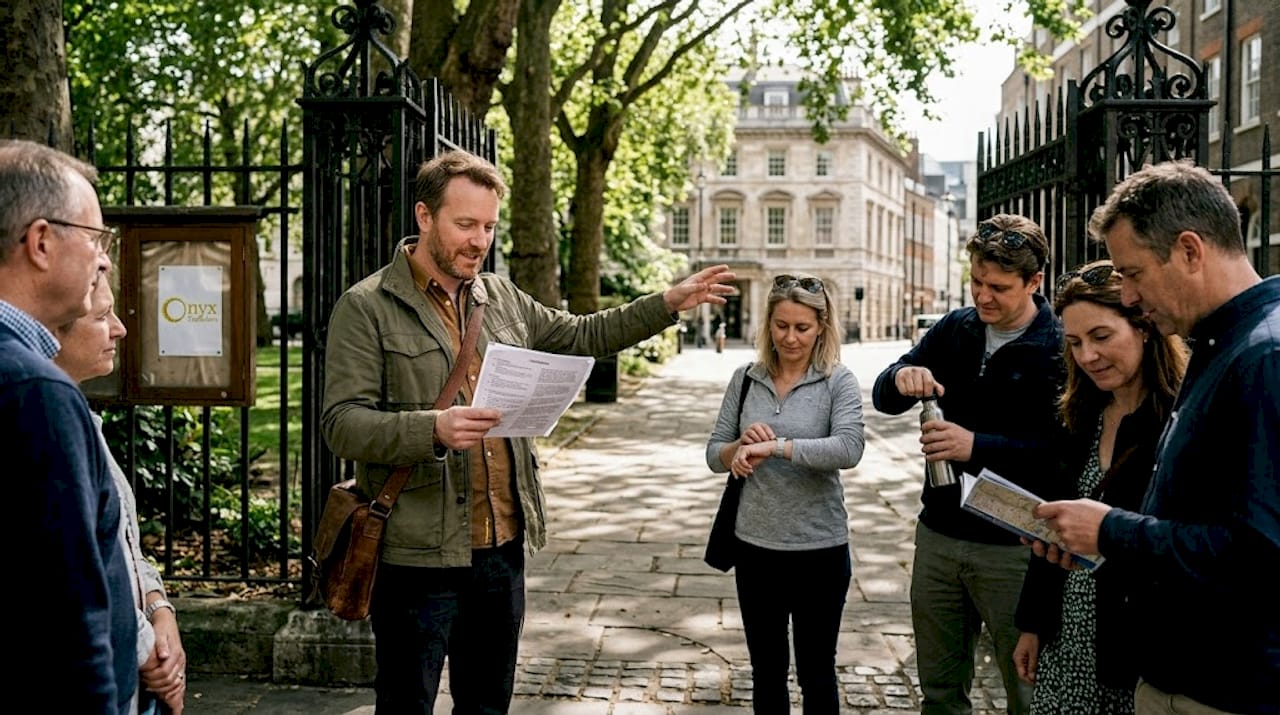
For business group transport needs, this briefing moment is also a chance to set a professional tone that corporate clients appreciate. Review additional planning for logistics challenges resources when preparing large or multi-day tours.
Improving city tour quality with measurement and feedback
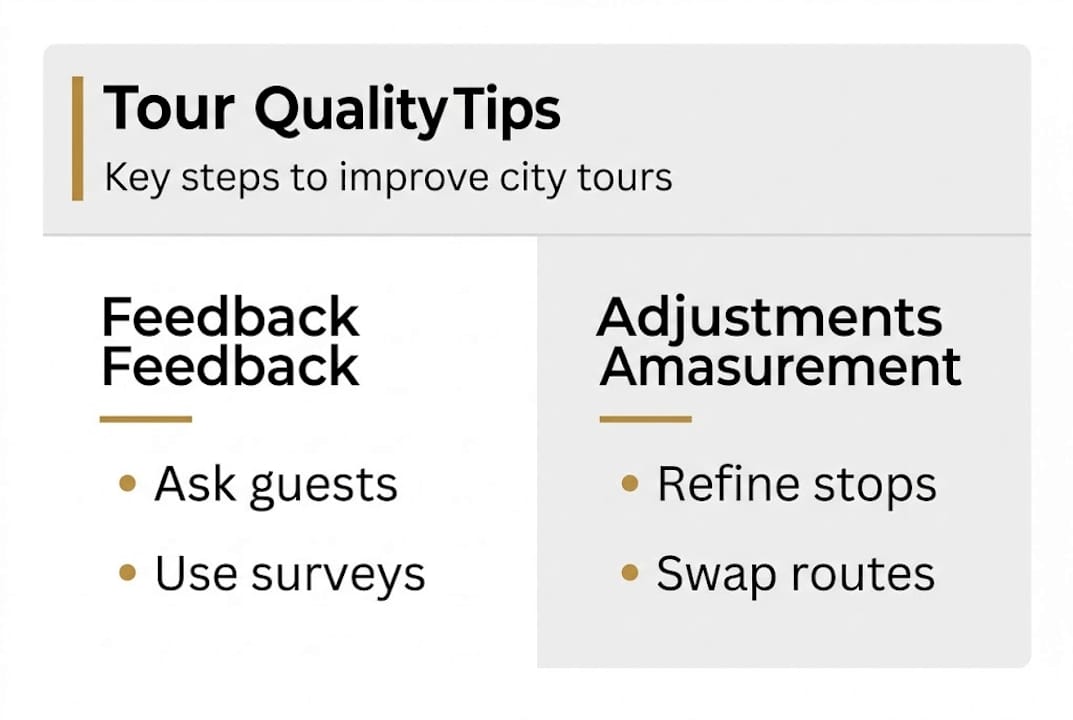
A great city tour is not just delivered; it is improved and adapted through real-world feedback. Quality assurance loops and explicit operational notes reduce surprises and enable continuous refinement in city tour experiences.
Here is a practical four-step feedback system:
- Collect structured input: Use a short digital survey or a printed form immediately after the tour. Ask about satisfaction, pacing, guide quality, and transport comfort.
- Track KPIs: Measure on-time arrival rate, overall satisfaction score, and how often the same itinerary is reused without changes.
- Hold a debrief: After each tour, spend 15 minutes with the guide and driver to identify what worked and what created friction.
- Update living documents: Treat your itinerary as a working document, not a finished product. Annotate it after each tour with real observations.
Pro Tip: For group or corporate clients, document every inclusion and exclusion in writing before the tour. When procurement teams review expenses, clear documentation prevents disputes and builds long-term trust. This is also valid for business travel and feedback integration across repeated bookings.
Review your measuring tour quality practices regularly. Small adjustments, such as changing a stop order or switching a lunch venue, often produce disproportionately large improvements in guest satisfaction.
Our perspective: The overlooked essentials that set great city tours apart
After working closely with leisure travelers, corporate delegations, and international groups across the Côte d'Azur, we have observed something consistent: the tours that guests remember and recommend are rarely the ones with the most attractions on the list. They are the ones where everything felt effortless.
Most planning failures are not strategic; they are small. A missed restroom stop. A lunch reservation that cannot seat the full group. A driver who did not know the group was running 10 minutes late. These micro-failures accumulate and quietly undermine even the most carefully designed itinerary.
The guides we trust most practice quiet leadership. They read group energy without making it obvious, they pivot routes without drama, and they create small, unrepeatable moments: a local pastry shop recommendation, a lesser-known viewpoint above the city, a brief story about a hidden courtyard in Vieux-Nice. These keys are not accidental. They come from preparation, genuine care, and years of attention to detail.
Our honest advice: build your tour around fewer, better experiences rather than an exhaustive checklist. Leave room for the unexpected. And always, always confirm your transport. Guests forgive a change in plan; they do not forgive being left waiting. If you want to see how this philosophy translates into practice, explore expert-guided tours in Nice that are designed with exactly this mindset.
Ready to elevate your Nice city tour experience?
You now have the frameworks, tools, and professional insights to organize city tours in Nice that your guests will genuinely remember. But if you want to remove the operational burden entirely and rely on a team that has already solved these challenges, we are here to help.
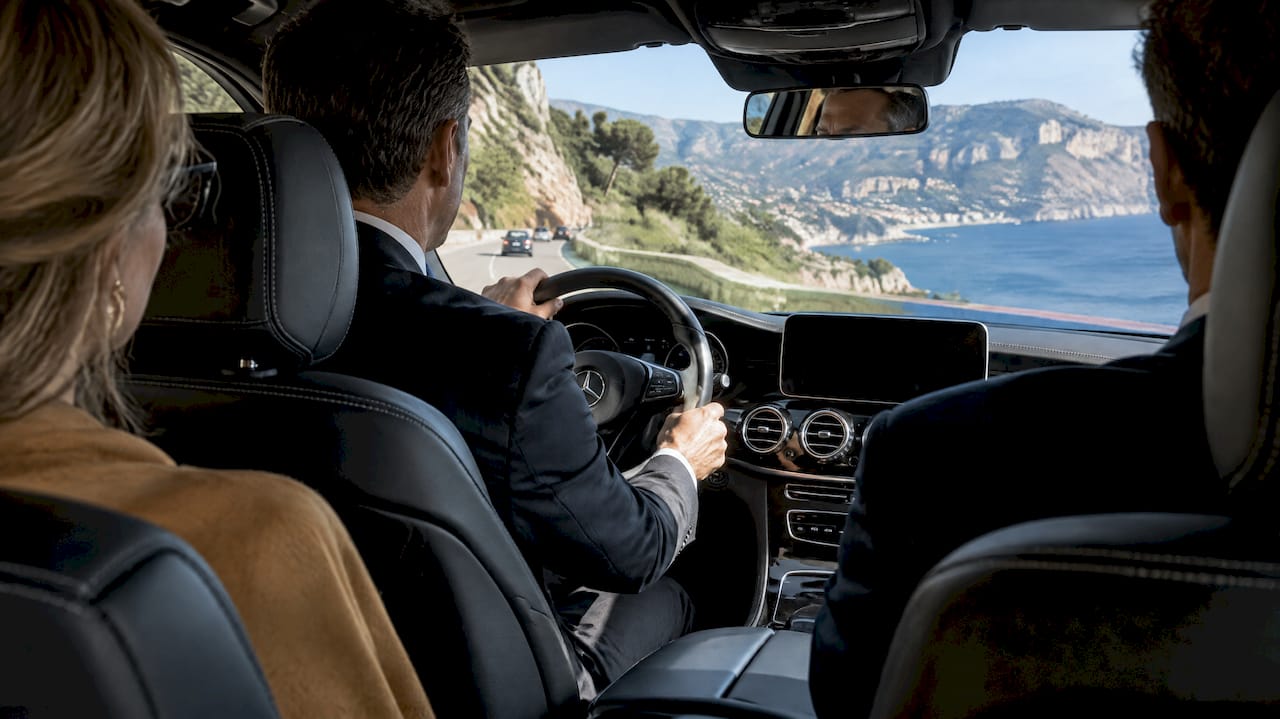
At Transponyx, we offer private sightseeing tours in luxury Mercedes vehicles with bilingual chauffeurs who know every corner of the Côte d'Azur. Whether you are planning a half-day discovery, an extended trip through private guided tours in Provence, or need a seamless premium airport transfer to start your visit right, our team handles every detail so you can focus on the experience.
Frequently asked questions
How do I choose the right tour guide in Nice?
Look for candidates with verified local expertise, strong language skills, and documented punctuality. Guide criteria include cultural and historical knowledge, language ability, and time management as the top three factors to evaluate.
What's the best way to plan a city tour itinerary?
Build your itinerary in modular morning, midday, and afternoon blocks with clear time slots and contingency options. Modular, templated itineraries allow for faster, higher quality planning across varied group types.
How do I handle unexpected disruptions during a tour?
Prepare alternate routes, communicate buffer time clearly to your guide, and brief the group at the start on the contact plan. Contingency plans for route swaps and delays are essential for maintaining confidence and momentum.
How can I measure the success of my Nice city tour?
Collect structured guest feedback immediately after the tour and track punctuality and satisfaction scores consistently. Quality assurance relies on explicit KPIs and feedback loops to drive genuine, repeatable improvement.

0 Comments
Trackbacks/Pingbacks