
A custom travel itinerary is a personalised, preference-driven plan that structures your trip around your own pace, interests, and priorities rather than a fixed package tour schedule. Travellers who follow a tailored plan report 40% higher satisfaction than those on standard package tours. That gap exists because a bespoke plan removes the friction of mismatched activities and wasted transit time. On the French Riviera, where destinations such as Nice NCE, Monaco, Cannes, Antibes, and Saint-Tropez each demand a different pace and mood, the difference between a generic tour and a well-crafted custom travel itinerary guide is the difference between a holiday and an experience.
What are the essential tools for a custom travel itinerary?
The right tools reduce planning time and improve the quality of your final route. Before choosing any tool, you need three things: a clear sense of your travel style, a realistic budget, and a list of non-negotiables. Without those anchors, even the best planning software produces a trip that looks good on paper but feels wrong in practice.
Manual planning versus AI-driven itinerary creation
The table below compares the two main approaches on the criteria that matter most to independent travellers.
| Criterion | Manual planning | AI-driven planning |
|---|---|---|
| Time to first draft | 30–60 minutes | Under 5 minutes |
| Local nuance | High, if researched well | Moderate, needs human review |
| Flexibility | Full control | Dependent on tool settings |
| Cost | Free | Free to paid tiers |
| Accuracy of opening hours | Requires manual checks | Requires manual checks |
AI trip planners work best as digital concierges handling logistics, not as replacements for human judgement. A tool can generate a Monaco to Cannes route in seconds, but it will not know that the Cannes Film Festival in may closes several waterfront streets to general traffic.
Key tools for building your personalised travel plan
- Google My Maps lets you plot a custom travel route visually, grouping sites by day and colour-coding by neighbourhood or theme.
- Travel blogs written by people who have visited recently provide ground-level detail that no algorithm captures reliably.
- Destination forums such as those on TripAdvisor or Reddit surface local knowledge about seasonal closures and transport quirks.
- Professional travel planners add genuine value for complex, multi-city trips where logistics require real relationships with local suppliers.
- Transponyx at https://transponyx.com offers private chauffeur expertise across the Riviera that doubles as local intelligence for transport-heavy itineraries.
The strongest approach combines an AI tool for the initial structure with manual refinement for accuracy and personality. Manual refinement remains necessary regardless of how sophisticated the tool is.
How to plan and structure your custom travel itinerary step by step
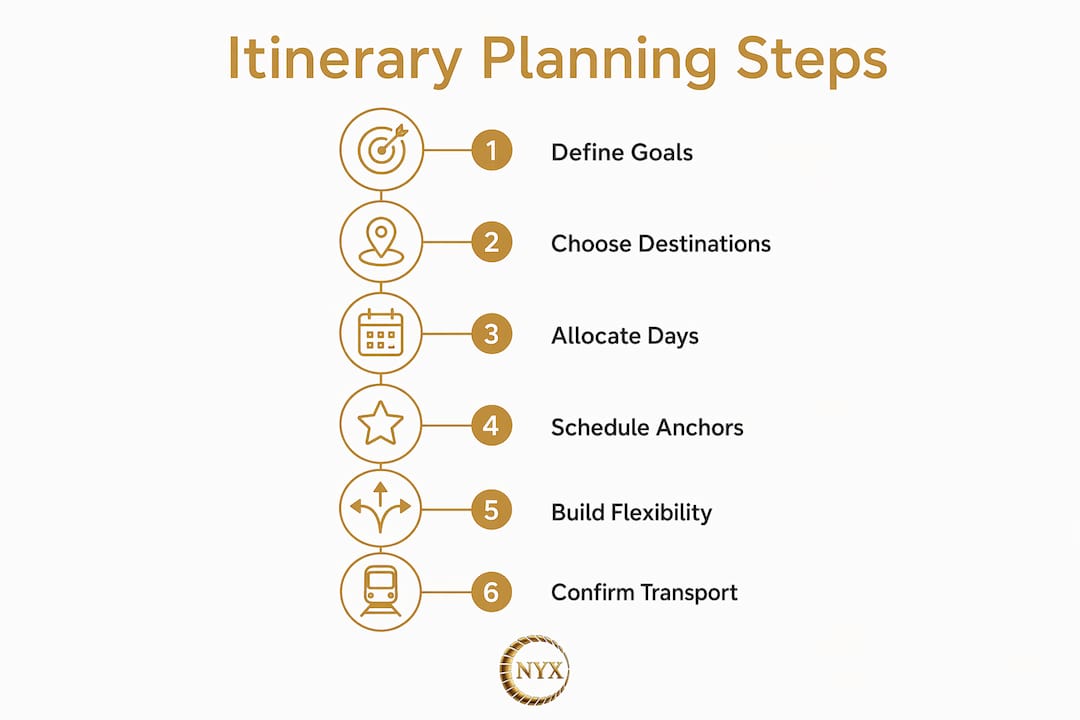
A well-structured itinerary follows a logical sequence. Skipping steps early in the process creates compounding problems later, particularly around transport connections and pacing.
Step 1: Define your trip goals and travel style
Start by writing down three to five experiences that would make the trip feel worthwhile. These become your anchor activities. Everything else fills the space around them. Personality-driven curation prevents the trap of building a trip around what looks impressive rather than what genuinely suits you. A traveller who values slow mornings and long lunches needs a very different structure from one who wants to cover six destinations in seven days.
Step 2: Choose your destinations and design a logical route
Group destinations by geography to avoid backtracking. On the Riviera, a logical west-to-east route might run Cannes, Antibes, Nice, Monaco, and Menton over five days. Reversing that order adds no value and costs time. For multi-city trips extending into Provence or northern Italy via Ventimiglia and San Remo, build the route around transport hubs rather than alphabetical order.
Step 3: Allocate days and set realistic durations
City breaks work best at 3–5 days, while multi-city or road trips benefit from 7–10 days to avoid burnout. Applying those benchmarks to the Riviera, three days in Nice covers the Old Town, the Promenade des Anglais, and a day trip to Èze or the Corniche roads without feeling rushed. A seven-day plan can comfortably include Nice, Monaco, Cannes, and a half-day in Antibes, with one day held in reserve.
Step 4: Group nearby sites and schedule anchor activities first
Book your anchor activities before filling in secondary ones. If the Monaco Grand Prix is the centrepiece of your trip, every other element should be arranged around its schedule, not the reverse. Grouping nearby sites within the same day reduces transit time significantly. The Musée Matisse and the Cimiez monastery in Nice, for example, sit within walking distance of each other and belong on the same afternoon.
Step 5: Build in flexibility and protect your energy
The ideal itinerary is a flexible framework, not a minute-by-minute timetable. Scheduling every hour removes the possibility of genuine discovery. Leave at least one unstructured half-day per three days of travel. That unscheduled time is where the most memorable moments tend to happen, whether it is a conversation with a winemaker in Bellet or an unplanned stop at a market in Antibes.
Pro Tip: Limit yourself to no more than two major activities per day. Two well-chosen experiences, fully absorbed, deliver more satisfaction than five rushed ones.
Step 6: Confirm transport connections before finalising the plan
Transport is the skeleton of any tailored vacation itinerary. A beautiful sequence of destinations collapses if the connections between them are unreliable or poorly timed. On the Riviera, the coastal train between Nice and Monaco runs frequently, but road transfers to hill villages, ski resorts such as Isola 2000 or Auron, or private estates require pre-booked private transport. Confirm every connection before you treat the itinerary as final.
How to verify and troubleshoot your itinerary before you travel
Even a carefully built plan contains errors. Verification is not optional; it is the step that separates a working itinerary from a frustrating one.
Check opening hours, seasonal closures, and local events
Museums, restaurants, and attractions on the Riviera often close on mondays or tuesdays, and many reduce hours outside the june-to-september peak season. The Cannes Film Festival in may, the Monaco Grand Prix in may, and Cannes Lions in june each alter traffic patterns, hotel availability, and restaurant bookings across the entire coast. AI-generated itineraries require manual checks for these details without exception.
Add buffer time to every day
Build 20–30% buffer time into each day’s schedule. That buffer absorbs late arrivals, longer-than-expected meals, and the kind of spontaneous detours that make a trip memorable. A day planned for eight hours of activity should have only five to six hours of fixed commitments.
Common mistakes to avoid
- Over-scheduling: Filling every hour creates fatigue and resentment. Two anchor activities per day is the professional standard.
- Ignoring transport connections: A 20-kilometre gap between two sites can mean 15 minutes by private car or 90 minutes by local bus, depending on the route.
- Skipping local vetting: Sharing your draft itinerary on destination-specific forums surfaces routing errors that no planning tool catches.
- Booking too rigidly: Holding non-refundable reservations for every meal and activity removes all flexibility and increases stress when plans shift.
Pro Tip: Post your draft route on a destination forum before you travel. Locals will identify inefficient routing, flag closed venues, and often suggest alternatives you would never find in a guidebook.
Adjusting your itinerary mid-trip
Accept that the plan will change. The skill is in knowing which changes to accept and which to resist. If a weather forecast makes an outdoor excursion impractical, swap it for an indoor anchor activity from your reserve list. Keep a short list of two or three backup options for each day so that adjustments take minutes rather than hours.
How to integrate luxury ground transport into your Riviera itinerary
Transport is not a footnote in a well-crafted itinerary. On the French Riviera, where the most rewarding destinations sit between mountain passes, coastal cliffs, and private estates, the quality of your transfers directly affects the quality of your experience.
Why private chauffeur transfers change the itinerary equation
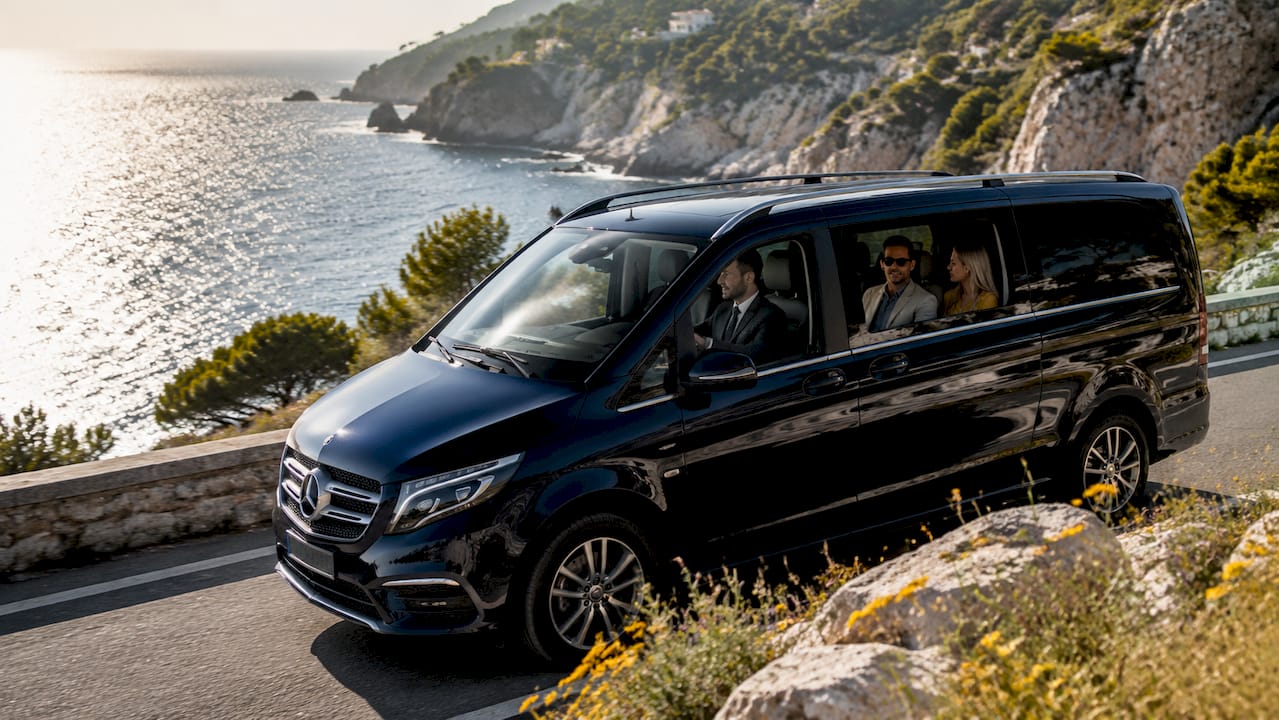
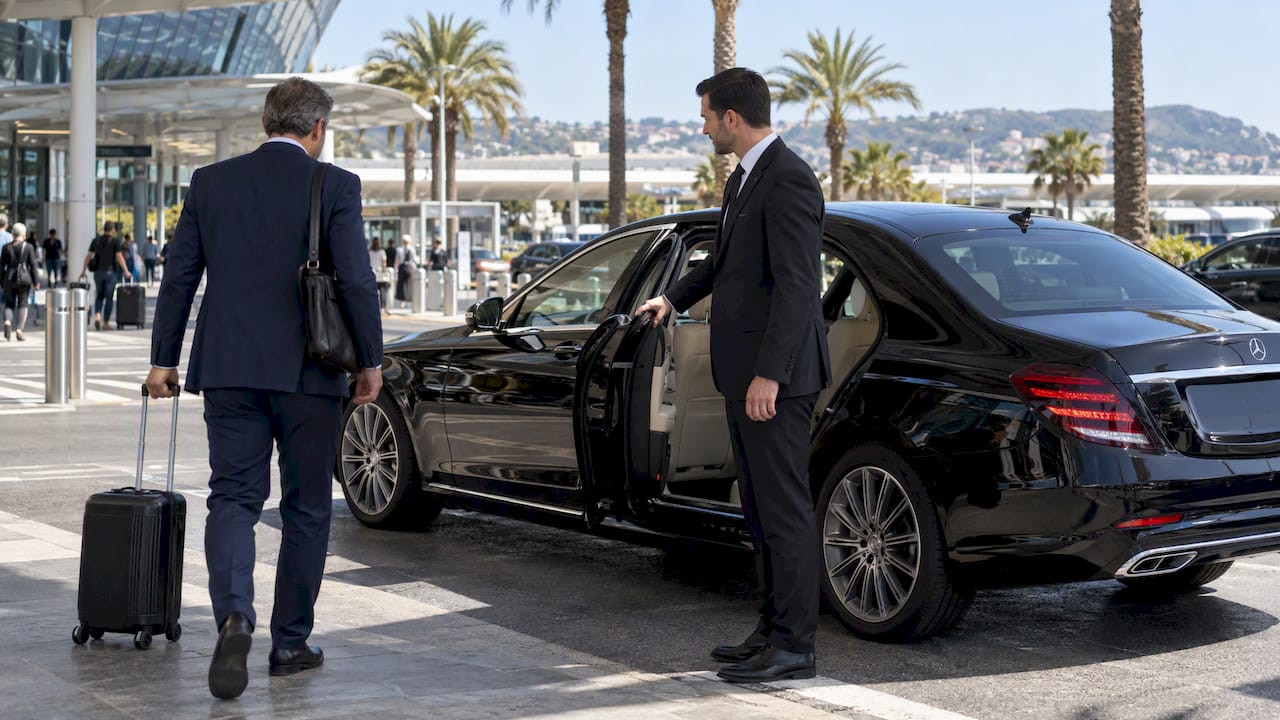
Luxury ground transport amplifies comfort and logistical efficiency, particularly in regions where attractions are dispersed and public connections are infrequent. A private chauffeur eliminates parking stress in Monaco, removes the uncertainty of taxi availability after a late dinner in Cannes, and ensures you arrive at Nice Côte d’Azur Airport (NCE) on time regardless of coastal traffic. For event travel during the Monaco Grand Prix or the Cannes Film Festival, pre-booked private transfers are not a luxury. They are a practical necessity.
Transponyx fleet options for every group size
Transponyx operates exclusively Mercedes-Benz vehicles across four categories, each suited to a different itinerary configuration.
- Standard Sedan: Up to 3 passengers. Ideal for couples or solo travellers on point-to-point transfers between Nice NCE and Monaco or Cannes.
- Business Sedan: Up to 3 passengers, premium finish. The preferred choice for corporate travellers attending MIPIM, Cannes Lions, or MIPCOM.
- Van 7 pax: Up to 7 passengers. Well-suited to small groups covering multiple Riviera stops in a single day.
- Van 8 pax: Up to 8 passengers. The right vehicle for families or groups combining an airport transfer with a wine tour through Provence.
All vehicles carry Wi-Fi, air conditioning, chilled water, and phone chargers. Child seats are available on request.
Coordinating chauffeur bookings with your itinerary timings
The most effective approach is to book transport at the same time as anchor activities, not afterwards. Transponyx includes flight monitoring on every airport transfer from Nice NCE, with 60 minutes of free waiting time on all airport pickups and 20 minutes for any other address. That policy removes the anxiety of delayed flights disrupting the first day of a carefully planned trip. Fixed 2026 rates are confirmed at booking with no surge pricing, which means your transport budget is locked from day one.
For personalised transfers on the Riviera, Transponyx drivers are licensed VTC professionals, bilingual in English and French as a minimum, with several also speaking Italian, Spanish, Russian, or Arabic. That multilingual capability matters on a coast where itineraries frequently cross into Italy via Ventimiglia or San Remo. Reach the reservations team on +33 6 10 30 71 84 or via WhatsApp on +33 7 67 78 10 26.
What I have learned from building itineraries on the Riviera
The most common error I see in travellers’ plans is the belief that more structure equals more control. It does not. A tightly packed schedule creates the illusion of efficiency while actually reducing the quality of every individual experience. The traveller who tries to cover Monaco, Èze, Antibes, and Cannes in a single day arrives at each place too tired to appreciate it.
The second lesson is that a personalised itinerary reflects your personality, not a destination’s greatest hits list. I have met travellers who spent three days in Nice without visiting the Promenade des Anglais once because their interests ran entirely to food markets and contemporary art. Their itinerary was correct for them, even though it looked incomplete on paper.
Transport is where most itineraries quietly fail. Travellers invest hours selecting restaurants and attractions, then leave transfers to chance. On the Riviera, that approach costs time and composure. Booking a private sightseeing transfer with Transponyx for a full-day Corniche route, for example, turns a logistical exercise into part of the experience itself. The driver knows which viewpoints are worth stopping at and which are tourist traps.
The final observation is about local intelligence. No planning tool, however sophisticated, replaces a conversation with someone who drove the route last week. That is true whether the source is a forum post, a hotel concierge, or a Transponyx driver who has covered the Nice NCE to Saint-Tropez route hundreds of times. Build that intelligence into your process from the start, not as an afterthought.
— Dany
Transponyx: private chauffeur services built for your Riviera itinerary
Planning a tailored vacation itinerary on the French Riviera is only as strong as the transport holding it together. Transponyx provides fixed-rate, 24/7 private chauffeur services across the entire Côte d’Azur, from Nice NCE airport transfers to full-day excursions through Provence and the Ligurian coast.
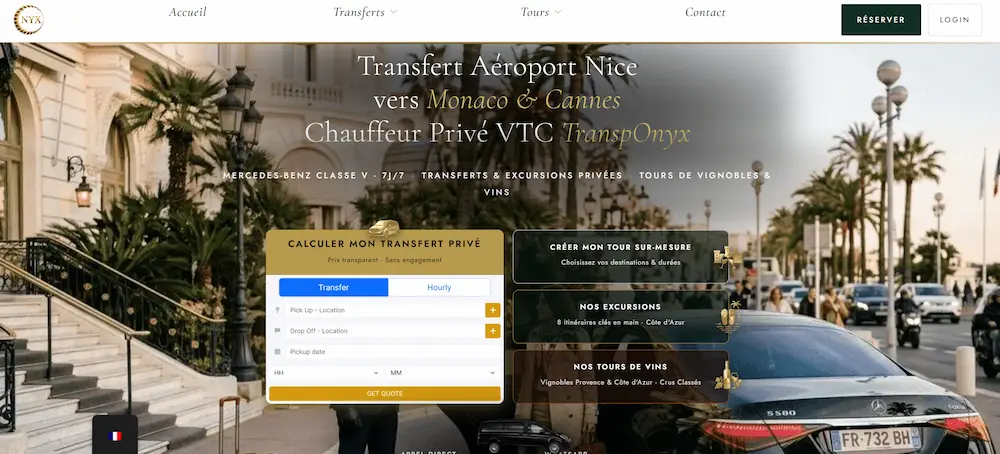
The fleet covers every group size, from a Standard Sedan for a couple arriving at Nice NCE to a Van 8 pax for a corporate group heading to Cannes for the Film Festival. All 2026 rates are fixed per vehicle and confirmed at booking. For travellers who want their luxury chauffeur service to match the quality of their itinerary, Transponyx is the natural choice on the Riviera. Book via https://transponyx.com, call +33 6 10 30 71 84, or message on WhatsApp at +33 7 67 78 10 26.
FAQ
What is a custom travel itinerary?
A custom travel itinerary is a personalised trip plan built around your specific interests, pace, and budget rather than a fixed package tour schedule. Travellers using tailored plans report 40% higher satisfaction than those on standard packages.
How long does it take to create a personalised travel plan?
Manual creation of a basic itinerary takes 30–60 minutes, while AI-powered tools produce a first draft in under five minutes. Human refinement for accuracy and local detail is always required regardless of the method used.
How many activities should I plan per day?
No more than two major activities per day is the recommended standard for maintaining energy and genuine engagement. Buffer time of 20–30% should be added to each day’s schedule to absorb delays and spontaneous detours.
How do I integrate private transport into my French Riviera itinerary?
Book chauffeur transfers at the same time as your anchor activities, not as an afterthought. Transponyx offers fixed 2026 rates, flight monitoring on all Nice NCE airport pickups, and a Mercedes-Benz fleet covering groups of 1–8 passengers across the entire Riviera.
What is the ideal length for a Riviera trip itinerary?
City breaks work best at 3–5 days, while multi-destination trips covering Nice, Monaco, Cannes, and Provence benefit from 7–10 days. Shorter trips should concentrate on one or two anchor destinations rather than attempting to cover the full coast.


0 commentaires