
When you hire a private chauffeur or VTC, always pre-book, verify the vehicle and driver, and confirm any child-seat or waiting-time arrangements. These are not courtesies. Under reservation rules such as L.3120-2 and L.3122-9, a VTC can only operate on a confirmed booking, and operators like TranspOnyx build their 2026 fixed-rate policies around exactly this discipline.
A practical etiquette checklist for passengers
Good chauffeur etiquette follows the rhythm of the journey itself: what you confirm beforehand, how you behave at pickup, how you conduct yourself inside the car, and what you settle afterwards.
Before travel, lock down the details that prevent confusion later. Confirm your booking reference, the vehicle’s make and model, the licence plate, the driver’s name and contact number, and the fixed 2026 rate along with any included waiting time. If you are travelling with a child, request a child seat at the time of booking rather than hoping one appears. Flag oversized luggage, musical instruments or sports equipment in advance so the operator can allocate the right vehicle category.
At pickup, patience and caution matter more than speed, and always check the car and driver by verifying their digital ID to ensure your safety, as explained in this passenger guide. Wait in a safe, well-lit area rather than wandering towards unmarked vehicles, and check the car and driver against the details you were sent before getting in. Politely decline any unsolicited offers from drivers soliciting passengers directly, since this practice sits outside the legal framework VTCs operate under. Follow whatever meeting-point instructions the operator has given, particularly at busy terminals.
Inside the vehicle, small habits set the tone for the whole journey:
- Take the seat your chauffeur recommends, usually the rear passenger side, and use the seat belt throughout.
- Keep phone calls brief or use a headset for anything longer.
- Avoid eating strong-smelling food or applying heavy fragrance in a confined cabin.
- Treat amenities such as Wi-Fi, chilled water and phone chargers as conveniences, not entitlements to be used carelessly.
- Respect the driver’s concentration, especially in heavy traffic around Monaco or Cannes during peak events.
After the ride, ask for an itemised receipt if you need one for an expense claim, settle any discretionary tip according to local custom, and report lost property to the operator immediately rather than days later.
Airport pickups and public-hub rules: what passengers must expect
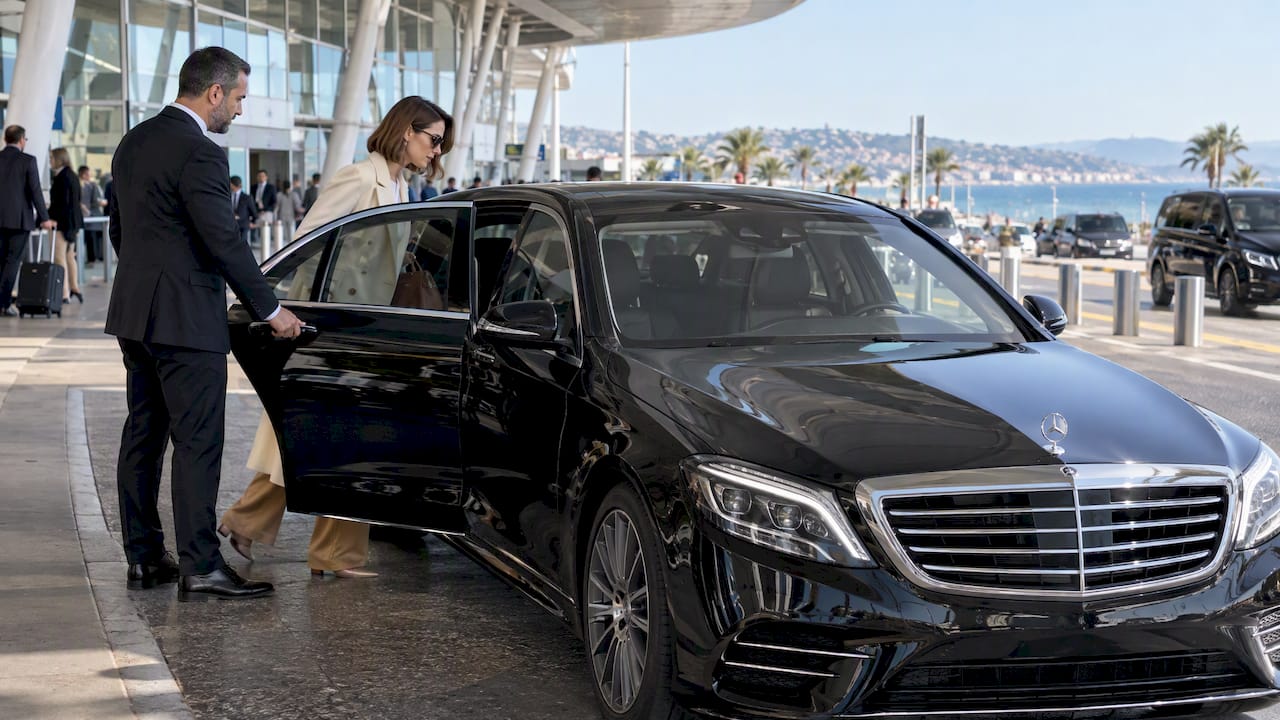
French law treats airport and station pickups differently from a street hail. A VTC cannot cruise for passengers or pick up without a prior reservation; doing so exposes the operator to penalties, including up to a year of imprisonment and a fine of €15,000 under the Legifrance provisions governing transport without authorisation. This is why a chauffeur waiting for you at Nice Côte d’Azur Airport will always be working from a confirmed booking, never responding to a spontaneous wave.
Reputable operators build in flight monitoring and free waiting time so delays do not become disputes, and they direct passengers to designated meeting points rather than kerbside scrums. As a passenger, your part is straightforward:
- Remain inside the terminal or at the agreed meeting point until the driver signals arrival.
- Check the vehicle model and licence plate against your booking confirmation before approaching.
- Confirm the driver is expecting you by name, without volunteering more personal detail than necessary.
- Note any posted waiting-time allowance so you know how flexible the arrangement is if baggage reclaim runs long.
These steps protect both parties and keep the pickup compliant with the rules that govern pre-booked transport at airports and stations.
In-vehicle behaviour and courtesy for short and long journeys
Seating choice says more than most passengers realise. The rear seat, passenger side, is generally preferable: it gives the chauffeur a clear sightline and keeps a natural distance that suits both privacy and safety, whether the trip is a fifteen-minute hop from Nice to the old town or a longer run towards Saint-Tropez.
Business travellers working from the back seat should keep calls discreet, use a headset for anything confidential, and treat the Wi-Fi and chargers as tools rather than an excuse to spread paperwork across the cabin. A chauffeur’s job is to drive calmly through traffic near Antibes or along the Basse Corniche, not to referee a mobile office.
Smoking is never acceptable inside a chauffeur-driven vehicle, and strong fragrances or food odours linger longer than passengers expect in an air-conditioned cabin. If a spill happens, say so immediately and offer to cover any cleaning cost rather than leaving it unmentioned. A short, direct apology and a practical offer resolve almost any accidental mess without awkwardness.
Luggage, child seats and safety responsibilities
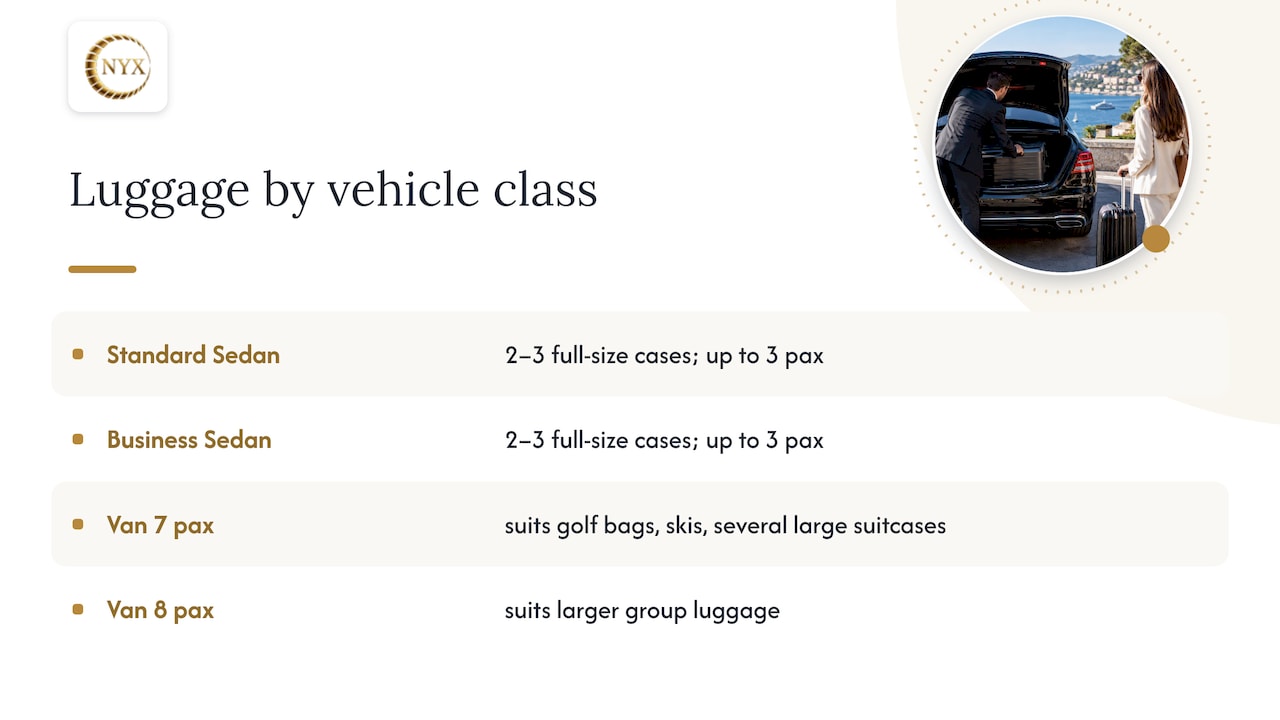
Luggage capacity depends on the vehicle class, so matching your bags to the booking avoids last-minute scrambles. A Standard Sedan or Business Sedan comfortably takes two to three full-size cases for up to three passengers, while a Van 7 pax or Van 8 pax suits groups travelling with golf bags, skis or several large suitcases. Give advance notice of anything oversized so the operator can assign the right vehicle rather than improvising at the kerb.
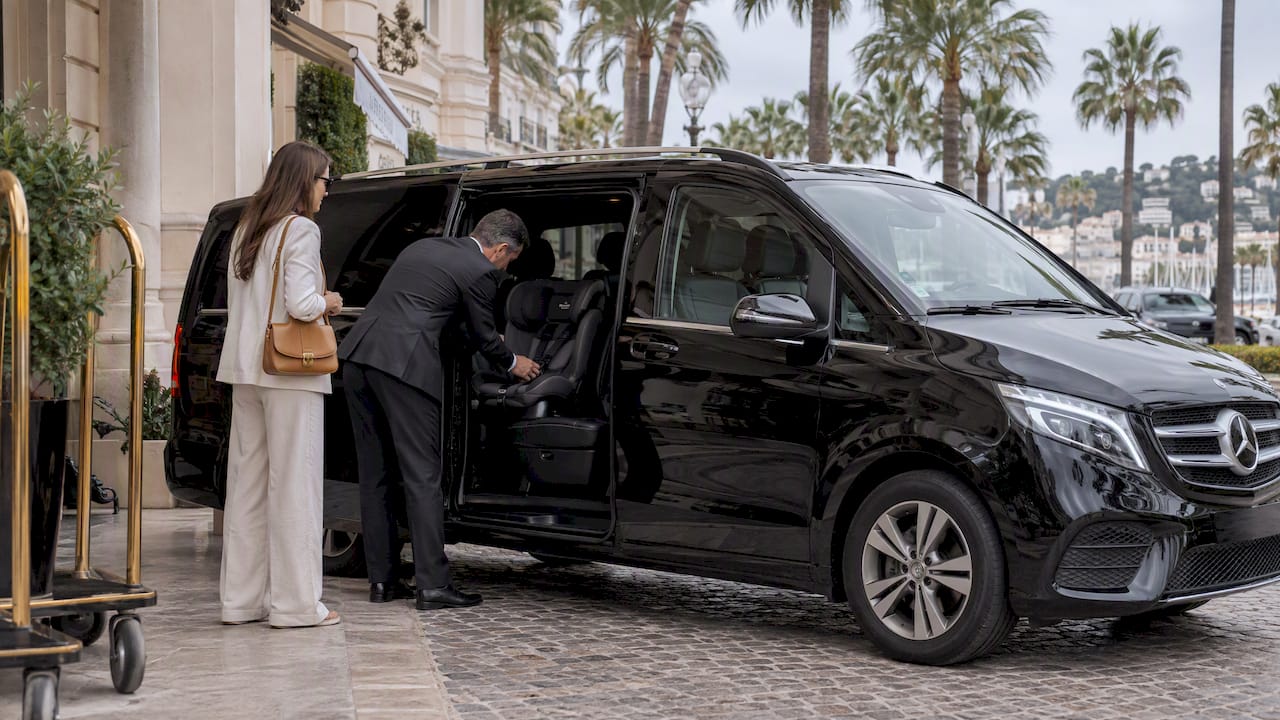
Child seats should be requested at the time of booking, not assumed. TranspOnyx, for example, provides child seats on request as a standard part of its service, reflecting the legal expectations around transporting children in hired vehicles. Passengers remain responsible for buckling up, securing loose bags inside the cabin rather than on laps, and asking the driver for help with anything heavy rather than wrestling a case alone.
Booking, payment and tipping: confirm before you travel
A confirmed fixed rate at the point of booking removes most disputes before they start. Ask specifically whether waiting time is included, what triggers an extra charge, and whether an itemised receipt is available for expense reconciliation; this matters particularly for corporate bookers managing multiple trips.
- Prefer contactless or in-app payment over cash-only arrangements, since digital payment creates a clear record for both sides.
- Confirm the 2026 fixed rate in writing before the journey, not verbally on the day.
- Treat tipping as discretionary: a small cash tip or rounding up is customary rather than obligatory, and the etiquette around tipping a chauffeur in France differs from some other markets.
- Corporate travel managers should brief guests on the company’s own expense policy so tipping and receipts align with internal rules.
How concierges and corporate bookers should brief passengers
A guest who knows what to expect rarely causes friction at the kerb. Concierges and corporate bookers should pass on the essentials before the journey: booking reference, vehicle make and licence plate, driver name and phone number, the free waiting allowance, and the exact meeting point.
- Confirm any special requirement at booking: a child seat, mobility assistance or a specific instruction for high-traffic events such as the Cannes Film Festival or the Monaco Grand Prix.
- Share a one-line briefing with the guest: vehicle details, driver contact and meeting point, nothing more.
- Keep a saved template so repeat bookings, including those around MIPIM or Cannes Lions, take seconds to confirm.
A chauffeur’s expected professional appearance and conduct
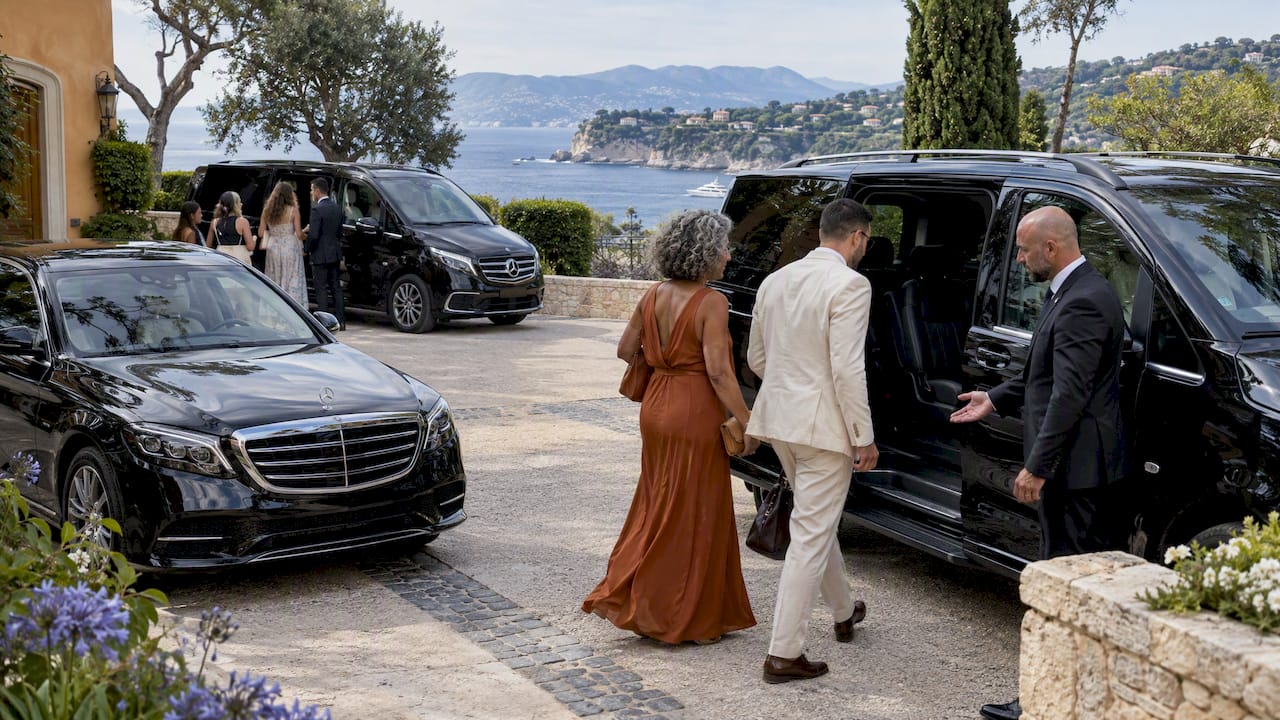
Passengers are entitled to expect a certain standard from the person driving them, and recognising that standard helps you judge whether a service meets it. A professional chauffeur typically presents in clean, formal attire, in a vehicle kept spotless inside and out, with no strong odours and no personal clutter visible to passengers. Punctuality is treated as a baseline rather than a bonus: arriving within the agreed window, confirming identity politely, and handling luggage without being asked.
Conduct matters as much as appearance. A chauffeur should greet passengers by name, confirm the destination without requiring repeated explanation, and adjust driving style to the passenger’s comfort, whether that means a smoother pace through central Nice or a brisker run along the autoroute towards Cannes. Licensed VTC drivers operating on the French Riviera are required to hold the relevant professional card, and bilingual fluency, at minimum in French and English, has become close to standard for operators serving international clients.
What passengers should watch for is consistency rather than performance. A driver who opens the boot without prompting, waits for passengers to settle before pulling away, and keeps the cabin temperature comfortable without being asked is demonstrating the baseline of the profession, not going beyond it. If a chauffeur falls short on appearance, timeliness or basic courtesy, that is worth noting and raising with the operator rather than brushing aside, since these standards are what distinguish a licensed VTC service from an informal lift.
Privacy and confidentiality norms between chauffeur and passenger
A chauffeured car is one of the few spaces where business travellers can speak candidly, and that only works if both sides respect confidentiality. Passengers should expect that anything overheard, a phone call, a conversation between colleagues, a document left on the seat, stays private. Professional drivers are trained to treat the cabin as a confidential space and not to repeat, comment on or act on what they hear.
That expectation runs both ways. Passengers should avoid putting a chauffeur in an awkward position by asking personal questions about other clients or expecting gossip about well-known figures the driver may have transported around Monaco or during an event like the Cannes Film Festival. A good chauffeur will deflect such questions courteously, and a considerate passenger will not press.
Practical privacy also means not photographing the driver or the vehicle’s interior without reason, and not sharing a driver’s personal number beyond the booking itself. If you need to reach the same driver again, go through the operator’s booking channel rather than contacting them directly outside the arrangement. This keeps the relationship professional and protects both the chauffeur’s working conditions and the passenger’s own privacy during the ride.
Communication etiquette: how and when the chauffeur should interact with passengers
The right amount of conversation varies by passenger, and a good chauffeur reads the cues rather than imposing a script. On arrival, a brief confirmation of the destination and expected journey time is normal and useful, particularly when traffic around Antibes or the Promenade des Anglais might affect timing. Beyond that, most professional drivers wait for the passenger to set the tone: some want quiet for calls or rest, others welcome local recommendations for a restaurant in Menton or the quickest route to a meeting in Monaco.
Passengers should feel free to state a preference early rather than enduring unwanted small talk or struggling to concentrate over a chatty driver. A simple, direct request, such as asking for a quiet journey, is entirely normal and should be respected without comment.
Updates during the journey should be limited to what is useful: a heads-up about a delay, a question about a preferred drop-off point, or confirmation of a change in plan. Anything beyond that, personal opinions, unsolicited reviews of other passengers, speculation about traffic causes, sits outside what passengers should expect from a professional service. If communication feels excessive or intrusive, it is reasonable to ask the driver to focus on the road, and reasonable operators train their chauffeurs to accept that request without taking offence.
Handling special requests or unexpected situations politely and professionally
Special requests are common on the French Riviera, from an unscheduled stop near Antibes to a last-minute change of destination ahead of an event like MIPCOM. A professional chauffeur should handle these calmly, confirming the new instruction and any impact on timing or fare before proceeding, rather than agreeing vaguely and sorting out details afterwards.
Passengers help this process by being specific and early. Naming the new stop, the approximate duration and any time pressure lets the driver plan the route properly instead of improvising mid-journey. If the request involves extra waiting or a detour that might affect the fixed 2026 rate, it is reasonable to ask upfront whether it changes the price agreed at booking.
Unexpected situations, a diversion for a closed road near Monaco during the Grand Prix, a delayed flight, a missing piece of luggage, call for the same approach from both sides: clear information, a calm tone and a willingness to adjust without drama. A chauffeur who explains a diversion briefly rather than leaving passengers guessing is behaving professionally, and a passenger who responds with patience rather than irritation makes the adjustment easier for everyone involved.
Guidelines for passenger-chauffeur interaction during the journey
Once the car is moving, the relationship settles into a simple rhythm: the chauffeur manages the drive, the passenger manages their own time inside the cabin. Respecting that division keeps the journey smooth. Avoid instructing the driver on route choices unless you have a genuine reason, since professional chauffeurs generally know the fastest way between Nice NCE and destinations such as Cannes or Menton, including how to work around predictable congestion during events like the Cannes Film Festival.
Use the amenities, Wi-Fi, chilled water, phone chargers, as intended, without treating the vehicle as a private office to rearrange. If you need to make a stop that was not part of the original booking, ask rather than assume, and expect the driver to confirm whether it affects the agreed rate or schedule.
Mutual respect also covers tone. A passenger who is short or demanding without cause makes the journey harder for a driver who is simply doing their job within agreed professional limits, and a driver who ignores reasonable requests undermines the service the passenger is paying for. Most friction during a chauffeured journey comes down to unclear expectations rather than genuine conflict, and most of it disappears when both sides communicate plainly at the point something needs to change.
Safety and emergency protocol etiquette from the chauffeur’s perspective
Safety sits above every other consideration in a professional chauffeur service, and passengers should expect their driver to prioritise it even when that means a short delay or a firm instruction. A chauffeur who insists on a seat belt being fastened before moving, or who pauses to secure loose luggage rather than driving off immediately, is following standard practice, not being overcautious.
In the event of a mechanical issue, a road closure or an accident involving another vehicle, passengers should expect clear, calm communication: what has happened, what the plan is, and roughly how long any delay will last. A professional driver will contact the operator’s dispatch or support line rather than leaving passengers uncertain, and will prioritise getting everyone to a safe location before resolving the practical details.
Passengers have a role here too. Following the driver’s instructions during an unexpected stop, whether that means staying in the vehicle or moving to a safe verge, helps the situation resolve faster. If you have a medical condition or mobility need that could matter in an emergency, mentioning it at booking rather than mid-journey gives the operator and driver time to prepare properly. Good etiquette in a crisis is mostly about trusting the professional in charge of the vehicle and avoiding actions, opening doors into traffic, stepping out unprompted, that could make a difficult moment worse.
TranspOnyx perspective: example policies that make good etiquette straightforward
Clear operator policy removes most of the guesswork from passenger behaviour. TranspOnyx confirms its 2026 fixed rate at the time of booking, includes 60 minutes of free waiting at airports and 20 minutes elsewhere, and runs a Mercedes-Benz fleet with bilingual licensed drivers. Child seats can be requested by phone on +33 6 10 30 71 84, by WhatsApp, or directly through the airport transfer booking page. When evaluating any operator, ask for these same specifics before you travel.
— Dany
Book a compliant, luxury transfer with TranspOnyx
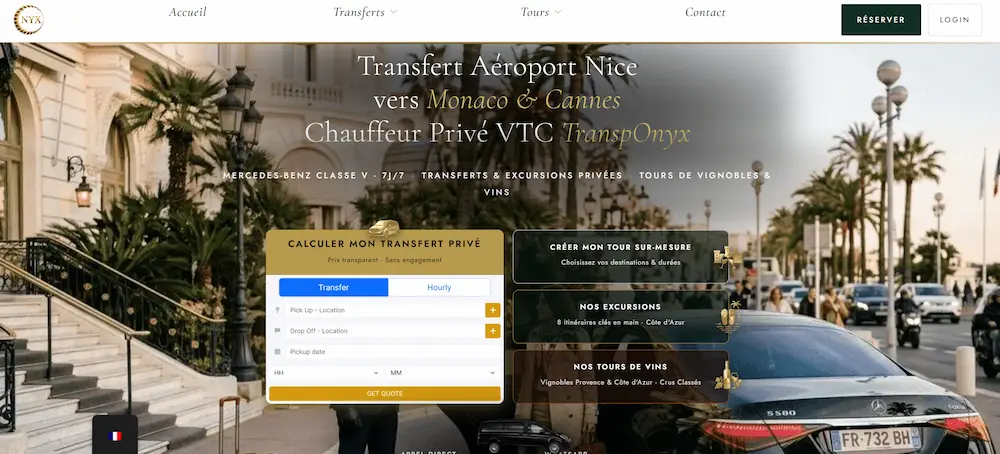
Knowing the etiquette is one thing; booking with an operator that makes it easy to follow is another. TranspOnyx runs airport transfers, point-to-point journeys, by-the-hour hire, private tours and event transport across the Riviera, all at fixed 2026 rates confirmed before you travel, with waiting time, child-seat requests and multilingual licensed drivers built into the service rather than negotiated on the day.
- Airport transfers from Nice NCE to Monaco, Cannes, Antibes, Menton and Saint-Tropez, with flight monitoring included.
- By-the-hour hire and bespoke tours for business days or leisure itineraries along the coast.
- Event transport for occasions such as the Monaco Grand Prix, MIPIM or the Cannes Film Festival, booked in advance to match legal reservation requirements.
Reserve directly through the Nice airport transfer page, by phone on +33 6 10 30 71 84, or via Transponyx to confirm your vehicle, driver and fixed rate before you set off.
FAQ
What is the single most important rule of chauffeur etiquette?
Always pre-book and confirm your vehicle, driver and fixed rate before the journey rather than hailing a VTC on the street. French reservation rules require this, and it also protects you from disputes over price or pickup location.
Should I sit in the front or back seat with a private chauffeur?
The rear seat, passenger side, is generally preferred for both privacy and safety, giving the driver a clear view of the road. Front-seat travel is uncommon unless the group size or luggage makes it necessary.
Do I need to tip a chauffeur in France?
Tipping is discretionary rather than expected; a small cash tip or rounding up the fare is customary if the service pleased you. Corporate travellers should check their own company’s expense policy on tipping before deciding.
How do I verify I am getting into the correct chauffeured vehicle?
Check the vehicle’s make, model and licence plate against your booking confirmation, and confirm the driver is expecting you by name before getting in. Consumer guidance recommends treating any unsolicited approach at an airport or station with caution, since pre-booking is the legal basis for a VTC pickup.
Can I request a child seat for a private chauffeur booking?
Yes, but it must be requested at the time of booking rather than assumed. Operators such as TranspOnyx provide child seats on request as part of their standard service across the Riviera.
Sources
The legal framework behind VTC pre-booking rules, along with practical verification advice, comes from official and consumer-protection sources rather than industry opinion. These are worth consulting directly if you want to check penalties, enforcement detail or passenger safety guidance before your next booking.
0 commentaires