
Yes, you can drive from Nice to Milan in a single day. Two routes serve the journey well: the coastal A8 through Monaco and Ventimiglia for speed and predictability, or the inland Fréjus route when alpine scenery or coastal congestion make it the smarter choice. Expect somewhere between 3 hours 20 minutes and 4 hours under normal traffic, depending on which road you take.
Coastal A8 versus inland Fréjus: which route suits your trip
The coastal A8 runs from Nice through Monaco, across the Italian border at Ventimiglia, then via Sanremo and Imperia towards Genoa before turning north to Milan. It follows the sea for much of its length, offers consistent motorway conditions, and avoids the separate Fréjus Tunnel toll, a point highlighted consistently in route planning guides.
The inland option threads through the Fréjus Tunnel onto the French A43 and Italian A32, joining the A4 near Turin before the final run into Milan. Although it can be slightly longer in distance, the route offers alpine scenery and is a practical alternative when coastal congestion peaks near Riviera events such as Cannes or Monaco.
- Choose the coastal A8 for reliability and sea views, especially outside peak season.
- Choose the inland Fréjus route when the Riviera coast road is congested or when alpine scenery matters more than tunnel fees.
- Check live conditions before committing, since snow, landslides or roadworks can flip the calculation either way.
How far is it and how long does the drive take
Route choice changes both distance and duration meaningfully, and knowing the numbers before you leave helps you set a realistic departure time rather than guessing at journey length once you are already on the road.
| Route | Distance | Typical drive time |
|---|---|---|
| Coastal A8 (via Monaco, Ventimiglia, Sanremo) | Approximately 315 to 320 kilometres | Roughly 3 hours 20 minutes |
| Inland Fréjus (A43, A32, A4) | Approximately 340 kilometres | Around 4 hours |
These figures assume ordinary traffic. Rush hour around Genoa, event weekends in Cannes or Monaco, and scheduled motorway maintenance can all stretch the drive time and distance estimates noticeably, so checking Autostrade per l’Italia’s live bulletins before departure is worth the two minutes it takes.
What tolls and fuel will realistically cost you
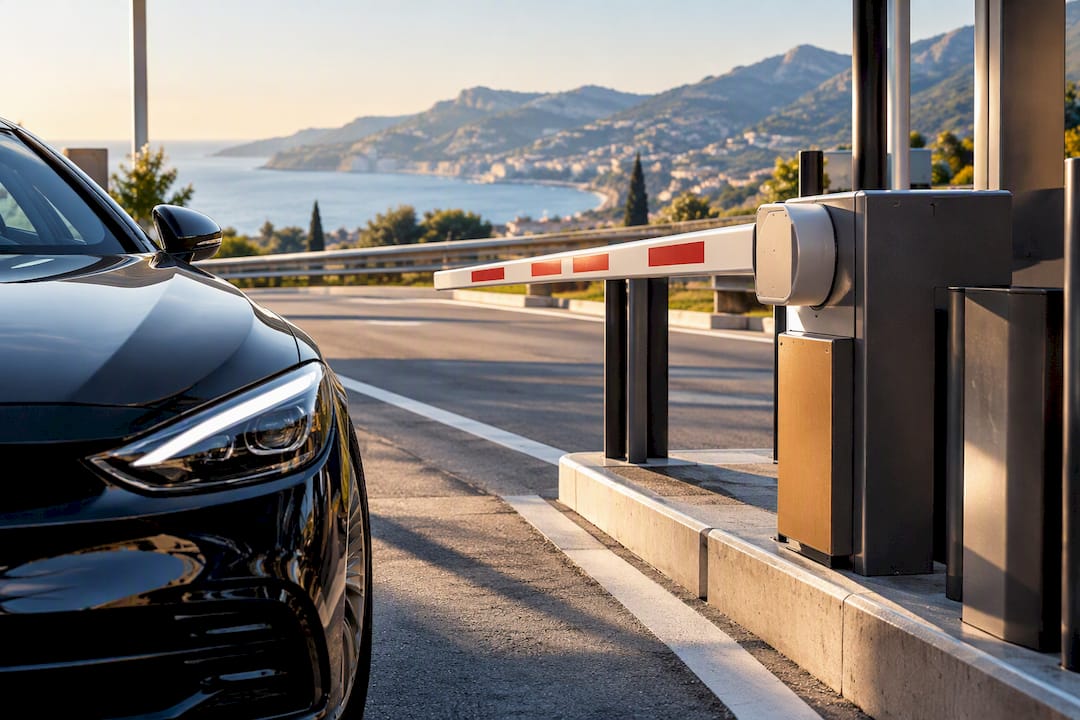
French and Italian autostrade both operate distance-based tolls, collected at barriers by card, cash or an electronic télépéage badge fixed to the windscreen. The badge lets you glide through dedicated lanes without stopping, which matters on a route crossing two countries’ toll networks in one day.
The Fréjus Tunnel charges a separate one-way fee of €55.50 for a standard car in 2026, distinct from the ordinary autostrada tolls, and it only applies to drivers taking the inland route through the tunnel itself.
- Budget separately for standard motorway tolls and, if relevant, the Fréjus Tunnel charge.
- Card payment is accepted almost everywhere, though carrying some cash covers smaller or older toll plazas.
- A télépéage transponder, hired with the car or borrowed from a rental company, speeds up every barrier crossing.
- Fuel costs vary with the vehicle, but a mid-size car over 315 to 340 kilometres will typically need one full tank.
Documents and vehicle checks before you cross into Italy
Crossing from France into Italy by road involves no passport control under the Schengen arrangement, but you still need the paperwork that proves the car and its driver are legitimate. Carry your driving licence, the vehicle’s registration document, and proof of insurance valid for Italy. A green card is worth keeping in the glovebox even where not strictly demanded, since it settles any roadside query quickly.
Hired or leased vehicles need particular attention: not every rental agreement permits cross-border travel, and some insurers exclude Italy or the Fréjus Tunnel specifically, so read the contract before you leave the depot.
- Driving licence, vehicle registration and valid insurance documents, kept together and accessible.
- A green card or equivalent proof of Italian coverage, even when not routinely checked.
- A basic safety kit: warning triangle, high-visibility vest, and a spare bulb kit for older vehicles.
- Winter tyres or snow chains between mid-autumn and spring if taking the inland alpine route.
Check your vehicle’s emissions class on the Portale dell’Automobilista before you leave home, to ensure compliance before entering Milan’s low emission zones.
Milan’s Area B and ZTL rules for visiting drivers
Milan restricts a large portion of its municipal area under Area B, an electronically enforced low-emission zone covering most of the city within the ring road. Since 1 October 2025, Area B has excluded certain older petrol vehicles rated Euro 3, a change that catches out visitors driving older cars from outside Italy.
Milan enforces Area B through numerous camera-monitored gates called varchi; being unaware of your vehicle’s emissions classification is the principal cause of fines for foreign drivers.
- Check your vehicle’s Euro class against Area B rules before entering the city, not after.
- Consult the municipal map of varchi to identify which entry points sit inside the restricted zone.
- Non-resident vehicles that qualify for temporary access can sometimes use the MoVe-In box scheme, though allowances are limited and must be arranged in advance.
- Parking outside the ring road and using public transport for the final stretch avoids the question entirely.
Staying safe and on schedule between the two cities
Ligurian motorways schedule night-time maintenance on the A10 and A7 corridors with some regularity, and these closures can force an unexpected detour if you are driving after dark. Checking Autostrade per l’Italia’s viability notices before you set off, rather than relying on memory of a previous trip, remains the most reliable habit for any Riviera to Lombardy run.
- Check Autostrade’s live updates and the Liguria regional bulletins the morning you travel.
- Build in one rest stop roughly every two hours, useful for fuel, coffee and a change of driver.
- Fit a télépéage badge before departure if your rental allows it, saving time at every barrier.
- Treat the alpine Fréjus route with extra caution in winter, and expect coastal congestion near Cannes or Monaco during major events.
Recommended stops and two ready-made itineraries
Whichever route you take, a handful of stops turn a transit drive into something more memorable without adding much time.
- Menton, just before the Italian border, rewards a twenty-minute wander through its old town and lemon-scented streets.
- Monaco offers a quick detour to the harbour or the Casino Square, best kept brief given its notorious parking.
- Sanremo, on the Italian coastal stretch, suits a proper lunch stop with its seafront promenade.
- Inland travellers can pause in the Maurienne valley before the Fréjus Tunnel, where mountain views justify fifteen minutes out of the car.
For a fast transfer, leave Nice by 8am, take the coastal A8, and expect arrival in Milan by early afternoon after one short fuel stop. For a scenic day, leave by 7am, take the inland Fréjus route, stop for a mountain coffee near Modane, then lunch in Turin before the final leg to Milan.
Anyone travelling around the Cannes Film Festival, Monaco Grand Prix, MIPIM or Cannes Lions should add at least an hour to coastal timings and consider departing well before the morning rush.
When a self-drive plan gives way to a chauffeured transfer
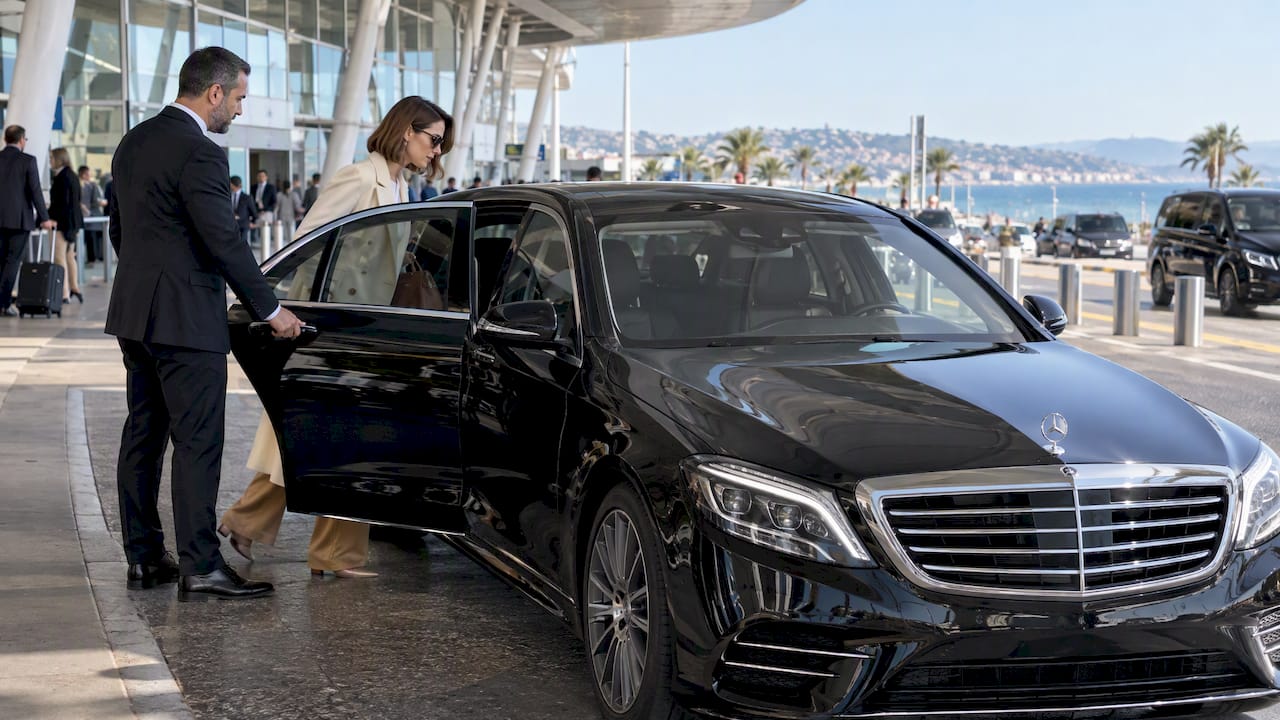
Self-driving suits travellers with time and a taste for the open road, but certain situations tip the balance, making a concierge private driver a preferable option to navigate Italy’s ZTL zones and VIP travel needs (Avoid ZTL Fines: Concierge Private Drivers in Italy for VIP Travelers). Group travel with heavy luggage, a fixed arrival deadline during MIPCOM or the Grand Prix, or simple reluctance to gamble on Area B eligibility all favour a professional driver who manages route changes, paperwork and local rules without your involvement. TranspOnyx operates exactly this kind of long-distance transfer from the Riviera into Italy.
— Dany
Booking a TranspOnyx transfer from Nice to Milan
Travellers who would rather arrive rested than navigate tolls and Area B rules themselves have a direct alternative. TranspOnyx runs point-to-point long-distance transfers from Nice into Italy, including Milan, under fixed 2026 rates confirmed at the time of booking, with no surprises added en route.
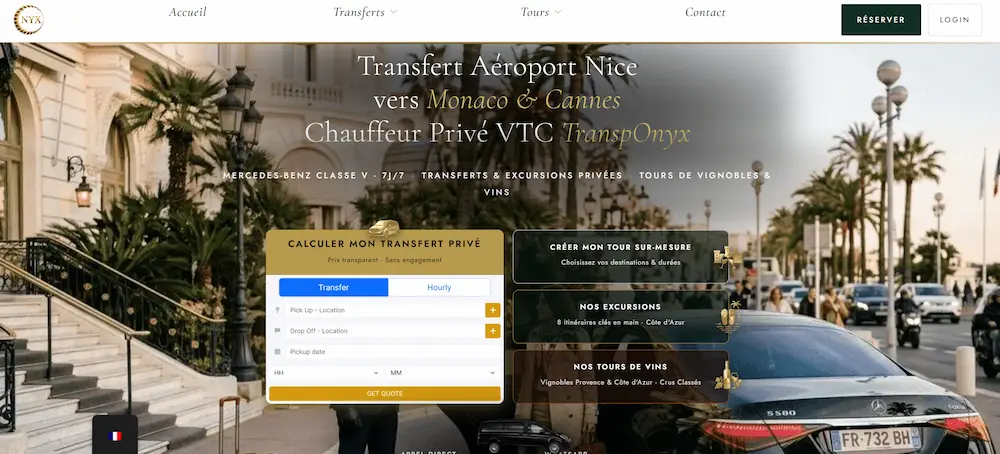
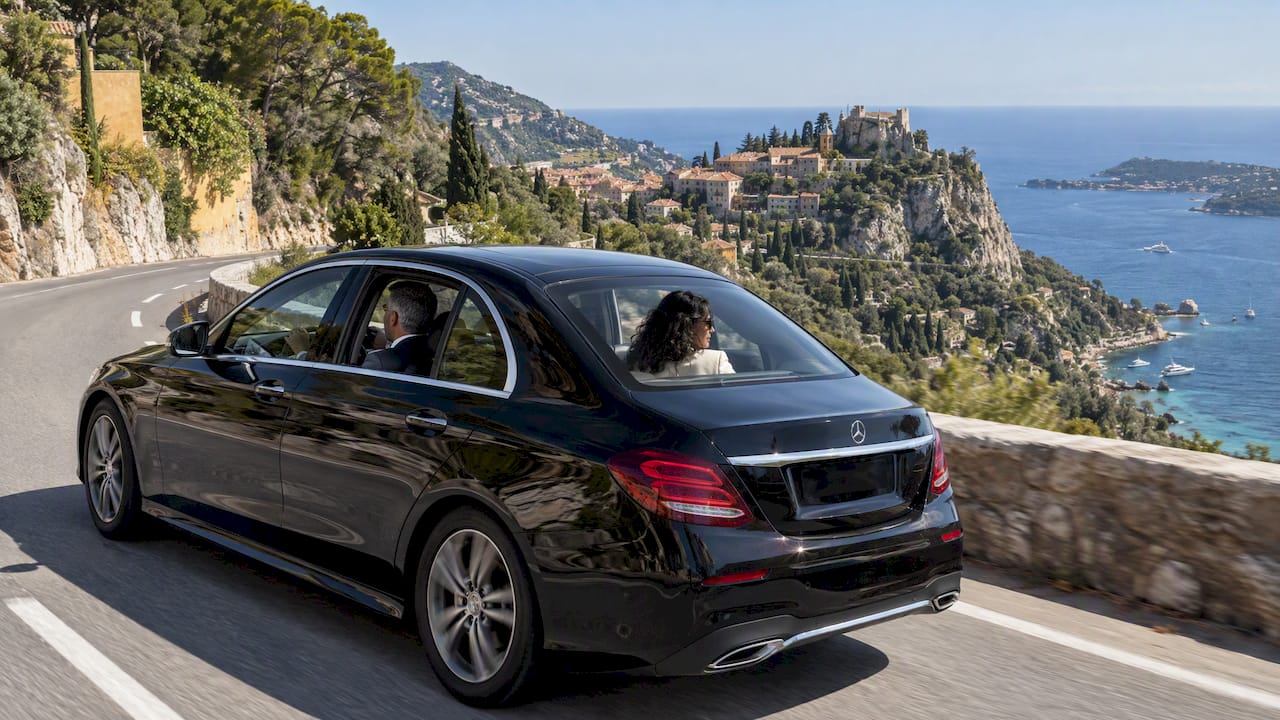
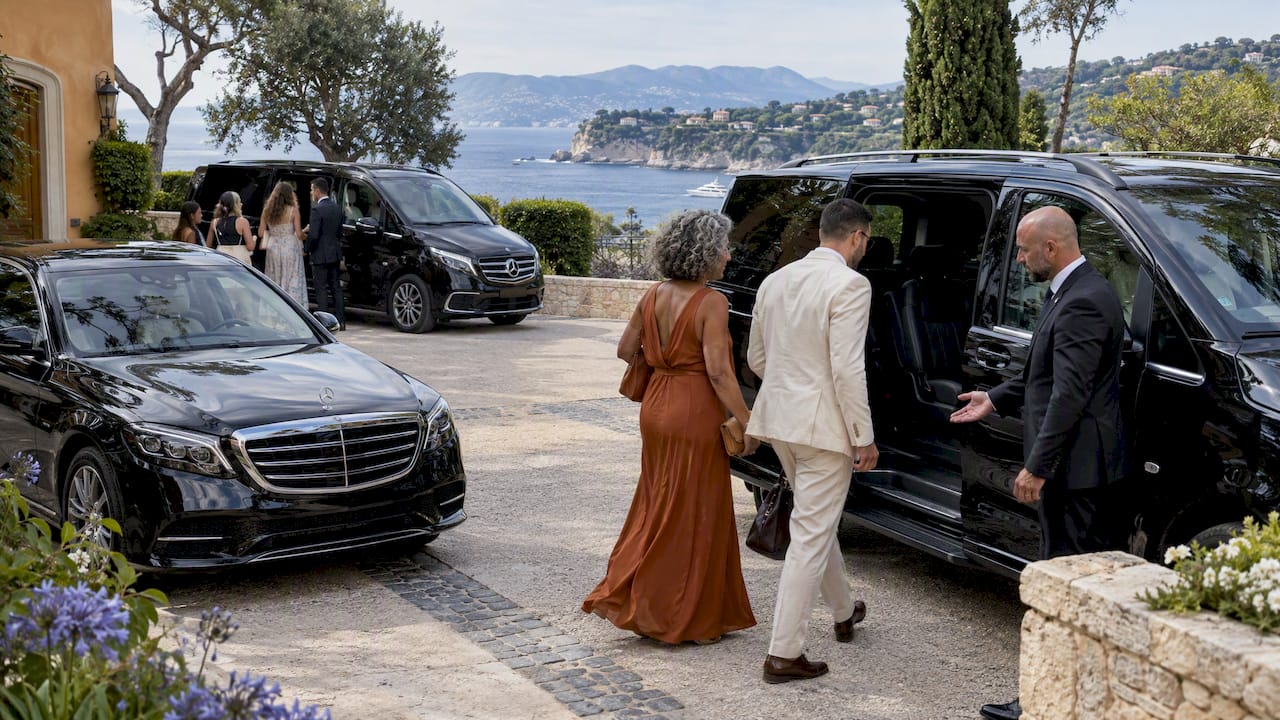
The fleet covers four Mercedes-Benz categories: Standard Sedan and Business Sedan for up to three passengers, and Van 7 pax or Van 8 pax for larger groups or extra luggage. Every vehicle carries Wi-Fi, air conditioning, chilled water and phone chargers, and drivers are licensed VTC professionals fluent in at least English and French. TranspOnyx operates 24 hours a day, seven days a week, with free waiting time included on airport pickups.
- Fixed 2026 rates per vehicle, agreed before you travel, with no surge pricing.
- Bilingual licensed drivers who handle Italian border and Area B considerations directly.
- Booking by phone on +33 6 10 30 71 84, by WhatsApp, or via the TranspOnyx website.
For travellers already comparing chauffeur options for Riviera legs, the Nice to Marseille transfer service shows how the same fixed-rate, point-to-point model works on other long-distance routes.
Where to check live conditions before you leave
Confirm motorway status with Autostrade per l’Italia, whose bulletins cover closures and scheduled works on the A10 and A7. Verify Milan access rules through the Area B guidance and the Portale dell’Automobilista. For distance, timing and toll estimates, ViaMichelin’s route planner remains a dependable reference, alongside TyreMap’s toll breakdown.
Sources
- Milan to Nice 2026: €55.50 Fréjus Toll on the 340 km | TyreMap
- A10 GENOVA-SAVONA: comunicati viabilità – Autostrade per l’Italia
- Area B Milano: dal 1° ottobre stop alle Euro 3 – L’Automobile ACI
- Nice – Milan driving directions – journey, distance, time and costs – ViaMichelin
FAQ
How can I get from Nice to Milan by car?
Take either the coastal A8 through Monaco and Ventimiglia or the inland route via the Fréjus Tunnel onto the A32 and A4. Both are manageable in a single day, with the coastal option generally favoured for reliability and the inland option for shorter distance on paper, as detailed in the route comparison above.
What is the best route to drive from France to Italy?
There is no single best route for every trip. The coastal A8 suits drivers who want predictable motorway conditions and avoid the separate Fréjus Tunnel charge, while the inland Fréjus road suits those prioritising alpine scenery or dodging coastal congestion near Cannes or Monaco.
What is the best way to travel from Nice to Milan?
Self-driving works well for travellers who enjoy the flexibility of stopping at Menton, Monaco or Sanremo along the way. Those preferring not to manage tolls, borders and Milan’s Area B rules often choose a chauffeured transfer instead, arranged directly with a provider such as TranspOnyx.
Is it possible to drive from France to Italy?
Yes, driving between France and Italy is routine and requires no passport control under the Schengen arrangement. You do need your driving licence, vehicle registration and valid insurance documents, plus awareness of Milan’s Area B emissions rules if your final destination sits within the city.
0 commentaires