
A wine tour in Provence is a curated, multi-estate experience combining vineyard walks, cellar visits, and guided tastings of the region’s celebrated rosé, red, and white wines across appellations including Châteauneuf-du-Pape, Bandol, Côtes de Provence, and Luberon. Provence produces roughly 40% of all French rosé, a statistic that explains why the region draws serious wine travellers from across the world. The terroir here is genuinely diverse: limestone plateaux, clay-rich valleys, and coastal garrigue each produce wines of distinct character. Whether you choose a small-group half-day tour from Avignon or a private full-day itinerary departing from Nice or Cannes, the experience rewards preparation. This guide covers every aspect you need to plan a wine tour in Provence with confidence.
What are the main wine regions on a wine tour Provence?
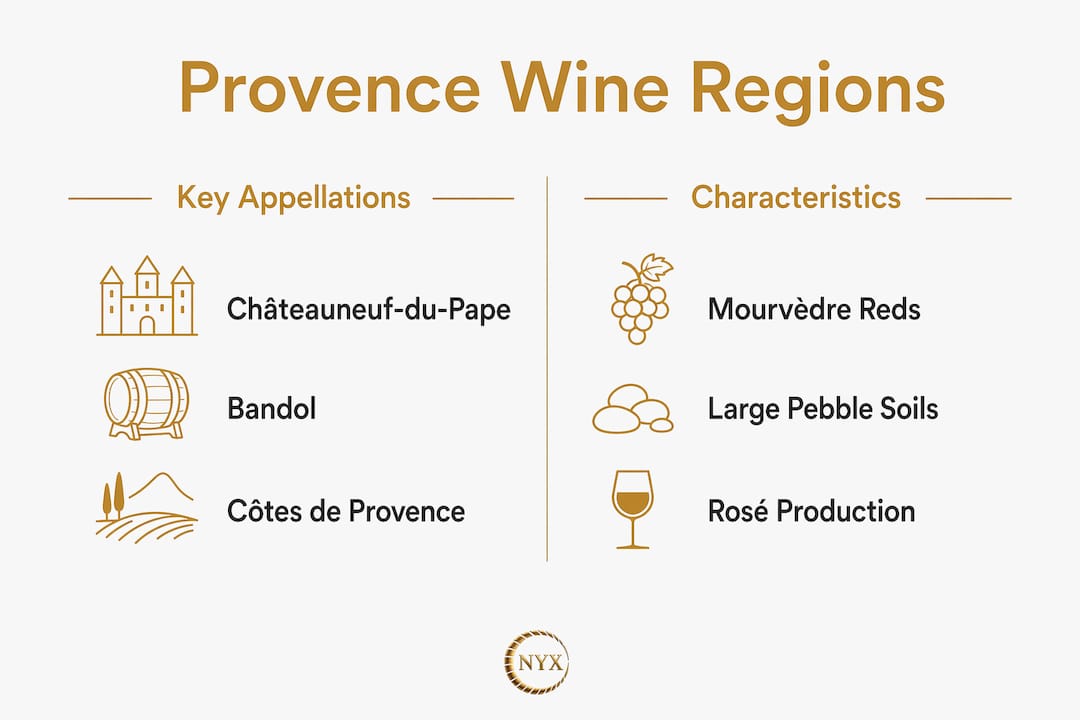
Provence is not a single wine region. It is a collection of distinct appellations, each with its own soils, microclimates, and flagship grape varieties. Understanding the geography before you book a tour determines whether you spend your day in the right vineyards.
Châteauneuf-du-Pape is the most internationally recognised appellation in the area. Grapes mature on large rolled pebbles and red clay soils, and winemakers reinforce appellation identity through deliberate terroir and grape variety differentiation. Grenache dominates, but the appellation permits up to 18 grape varieties. The resulting reds are powerful, structured, and age-worthy. Avignon serves as the natural departure point for tours into this appellation, with small-group tours from Avignon priced from €90 per person, including tastings of three local wines with expert commentary on terroir and grape varieties.
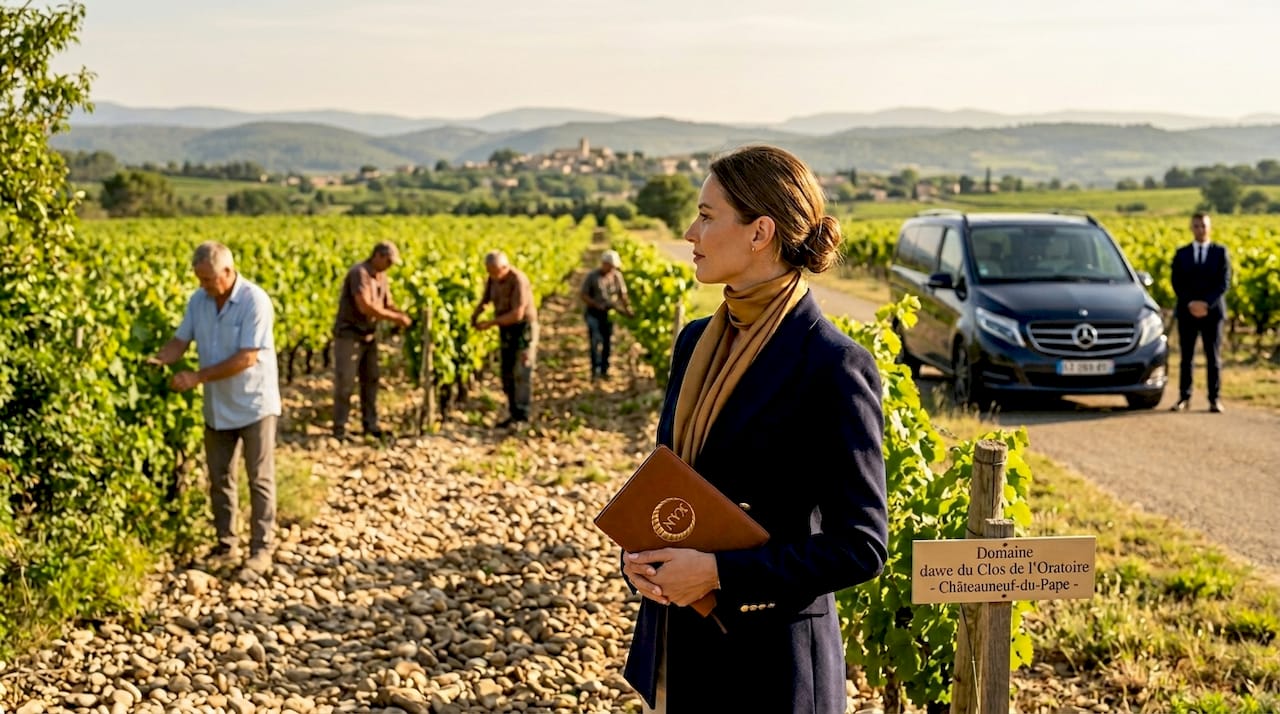
Bandol sits on the Mediterranean coast between Marseille and Toulon. It produces what many consider the finest Mourvèdre-based reds in France, alongside a distinctive rosé that bears little resemblance to the pale, delicate styles found further east. The appellation’s steep terraced vineyards require physical effort to visit, which makes guided transport essential.
Côtes de Provence is the largest appellation and the engine of Provence’s rosé production. The Protected Designation of Origin regulations controlling grape varieties, harvests, and processing are strict, ensuring the pale, dry style that has come to define summer wine culture globally. Rolle (Vermentino), Grenache, and Cinsault are the principal varieties.
Luberon and Ventoux offer a more pastoral, less-visited alternative. The Luberon hills produce elegant reds and whites at altitude, while the Ventoux appellation stretches across the slopes of Mont Ventoux, where cooler temperatures produce wines of notable freshness.
| Appellation | Principal varieties | Signature style | Typical tour departure |
|---|---|---|---|
| Châteauneuf-du-Pape | Grenache, Syrah, Mourvèdre | Powerful aged reds | Avignon |
| Bandol | Mourvèdre, Grenache | Structured reds, coastal rosé | Toulon, Marseille |
| Côtes de Provence | Grenache, Rolle, Cinsault | Pale dry rosé | Nice, Saint-Tropez |
| Luberon | Grenache, Syrah, Viognier | Elegant reds and whites | Apt, Aix-en-Provence |
| Ventoux | Grenache, Syrah | Fresh, altitude-driven reds | Carpentras, Mazan |
The Provence wine trails that connect these appellations are best covered by private vehicle. Driving between Châteauneuf-du-Pape and Bandol takes approximately 90 minutes, and attempting to combine both in a single day without dedicated transport is impractical.
How do guided wine tours in Provence typically operate?
The format of a guided wine tour in Provence varies considerably depending on whether you book a structured group experience, a private estate visit, or a workshop-style tasting event. Each format suits a different type of traveller.
A typical full-day private tour follows this sequence:
- Morning departure from Nice, Cannes, or Avignon in a private vehicle, with the driver briefed on your preferred appellations and estates.
- Vineyard walk at the first estate, usually lasting 45 to 60 minutes across the vines, with the winemaker or estate guide explaining the terroir, vine age, and harvest methods.
- Cellar visit covering fermentation, ageing vessels (oak barrels or concrete eggs are common in Provence), and the winemaker’s philosophy.
- Guided tasting of three to five wines, often structured as a dégustation avec accord mets et vins, pairing each wine with a regional dish or artisan cheese. At Domaine du Coffre in the Luberon, for example, evening tastings begin at 18:30 with a vineyard walk, cellar visit, and a three-glass tasting with food pairing.
- Second estate visit in the afternoon, often in a contrasting appellation to illustrate the diversity of Provençal terroir.
- Return transfer to your base, typically arriving by early evening.
For travellers who prefer a more structured, classroom-style format, the Pavillon Bouachon in Châteauneuf-du-Pape hosts gourmet food and wine workshops throughout the year, covering tasting technique, food pairing principles, and appellation history. These workshops remove the need to self-organise visits to multiple estates, making them particularly well-suited to first-time visitors.
Small-group tours from Avignon typically accommodate six to twelve participants and run for a half-day, covering one or two estates with a professional guide. Private tours offer complete flexibility on timing, estate selection, and pace.
Pro Tip: Vineyard terrain is uneven and often stony. Official guidance from estates including Domaine du Coffre strongly recommends closed flat shoes for all vineyard walks. Sandals and heels are genuinely impractical, not merely inadvisable.
The wine tour itinerary for Provence works best when it is built around no more than two estates per day. Three estates in a single day produces tasting fatigue and reduces the quality of attention you give to each wine.
Which are the best wineries to visit on a Provence wine tour?
The best wineries in Provence are not necessarily the most famous. The estates that deliver the most memorable visitor experiences combine wine quality with genuine hospitality, clear educational value, and a setting that reflects the character of the appellation.
Domaine du Coffre in Pertuis, within the Luberon appellation, is a benchmark for experiential wine tourism. The estate runs its Sunsets Vignerons programme through summer 2026, offering structured evening events that combine a vine walk with a cellar visit and a food-paired tasting. The format is deliberate and unhurried, which is rare among estates that attract significant visitor numbers.
Château la Croix des Pins in Mazan, positioned between the Ventoux appellation and the Dentelles de Montmirail, offers one of the most complete full-day wine experiences in the region. A morning vineyard hike followed by lunch at the estate restaurant, with afternoon tasting sessions and interactive vineyard trails, makes this a genuinely immersive visit. The restaurant serves regional dishes paired directly with estate wines, which is the most effective way to understand how Ventoux reds behave with food.
Pavillon Bouachon in Châteauneuf-du-Pape operates as a dedicated wine education venue as much as an estate. Its year-round workshop programme covers wine introduction, tasting methodology, and food pairing in a structured setting. This suits travellers who want depth of understanding rather than simply a pleasant afternoon in a vineyard.
Château de Berne in the Var, within the Côtes de Provence appellation, is one of the most polished wine tourism operations in the south of France. The estate combines a luxury hotel, a Michelin-recommended restaurant, and a working winery producing award-winning rosés. Visitor experiences range from cellar tours to blending workshops.
| Estate | Appellation | Signature experience | Best for |
|---|---|---|---|
| Domaine du Coffre | Luberon | Evening vine walk and food-paired tasting | Couples, small groups |
| Château la Croix des Pins | Ventoux | Full-day hike, lunch, and tasting | Active travellers |
| Pavillon Bouachon | Châteauneuf-du-Pape | Structured wine workshops | First-time visitors |
| Château de Berne | Côtes de Provence | Blending workshops, hotel, restaurant | Luxury travellers |
Booking in advance is non-negotiable for summer visits. July and August see estates operating at capacity, and the most sought-after tasting slots at Domaine du Coffre and Château de Berne fill weeks ahead. For the Onyx Tours wine programme, Transponyx coordinates estate bookings alongside transport, which removes the logistical burden entirely.
What practical advice should travellers consider when planning?
Planning a vineyard tour in Provence requires more attention to logistics than most travellers anticipate. The region is large, the roads between appellations are often narrow and winding, and the combination of midday heat and wine tasting makes self-driving a genuine safety concern.
The best period for vineyard tours Provence is late April through June and September through October. Late spring offers cooler temperatures, fewer crowds, and the visual drama of vines in full leaf. September brings the harvest, when estates are at their most animated and winemakers are willing to discuss the vintage in real time. July and August are viable but require earlier booking and earlier starts to avoid the worst of the heat.
Attire matters more than most visitors expect. Beyond the footwear recommendation already noted, light layers are advisable even in summer: cellar temperatures sit at around 12°C regardless of the outdoor heat, and a morning vineyard walk can be cool before 9am. Sun protection is non-negotiable for afternoon visits.
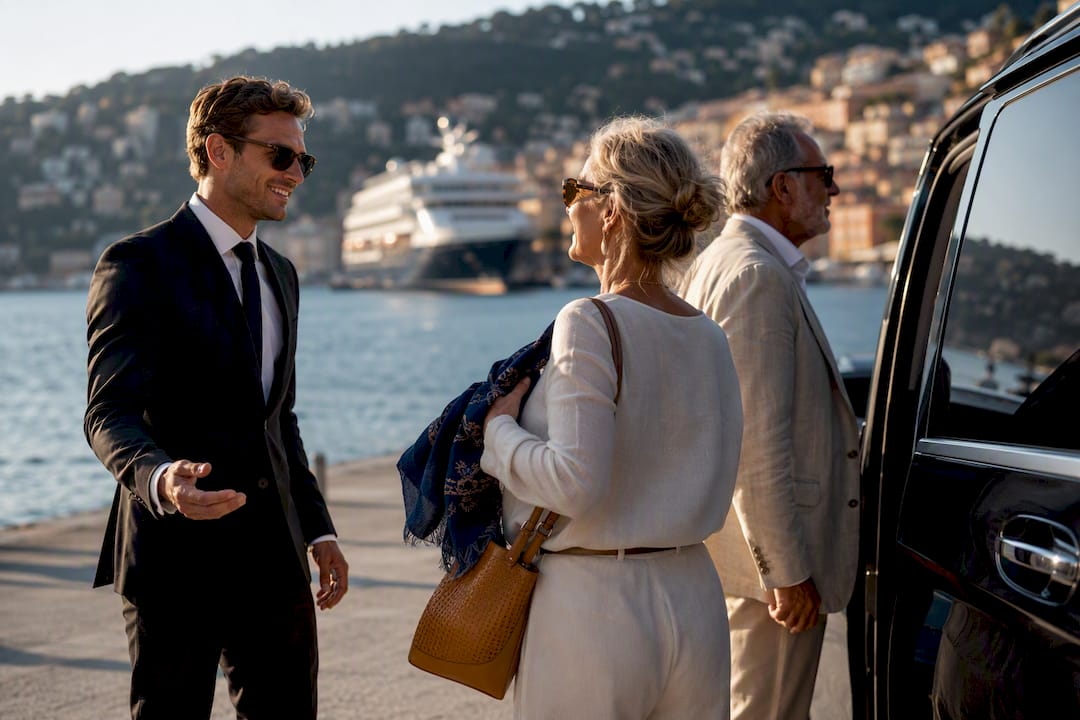
Transport is the single most consequential planning decision. Driving between estates after tasting is not a responsible option, and public transport between Provençal wine villages is infrequent and slow. The practical choices are a guided group tour with transport included, or a private chauffeur service. For travellers based on the French Riviera, in Nice, Cannes, Monaco, or Antibes, a private driver from Nice to the Luberon covers approximately 150 kilometres and takes around two hours, making a full-day itinerary entirely feasible.
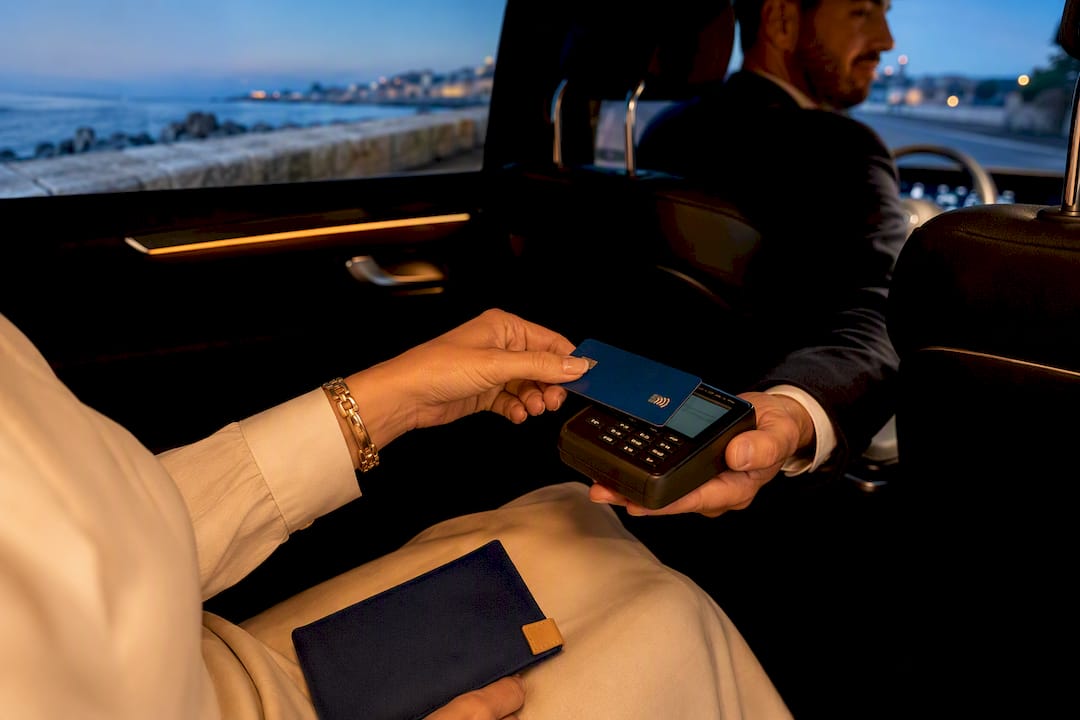
Transponyx operates private wine tour transfers across Provence and the Côte d’Azur with fixed 2026 rates confirmed at booking. The Van 7 pax and Van 8 pax options accommodate groups of up to eight, with Wi-Fi, chilled water, and air conditioning throughout. For smaller parties, the Business Sedan provides a premium finish for up to three passengers.
Pro Tip: When booking a multi-estate itinerary, allow at least 90 minutes between scheduled tastings. Estates in Provence rarely run precisely to time, and the most interesting conversations with winemakers happen after the formal tasting ends.
For travellers arriving at Nice Côte d’Azur Airport (NCE), Transponyx includes 60 minutes of free waiting time on all airport pickups, which means a delayed flight does not disrupt the start of your wine tour itinerary. Contact the team directly on +33 6 10 30 71 84 or via WhatsApp on +33 7 67 78 10 26 to discuss your preferred route and estate selection.
What I have learnt from years of Provence wine touring
The conventional advice on Provence wine tourism focuses almost entirely on the wines themselves. After accompanying dozens of guests through the region’s appellations, I have found that the most memorable visits are shaped by factors that no tasting note can capture.
The first is timing within the day. Estates visited before noon consistently produce sharper, more focused tastings. Palates are fresher, guides are less fatigued, and the quality of conversation with winemakers is markedly higher. Afternoon visits, particularly in July and August, often feel rushed and impersonal. If you have one premium estate on your itinerary, book it for the morning.
The second is the undervalued case for Luberon and Ventoux over the more celebrated appellations. Châteauneuf-du-Pape deserves its reputation, but the estates there are accustomed to international visitors and the experience can feel rehearsed. Domaine du Coffre and Château la Croix des Pins offer something rarer: genuine access to winemakers who are still building their international profile and who treat each visitor as an opportunity to share their work rather than fulfil a quota.
The third is the rosé question. Provence rosé has become so commercially successful that strict PDO regulations now govern every aspect of its production. This is reassuring for quality, but it also means that the most interesting wine discoveries on a Provence tour are often the reds and whites that receive less attention. Ask your guide specifically about the estate’s red programme. The answers are frequently surprising.
Finally, transport defines the entire experience. A driver who knows the region, speaks the language, and can wait patiently while you finish a conversation with a winemaker is not a luxury. It is the difference between a tour that feels curated and one that feels pressured. The wine tasting tour options offered through Transponyx are built around exactly this principle.
— Dany
Travel to Provence in comfort with Transponyx
Planning a wine tour in Provence from the French Riviera is straightforward when transport is handled by professionals who know the region. Transponyx provides fixed-rate chauffeur services for wine tour itineraries departing from Nice, Cannes, Monaco, and Antibes, with 2026 rates confirmed at booking and no surge pricing. The fleet covers every group size: Standard Sedan and Business Sedan for couples or solo travellers, Van 7 pax and Van 8 pax for larger parties.
All vehicles are Mercedes-Benz, equipped with Wi-Fi, air conditioning, chilled water, and phone chargers. Drivers are licensed VTC professionals, bilingual in English and French, with several also speaking Italian, Spanish, or Arabic. For multi-estate itineraries across Luberon, Ventoux, or Châteauneuf-du-Pape, the private driver service includes full flexibility on timing and routing. Book via +33 6 10 30 71 84, WhatsApp +33 7 67 78 10 26, or at transponyx.com.
FAQ
What does a wine tour in Provence typically include?
A Provence wine tour typically includes a vineyard walk, cellar visit, and guided tasting of three to five wines, often with food pairings. Structured events such as those at Domaine du Coffre combine all three elements in a single evening programme starting at 18:30.
How much does a guided wine tour in Provence cost?
Small-group guided wine tours from Avignon are priced from €90 per person and include vineyard visits and tastings of three local wines. Private full-day tours with dedicated transport cost considerably more but offer complete flexibility on estate selection and timing.
What should I wear on a vineyard tour in Provence?
Closed flat shoes are the single most important item, as vineyard terrain is uneven and stony. Light layers are advisable for cellar visits, where temperatures remain around 12°C regardless of the season.
When is the best time to visit Provence wineries?
Late April through June and September through October offer the best combination of pleasant temperatures, manageable visitor numbers, and active winemaking. September is particularly rewarding as the harvest brings estates to life and winemakers are available to discuss the current vintage directly.
Can I travel between Provence wineries without a car?
Public transport between Provençal wine villages is infrequent and impractical for multi-estate itineraries. A private chauffeur service or a guided group tour with transport included are the two reliable options, with private chauffeur services from Transponyx covering routes from Nice NCE and the wider French Riviera to all major Provence appellations.
0 commentaires